
Short Answer
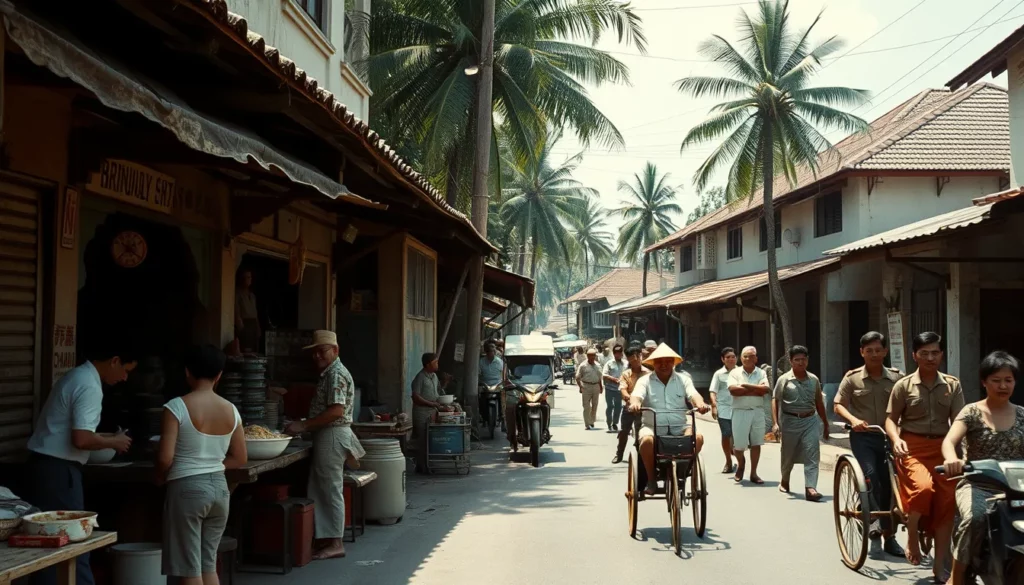
On 9 August 1965, the heat hung over Singapore like a wet blanket. In the kampongs, families woke in attap-roofed houses and listened to the radio. Along the Singapore River, bumboats jostled on the foul-smelling water, and hawkers set up stalls on the five-foot ways. Few knew that in Kuala Lumpur, the Malaysian Parliament was about to expel their island from the federation. At 4 p.m., Lee Kuan Yew appeared before television cameras at Caldecott Hill. His voice broke as he announced that Singapore was now independent. “For me, it is a moment of anguish,” he said. “All my life, my whole adult life, I have believed in merger and unity of the two territories.” In the streets, the reaction was disbelief, grief, anger and, for some, relief. A new nation had been born, but it had no hinterland, no resources and no certainty of survival.
What Happened?
Singapore’s union with Malaysia, formed on 16 September 1963, had been fraught from the start. The PAP’s campaign for a “Malaysian Malaysia” challenged Malay special rights. Racial riots in July and September 1964 left 36 dead and 556 injured. In March 1965, Indonesian saboteurs bombed Macdonald House, killing three and injuring 33. By mid-1965, Tunku Abdul Rahman had concluded that the union could not hold. The Separation Agreement was signed on 7 August; on 9 August the Malaysian Parliament approved it, and Lee announced Singapore’s independence. Yusof Ishak became the first President.
- 16 September 1963: Singapore joins Malaysia.
- 21 July and 3 September 1964: Racial riots kill 36 and injure 556.
- 10 March 1965: Macdonald House bombing.
- 7 August 1965: Separation Agreement signed.
- 9 August 1965: Independence proclaimed.
- 21 September 1965: Singapore joins the UN.
- 16 October 1965: Singapore joins the Commonwealth.
- 22 December 1965: Republic of Singapore Independence Act passed.
The legal mechanics were hurried. There was no grand parade; the first National Day Parade was held in 1966. The new state had to invent its institutions, foreign policy and sense of itself.

How It Was Seen at the Time
Contemporaries reached for the language of divorce and betrayal. The Straits Times called it a “separation”; the Barisan Sosialis called it a “sell-out”; Lee later called it an “expulsion.” Chinese-educated Singaporeans, who had tied their hopes to merger, were shocked. English-educated professionals saw a crisis to be managed. Malays feared becoming a minority. Businessmen feared losing the Malaysian market.
“If we were to keep Singapore in Malaysia, the only way to do it is to use force. I think the best way is to ask Singapore to leave.” — Tunku Abdul Rahman, Malaysian Parliament, 9 August 1965.
Lee insisted the new nation would not be a Chinese state. “We are not a Malay nation; we are not a Chinese nation; we are not an Indian nation,” he said. “Everybody will have his place, equal: language, culture, religion.” The promise was bold, but it acknowledged the fragility of a society just torn by racial violence.
The Chinese-educated and the English-educated
Chinese-language newspapers and students had been among the most vocal supporters of merger. For them, separation felt like defeat. English-educated civil servants and professionals were more likely to see it as a political crisis to be managed.
The Malay community
Malay leaders worried that independence would leave them marginalised. The PAP promised equal treatment and emphasised the new state’s multiracial character, but the fear was real.
The business community and the Barisan Sosialis
Shopkeepers and manufacturers feared being cut off from the Malaysian market. The Barisan Sosialis denounced separation as a fraud and called for “true independence.”
Historical Snapshot
| Aspect | Detail |
|---|---|
| Date | 9 August 1965 |
| Place | Singapore, a city-state at the southern tip of the Malay Peninsula |
| People | Lee Kuan Yew, Yusof Ishak, Tunku Abdul Rahman, S. Rajaratnam, Goh Keng Swee and a population of about 1.9 million |
| What Happened | Singapore separated from Malaysia and became an independent and sovereign state |
| Why It Mattered | It created a new nation with no hinterland, no natural resources and a multiracial population, forcing a radical rethink of economy, housing, defence and identity |
By the numbers, Singapore was small and vulnerable. The population was about 1,887,000: roughly 75 per cent Chinese, 14 per cent Malay and 8 per cent Indian. Unemployment was around 9 per cent, GDP per capita about S$500. The HDB had built some 54,000 flats since 1960, but most families still lived in kampongs or crowded shophouses. The British bases contributed an estimated one-fifth of GNP. Life expectancy was about 64 years. These figures explain why observers doubted Singapore could survive.
Daily Life
Housing and the Kampong
In 1965, the HDB was young. Its flats were clean and coveted, but housed only a minority. Most Singaporeans lived in kampongs of attap- or zinc-roofed houses, often without piped water. Night soil collectors still made their rounds, and fires were a constant hazard. Yet kampong life had its rhythms: neighbours shared food, children played in the dirt, and the “kampong spirit” became a byword for mutual aid.
Food, Hawkers and the Five-Foot Way
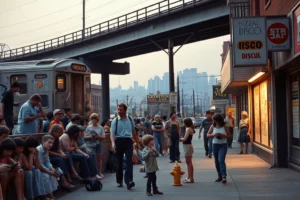
Street food was cheap and ubiquitous. Hawkers set up stalls along five-foot ways and outside kopitiams. A bowl of noodles cost ten to twenty cents. Families ate char kway teow, laksa, roti prata and bak kut teh. Children bought ice balls and kachang puteh. The five-foot way was a social space where people ate, talked and did business.
Work, Transport and Wages
Work was hard and insecure. Trishaw riders, bus drivers, dock workers, bumboatsmen and factory hands made up the labour force. Jurong Industrial Estate was beginning to attract factories, but unemployment was high. Samsui women worked on construction sites. A labourer might earn $100 to $150 a month. Buses and trishaws were the main transport.
Media, Leisure and Religion
Television had arrived in 1963, but radio dominated. Rediffusion piped music and news into homes. Newspapers appeared in English, Chinese, Malay and Tamil. Families gathered at wayang stages for Chinese street opera or went to cinemas. Religious festivals—Hari Raya, Chinese New Year, Deepavali, Thaipusam—brought different communities into shared streets.
Contemporary Newspaper Coverage
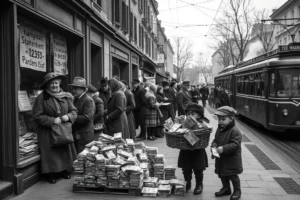
The Straits Times of 10 August 1965 led with “Singapore is out.” Its report described Lee weeping as he announced the separation. Chinese-language papers, including Nanyang Siang Pau and Sin Chew Jit Poh, carried anguished editorials. Berita Harian reflected Malay anxieties; Tamil Murasu spoke to Indian readers. The tone was sober, anxious and sometimes defiant. There were rumours of troop movements and Indonesian infiltrators. The newspapers had no hindsight; they were reporting a crisis whose outcome was unknown.
“Singapore is out.” — The Straits Times, 10 August 1965.
Eyewitness Accounts
Lee’s televised address remains the most famous eyewitness account. His voice cracked as he spoke of his lifelong belief in merger. The broadcast was carried by Radio Singapura and Television Singapura and reprinted across the region. For many Singaporeans, it was the moment they realised independence was not a triumph but a wrenching break.
“For me, it is a moment of anguish. All my life, my whole adult life, I have believed in merger and unity of the two territories.” — Lee Kuan Yew, 9 August 1965.
Oral histories add another dimension. Gerald De Cruz, a former organising secretary of the Malayan Democratic Union, recalled the anti-colonial conviction of his generation: “…we cannot depend on other people—white man, black man, yellow man, whoever it might be—to look after us; we must look after ourselves.”
“…we cannot depend on other people—white man, black man, yellow man, whoever it might be—to look after us; we must look after ourselves. You see, this is our country and we’ve got to rule ourselves.” — Gerald De Cruz, oral history interview, September 1981.
What People Feared
Fear in 1965 was concrete. The Macdonald House bombing had shown that Indonesian saboteurs could strike in the city. The 1964 riots had shown how quickly communal violence could spiral. People feared a third riot, a communist insurgency, economic collapse, a water cutoff and the eventual British withdrawal. The government’s emphasis on “survival” spoke to a population with good reason to be anxious.
- Indonesian sabotage: Further attacks were expected after Macdonald House.
- Racial violence: A recurrence of the 1964 riots was feared.
- Economic collapse: Separation threatened the Malaysian common market.
- Water cutoff: Singapore depended on Johor for water.
- Communist insurgency: The Malayan Communist Party remained a threat.
- British withdrawal: The bases were a major employer, but their future was uncertain.
How Historians See It Today
Historians now treat 1965 as a founding trauma rather than a simple triumph. The “Singapore Story” emphasised vulnerability, survival and multiracial pragmatism. Later scholarship has complicated that narrative. Albert Lau’s The Separation of Singapore from Malaysia (1998) and Tan Tai Yong’s Creating “Greater Malaysia” (2008) show that the break was the product of clashing political visions, racial politics and personal rivalries. Revisionists ask whether separation was inevitable. What is not in doubt is that 1965 forced the new state to build an army, industrialise, rehouse its population and invent a national identity.
The primary sources of 1965 do not record a triumphant birth. They record tears, rumour, crowded kampongs, hawker stalls and anxious newspaper readers. Lee’s anguish, Tunku’s relief, De Cruz’s defiance and the headline “Singapore is out” belong to the same moment. Everyday life went on: people ate, worked, prayed and queued for buses. But the ground had shifted. The new nation would be built on the memory of a wrenching break and the conviction that there was no alternative but to survive.
FAQ
Why did Singapore separate from Malaysia in 1965?
The union was strained by racial politics, the PAP's 'Malaysian Malaysia' campaign, the 1964 riots and the Macdonald House bombing. By mid-1965, Tunku Abdul Rahman concluded that Singapore had to leave. The Separation Agreement was signed on 7 August and approved by the Malaysian Parliament on 9 August.
What was everyday life like in Singapore in 1965?
Most people lived in kampongs or crowded shophouses, ate at hawker stalls, travelled by bus or trishaw, and listened to Rediffusion. HDB flats were new, television had just arrived, and unemployment was high.
Was there a National Day Parade in 1965?
No. The first National Day Parade was held on 9 August 1966. In 1965, independence was announced in a televised address by Lee Kuan Yew.
How did newspapers report the separation?
The Straits Times of 10 August 1965 led with 'Singapore is out' and reported that Lee had wept. Chinese, Malay and Tamil newspapers carried detailed reports and editorials reflecting shock, anxiety and resolve.
What did people fear in 1965?
They feared Indonesian sabotage, racial riots, economic collapse, a water cutoff, communist insurgency and the eventual British withdrawal.
Did Singapore have an army in 1965?
Singapore had two infantry battalions and a small navy, but National Service was not introduced until 1967. The British bases provided the main defence.


Leave a Reply