
Short Answer
Quick Snapshot
In August 1980, Gdańsk became the centre of a peaceful revolution inside the Soviet bloc. On 14 August workers at the Lenin Shipyard began a sit-in strike, initially demanding the reinstatement of gantry crane operator Anna Walentynowicz and better conditions. Within days the strike had grown into the Inter-Enterprise Strike Committee (MKS), a city-wide and then national coordinating body. Its 21 Demands, issued on 17 August, called for independent trade unions, the right to strike, freedom of speech, the release of political prisoners, and economic reforms. On 31 August 1980 the Gdańsk Agreement was signed, opening the way for the Independent Self-governing Trade Union Solidarity.
This article treats the subject in its most common encyclopedic sense: Gdańsk as a Baltic port city and shipbuilding centre during the 1980 strikes and the emergence of Solidarity. It does not attempt a general history of the entire Polish coast, although Gdynia and Sopot are mentioned where the Tricity context is essential. The focus is on the shipyard, the city, the negotiations, and the documentary traces they left behind.
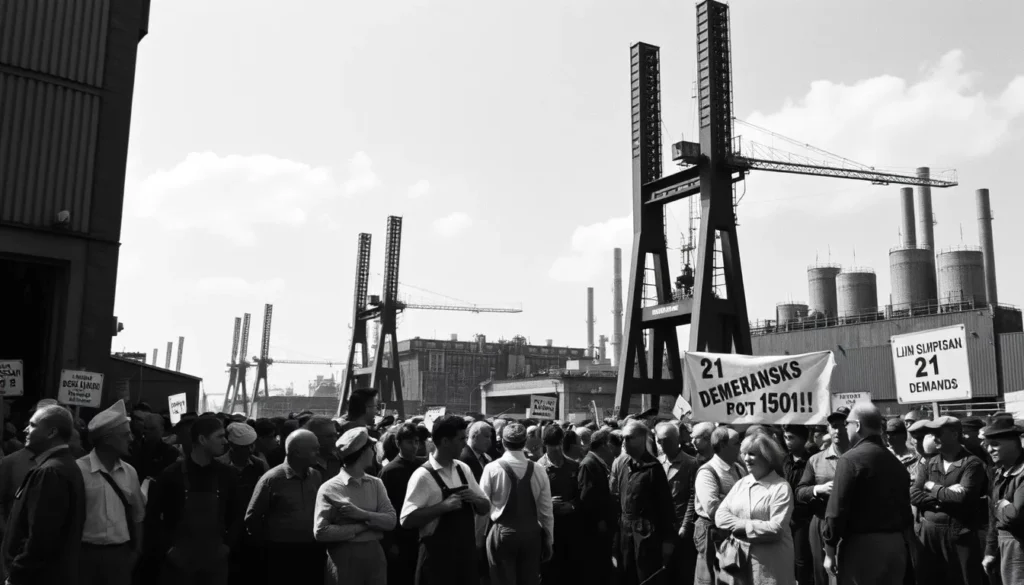
Gdańsk in 1980 was a city of cranes, prefabricated housing estates, Catholic churches, queues, and official slogans. The strike turned the shipyard into a temporary civic parliament, with Masses, bulletins, food distribution, and negotiations conducted under the gaze of workers and photographers. The events of that August are among the most heavily documented episodes of late communist Poland.
Gdańsk in 1980
Gdańsk lies on the southern Baltic coast at the mouth of the Vistula, linked by the Motława river and a dense network of port channels to the sea. With nearby Sopot and Gdynia it forms the Tricity, a conurbation whose economy depended on shipbuilding, maritime trade, rail, and fishing. The climate is maritime: cool, humid, and changeable, with late-summer days that can be warm and bright or grey and rainy. In August 1980 the physical setting mattered less than the symbolic one: the Lenin Shipyard, its gates, cranes, and halls became the stage for a national drama.
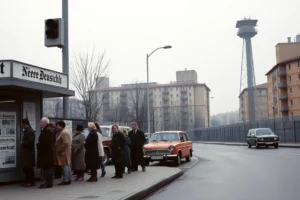
The atmosphere of the city combined socialist modernity with scarcity. New housing blocks stood beside older districts; trolleybus and tram wires crossed streets crowded with workers; the shipyard dominated the skyline near the historic centre. The Polish United Workers’ Party (PZPR) controlled public life, but the Catholic Church remained a powerful alternative source of authority and community. By 1980, after John Paul II’s first pilgrimage to Poland in June 1979, many Poles sensed that mass solidarity could change the political climate.
Population & Economy
Gdańsk had an estimated population of about 456,000 in 1980, part of a Tricity urban area of more than a million people. The city was still growing, with migration from smaller towns and villages feeding the housing estates and industrial workforce. Employment was dominated by the shipyard, the port, railway and transport enterprises, food processing, and higher education. Wages were controlled by the state, but shortages and queues shaped the real cost of living.
The economy of the Polish People’s Republic was in deepening crisis. The authorities raised food prices on 1 July 1980, including meat and cured meats, triggering strikes across the country. In Gdańsk, workers combined economic grievances with demands for dignity and legal representation. Housing was scarce, consumer goods were unreliable, and many families depended on informal networks, second jobs, and garden plots. The shipyard’s export production gave its workers unusual leverage: a stoppage there affected major national and international contracts.
Government & Politics
Gdańsk was governed through the PZPR-led city and voivodeship administration, with official trade unions and censorship limiting independent political activity. At the national level, Edward Gierek was First Secretary of the PZPR until September 1980, when he was replaced by Stanisław Kania. The local party apparatus was unprepared for the scale of the strike, and the government sent Deputy Prime Minister Mieczysław Jagielski to negotiate with the MKS. The Gdańsk Agreement was a political compromise: it recognised the right to form independent trade unions but left the party determined to limit their influence.
Industry
The Lenin Shipyard, formally Stocznia Gdańska im. Lenina, was one of the largest industrial plants in Poland, employing roughly 16,000 workers. It built fishing trawlers, bulk carriers, and other vessels, often for Soviet and foreign customers. Nearby lay the Port of Gdańsk, the Northern Shipyard and repair yards, the Gdańsk Refinery, and a range of supporting workshops and transport enterprises. The shipyard’s size and strategic importance made it a natural centre for protest, and its workers’ committees could coordinate with enterprises across the city and country.
Education
Gdańsk was an important educational centre. The University of Gdańsk, founded in 1970, the Gdańsk Polytechnic, the Medical Academy, and maritime and technical schools trained the region’s engineers, teachers, doctors, and sailors. Literacy was near universal, but education was subject to ideological supervision. Catholic catechism, family transmission, and unofficial publications offered alternative channels of learning. After the strikes, students and intellectuals would help form the Independent Students’ Association (NZS), extending the civic energy of August into universities.
Transportation
People moved around Gdańsk by tram, bus, suburban rail, bicycle, and on foot. The Szybka Kolej Miejska linked Gdańsk, Sopot, and Gdynia, while Gdańsk Główny station connected the city to the rest of Poland. The port and shipyard had their own rail sidings and industrial transport. During the strike, normal movement was disrupted but not stopped: delegations arrived from other workplaces, families brought food, and the shipyard gates became meeting points for workers, journalists, and clergy.
Everyday Life
Daily life in 1980 was shaped by shortage and improvisation. Families queued for meat, butter, sugar, and other goods; housing was cramped and often poorly maintained; clothing was utilitarian and repaired rather than replaced. Entertainment included television, radio, cinema, church services, family gatherings, and informal music-making. Inside the occupied shipyard, everyday life took on a collective rhythm: Masses were celebrated, soup kitchens fed strikers, typewriters and mimeographs produced bulletins, and workers slept in shifts in the halls.
Major Events
The trigger for the Gdańsk strike was the dismissal of Anna Walentynowicz, a crane operator and opposition activist, shortly before her retirement. On 14 August 1980 workers began a sit-in strike and demanded her reinstatement. On 16 August the Inter-Enterprise Strike Committee was formed, and on 17 August it issued the 21 Demands. The first demand was fundamental:
"Acceptance of free trade unions independent of the Communist Party and employers, in accordance with Convention No. 87 of the International Labour Organization ratified by Poland." — Demand No. 1 of the 21 Demands, Gdańsk, 17 August 1980.
The demands also included the right to strike, freedom of speech, release of political prisoners, and economic improvements. Negotiations with Deputy Prime Minister Jagielski produced the Gdańsk Agreement on 31 August. On 17 September 1980 representatives of strike centres founded Solidarity in Gdańsk; the union was registered on 10 November 1980.
What Newspapers Were Reporting
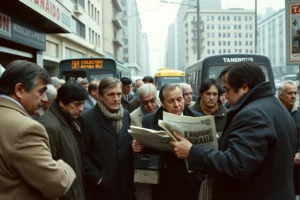
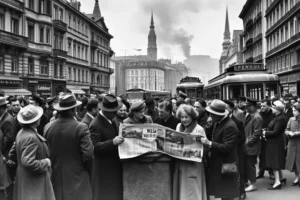
The official press in Gdańsk, including Dziennik Bałtycki and Głos Wybrzeża, operated under censorship. Early reports framed the stoppages in the language of production discipline, socialist legality, and ‘work interruptions’; later coverage shifted to the signing of the agreement and the restoration of normal work. The MKS issued its own strike bulletins, which printed the 21 Demands, negotiation updates, and messages of support from other factories. These bulletins are crucial because they preserve the strikers’ own language and priorities, often omitted or softened in official newspapers.
What People Were Talking About
Conversations in queues, tram stops, shipyard canteens, and church porches centred on prices, shortages, and the astonishing fact that workers were negotiating with the government. People discussed Anna Walentynowicz, Lech Wałęsa, and the possibility of free unions. Many feared Soviet intervention, recalling Hungary in 1956 and Czechoslovakia in 1968; others drew hope from John Paul II’s 1979 visit. Rumours travelled quickly: that the army might move, that the authorities would concede, that other cities would join. Memoirs and letters from participants recall a mixture of exhaustion, exhilaration, and uncertainty.
Historical Photographs
Photographs from 1980 are among the most powerful sources for understanding the strike. They show Gate No. 2 of the Lenin Shipyard crowded with workers, Lech Wałęsa addressing crowds, the wooden boards bearing the 21 Demands, priests celebrating Mass in the shipyard, and strikers sleeping in makeshift quarters. Photographers and amateur workers captured the shipyard cranes against the Baltic sky, the hand-painted banners, and the faces of ordinary people who had suddenly become political actors. These images document not only events but also emotions and collective identity.
Documents & Primary Sources
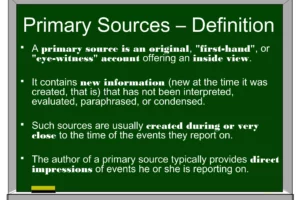
Key primary sources include the 21 Demands, inscribed in UNESCO’s Memory of the World Register in 2003; the text of the Gdańsk Agreement; MKS bulletins, leaflets, and strike correspondence; PZPR reports and censorship records; local newspapers; and photographs, oral histories, and memoirs. Major repositories include the Institute of National Remembrance (IPN), the European Solidarity Centre in Gdańsk, the National Digital Archives, the University of Gdańsk, and local museum collections. Together these sources allow historians to compare official accounts with workers’ testimony.
1980 Timeline
| Date | Event |
|---|---|
| 1 July 1980 | Food price rises, including meat, trigger strikes across Poland. |
| 14 August 1980 | Sit-in strike begins at the Lenin Shipyard in Gdańsk. |
| 16 August 1980 | Inter-Enterprise Strike Committee (MKS) is formed. |
| 17 August 1980 | MKS issues the 21 Demands, including free trade unions. |
| 30 August 1980 | Szczecin Agreement is signed. |
| 31 August 1980 | Gdańsk Agreement is signed by the MKS and Deputy Prime Minister Mieczysław Jagielski. |
| 17 September 1980 | Independent Self-governing Trade Union Solidarity is founded in Gdańsk. |
| 10 November 1980 | Solidarity is officially registered. |
| 11 November 1980 | Poles freely mark the anniversary of independence for the first time in decades. |
What Changed Next
Solidarity grew rapidly, claiming nearly 10 million members. It inspired Rural Solidarity, the Independent Students’ Association, and a broad civic awakening. The authorities, however, never accepted the full implications of the Gdańsk Agreement. On 13 December 1981 martial law was imposed; Lech Wałęsa and many activists were interned, and Solidarity was driven underground. Martial law was lifted in 1983, but the union remained illegal until 1989, when the Round Table talks legalised it again. The Gdańsk strike of August 1980 thus opened a path that, after years of repression and struggle, contributed to the end of communist rule in Poland.
Sources
- Institute of National Remembrance, ’31 August 1980 – the birth of Solidarity’.
- Europeana, ‘Solidarity: A Peaceful Revolution’.
- Timothy Garton Ash, The Polish Revolution: Solidarity.
- Michael Szporer, Solidarity: The Great Workers Strike of 1980.
- European Solidarity Centre, Gdańsk, archival and exhibition collections.
FAQ
What was the population of Gdańsk in 1980?
Gdańsk had an estimated population of about 456,000 in 1980, within the larger Tricity conurbation that also included Sopot and Gdynia.
What major events happened in Gdańsk in 1980?
The Lenin Shipyard sit-in strike began on 14 August, the Inter-Enterprise Strike Committee was formed on 16 August, the 21 Demands were issued on 17 August, and the Gdańsk Agreement was signed on 31 August. Solidarity was founded in Gdańsk on 17 September and registered on 10 November.
What primary sources are available for studying Gdańsk in 1980?
Key sources include the 21 Demands, the Gdańsk Agreement, MKS strike bulletins and leaflets, official newspapers such as Dziennik Bałtycki and Głos Wybrzeża, PZPR and censorship records, photographs, memoirs, and oral histories held by the IPN and the European Solidarity Centre.
How did daily life in Gdańsk in 1980 differ from today?
Daily life was shaped by a state-controlled economy, chronic shortages, censorship, and limited travel and communication. People queued for food, relied on informal networks, and received news through official media, rumour, and unofficial publications. The 1980 strike created a brief space of free public speech that is hard to imagine under the restrictions of the time.


Leave a Reply