Short Answer
In the autumn of 1918, as the First World War raged across Europe, a new and invisible enemy began to cut through the home front. The Spanish influenza, as it was then called, struck with a speed and ferocity that left doctors and civilians alike scrambling for answers. In the United States, a quarter of the population would fall ill, and some 675,000 would die, making it the deadliest pandemic since the Black Death. Yet for those living through it, the disease was a bewildering mystery, reported in fragments, feared in whispers, and fought with the limited tools of a pre-antibiotic age. This article reconstructs the pandemic as it was experienced and reported at the time, drawing on letters, newspapers, and official records from 1918.
What Happened?
The 1918–1919 influenza pandemic killed more people than combat did in the First World War. Fatality estimates range from 20 to 40 million worldwide, with some estimates twice that (JSTOR Daily). In the United States alone, about 675,000 people died, and a quarter of the population contracted the flu. The disease spread in waves, with the first reports emerging in the spring of 1918, but the deadliest wave struck in the autumn of that year.
By late September 1918, the pandemic had reached military camps and civilian communities across the United States. A doctor stationed at Camp Devens, a military base near Boston, described the situation in a letter dated September 29, 1918: “Camp Devens is near Boston, and has about 50,000 men, or did have before this epidemic broke loose” (PBS American Experience). The Public Health Service reported on October 4, 1918, that “influenza is spreading rapidly in the United States. Its presence has been noted in 43 States and the District of Columbia” (Public Health Reports).
- Spring 1918: First cases reported in military camps and civilian populations, often misidentified as ordinary flu.
- September 1918: A second, more lethal wave erupts, hitting military bases and cities simultaneously.
- October 1918: The disease peaks in many areas; hospitals overflow, and public health measures such as quarantine and mask-wearing are introduced.
- November 1918: Armistice celebrations are muted by the ongoing pandemic; the third wave continues into 1919.
How It Was Seen at the Time
Contemporaries called the disease “Spanish influenza” or “Spanish flu” because neutral Spain, lacking wartime censorship, reported the outbreak openly, making it appear that Spain was suffering worse than other nations (JSTOR Daily). The prevailing mood was one of confusion and dread. Doctors, trained to treat pneumonia and other bacterial infections, were baffled by the rapid onset and high mortality. The Camp Devens doctor wrote: “As you know, I have not seen much pneumonia in the last few years in Detroit, so when I came here I was somewhat behind in the niceties of the Army way of intricate diagnosis” (PBS).
Newspapers used dramatic language to convey the scale of suffering. The Big Stone Gap Post in Virginia reported on November 20, 1918: “It is hardly likely that the general public will ever realize the extent of the suffering and the anguish caused by the Spanish influenza in some of the more remote mountain communities of Virginia where the frightful malady raged with a degree of severity which is difficult to explain” (Encyclopedia Virginia). The disease was often called “grippe,” a term for influenza, and many believed it was caused by a bacterium, not a virus, and that it spread through close contact.
Historical Snapshot
| Aspect | Detail |
|---|---|
| Date | 1918–1919 |
| Place | Global, with severe outbreaks in Europe, North America, and Asia |
| People | Soldiers, civilians, medical personnel, and public health officials |
| What Happened | A novel influenza virus caused a pandemic that killed an estimated 20–40 million people worldwide |
| Why It Mattered | It was the deadliest disease outbreak since the Black Death, overwhelming healthcare systems and reshaping public health policy |
What People Knew at the Time
| What People Knew Then | What We Know Now |
|---|---|
| Influenza was caused by a bacterium (often called Pfeiffer’s bacillus) and spread through respiratory droplets. | Influenza is caused by a virus (H1N1) that spreads through airborne particles and contact. |
| There was no specific treatment; doctors relied on supportive care, fresh air, and sometimes aspirin or quinine. | Antiviral drugs and vaccines exist, but in 1918 none were available; modern medicine focuses on supportive care and prevention. |
| The disease was often called “Spanish flu” because Spain’s uncensored press reported it first. | The virus likely originated in the United States or Europe, not Spain; the name is a misnomer. |
Contemporary Newspaper Coverage
Newspapers in 1918 reported the pandemic with a mix of alarm and patriotic reassurance. The Big Stone Gap Post, a small Virginia paper, published a story on November 20, 1918, under the headline “Flew on the Wings of Death to the Hills,” describing the state health board’s response to the outbreak in remote mountain communities. The article noted that “scores of sufferers in mountain cabins and shacks far distant from railroads, could not be reached at all, and in some instances it was heard even to find persons to bury the dead” (Encyclopedia Virginia). It also reported that “in several neighborhoods the supply of coffins utterly ran out while almost everywhere there was a shortage of doctors and nurses.”
Larger urban papers often downplayed the severity to avoid panic, but the Public Health Reports of October 4, 1918, provided a sobering official summary: “Reports received by the Public Health Service indicate that influenza is spreading rapidly in the United States. Its presence has been noted in 43 States and the District of Columbia” (CDC). The tone of newspaper coverage ranged from clinical to sensational, but all shared a sense of helplessness against an invisible enemy.
Eyewitness Accounts
One of the most vivid eyewitness accounts comes from a doctor at Camp Devens, Massachusetts, who wrote to a fellow physician on September 29, 1918. The letter, preserved by the American Experience, describes the overwhelming conditions in the camp’s hospital:
“It is more than likely that you would be interested in the news of this place, for there is a possibility that you will be assigned here for duty, so having a minute between rounds I will try to tell you a little about the situation here as I have seen it in the last week. As you know, I have not seen much pneumonia in the last few years in Detroit, so when I came here I was somewhat behind in the niceties of the Army way of intricate diagnosis.”
The doctor goes on to describe the rapid progression of the disease, the shortage of beds, and the high mortality rate among young soldiers. His account captures the bewilderment and exhaustion of medical personnel who were fighting a disease they did not understand.
Official Reports
The U.S. Public Health Service issued weekly reports on the pandemic’s spread. The October 4, 1918, issue of Public Health Reports summarized the situation: “Influenza is spreading rapidly in the United States. Its presence has been noted in 43 States and the District of Columbia.” The report listed specific outbreaks, such as “Alabama.—An extensive epidemic is reported from Florence and vicinity” and “Connecticut.—On September 30 it was estimated that 9,000 cases had occurred in the State” (CDC). These official reports provided the only systematic data available to the public, but they often lagged behind the actual spread and undercounted cases in rural areas.
What People Feared
Beyond the immediate fear of death, contemporaries worried about the collapse of social order. The Big Stone Gap Post article highlighted the terror in remote communities: “scores of sufferers in mountain cabins and shacks far distant from railroads, could not be reached at all, and in some instances it was heard even to find persons to bury the dead” (Encyclopedia Virginia). The shortage of coffins and the inability to bury the dead quickly fueled rumors of mass graves and abandonment. There was also fear of the disease spreading through the military and disrupting the war effort. The Camp Devens doctor noted that the camp had 50,000 men before the epidemic, implying that the disease was decimating the ranks. People feared that the pandemic would never end, and that the world would be permanently weakened.
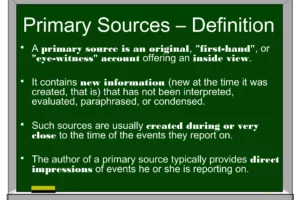
The 1918 influenza pandemic left an indelible mark on the generation that lived through it. The primary sources from the time—letters, newspapers, and official reports—reveal a world grappling with an invisible enemy, armed with little more than courage and a desperate hope for survival. They show that even in the face of overwhelming suffering, communities found ways to care for the sick, bury the dead, and carry on. The pandemic’s legacy is not just the millions of lives lost, but the lessons learned about the importance of public health, the limits of medical knowledge, and the resilience of the human spirit.
FAQ
Why was the 1918 pandemic called 'Spanish flu'?
Because Spain was neutral during World War I and had no wartime censorship, so its newspapers were the first to report the outbreak openly. This made it appear that Spain was suffering more severely, though the disease was widespread elsewhere.
What did people in 1918 think caused the flu?
Most medical authorities believed it was caused by a bacterium, often identified as Pfeiffer's bacillus, and that it spread through close contact. The viral cause was not discovered until the 1930s.




Leave a Reply