
Short Answer
Quick Snapshot
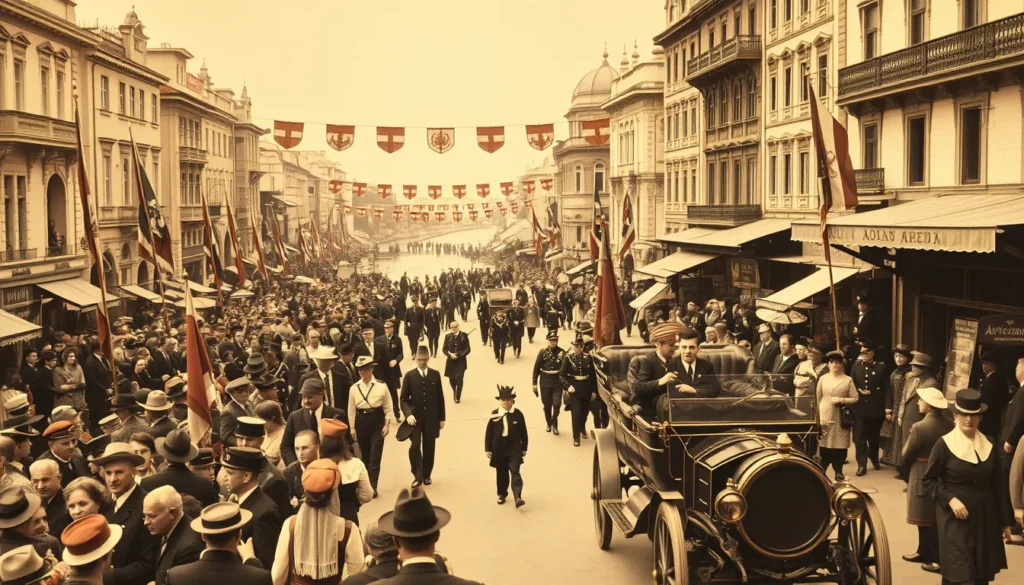
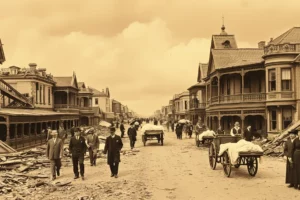
Sarajevo in 1914 was the capital of Bosnia and Herzegovina, a province under Austro-Hungarian administration since the occupation of 1878 and formal annexation in 1908. It was a compact, layered city where Ottoman bazaars, minarets, Orthodox and Catholic churches, synagogues, and Austro-Hungarian administrative buildings stood within sight of one another. The Miljacka River ran through the narrow valley, and the city’s streets mixed merchants, officials, students, soldiers, and peasants from the surrounding countryside.
The phrase “Sarajevo in 1914” is used here in its most common encyclopedic sense: the city and the events surrounding the assassination of Archduke Franz Ferdinand, heir to the Austro-Hungarian throne, and his wife Sophie on 28 June 1914. It does not attempt a general history of the First World War, but it explains why this city and that day became the immediate catalyst for the July Crisis.
On the morning of 28 June, six armed conspirators linked to Young Bosnia and aided by the Serbian nationalist Black Hand took positions along the Appel Quay. A bomb failed, but later, after a wrong turn near the Latin Bridge, Gavrilo Princip shot the archduke and his wife. Both died. Within weeks, Austria-Hungary’s ultimatum to Serbia and the resulting declarations of war drew Europe into a conflict of unprecedented scale.
Sarajevo in 1914
Sarajevo lies in a valley of the Dinaric Alps, encircled by hills that made the city both defensible and prone to sharp seasonal contrasts. The Miljacka River, shallow for much of the year, divided the old Ottoman quarter of Baščaršija from the newer Austro-Hungarian districts with their broad avenues, parks, cafés, and official buildings. In late June 1914 the weather was warm enough for open cars and outdoor crowds, and the city was decorated for the archduke’s visit.
The atmosphere was politically tense. Bosnia and Herzegovina had been a flashpoint between Austria-Hungary and Serbian nationalism since the annexation crisis of 1908–1909. The Balkan Wars of 1912–1913 had further inflamed South Slav aspirations and Austro-Hungarian fears. In Sarajevo, the provincial government under General Oskar Potiorek sought to assert imperial authority, while Serb, Croat, and Muslim political and cultural organizations debated the province’s future. The visit of Franz Ferdinand, scheduled for St. Vitus Day, was read by many Serb nationalists as a deliberate provocation.
Population & Economy
The Austro-Hungarian census of 1910 recorded about 51,900 inhabitants in Sarajevo; no separate annual census was taken in 1914, but the city was growing slowly as an administrative and commercial centre. Its population was religiously and ethnically mixed: Bosniak Muslims, Orthodox Serbs, Catholic Croats, Sephardic Jews, Roma, and others lived in distinct but interconnected quarters. The old bazaar remained the commercial heart for crafts, retail trade, and money-changing, while the newer districts housed banks, offices, schools, and military establishments.
The economy rested on trade, crafts, food processing, tobacco, brewing, milling, timber, and railway work rather than on heavy industry. The Sarajevo Brewery, founded in the 19th century, was one of the city’s better-known enterprises. Wages were modest, and reliable fixed price series for 1914 are scarce, but daily staples were generally cheaper than in Vienna, while rents and imported goods were higher in the Austro-Hungarian quarter. The city’s prosperity depended heavily on government employment, the garrison, the railway, and the surrounding rural market.
Government & Politics
Sarajevo was governed through the Austro-Hungarian provincial administration, headed in 1914 by Governor Oskar Potiorek. The city’s mayor was Fehim Čurčić, who received Franz Ferdinand at the City Hall on 28 June. The Bosnian Diet, established in 1910, had limited powers, and real authority lay with the imperial administration. Political life was shaped by the nationality question, the legacy of the annexation, and the growing influence of radical South Slav student groups such as Young Bosnia.
Potiorek was determined to suppress anti-Habsburg activity, but he also sought to use the archduke’s visit to strengthen his own position. Warnings of a possible plot were played down, and security for the procession was light. The conspirators, coordinated in Sarajevo by Danilo Ilić, included students and young radicals who had received weapons and training in Belgrade. Their target was not merely the archduke but the symbolic authority of Austria-Hungary in Bosnia.
Industry
Sarajevo was not a major industrial city in 1914. Its manufacturing sector was small-scale and tied to local needs: flour mills, bakeries, breweries, tobacco processing, leatherwork, metalwork, carpentry, and textile crafts. The railway workshops and military installations provided steady employment, while the bazaar supported a dense network of artisans and small traders. Austro-Hungarian investment had improved roads, public buildings, and utilities, but the province remained predominantly agrarian, with Sarajevo acting as the administrative and commercial funnel for its hinterland.
Education
Sarajevo had no university in 1914. Education was divided among Ottoman-era religious schools, Austro-Hungarian primary and secondary schools, and specialized institutions such as the Gymnasium and the Sharia Judicial School. Teacher training and technical education expanded under Austro-Hungarian rule, but literacy remained uneven and was generally higher among urban men than among rural women. Many of the young conspirators were educated students or recent school-leavers, and their radical politics drew on the nationalist and revolutionary ideas circulating in Belgrade and other South Slav centres.
Transportation
The city was linked to the wider empire by narrow-gauge railway, which carried passengers, freight, and official visitors. Within Sarajevo, electric trams, horse-drawn carriages, and pedestrians moved through the streets; automobiles were still rare and were mainly associated with officials, the military, and wealthy residents. The archduke’s motorcade of open cars was therefore a conspicuous display of modern authority. The Appel Quay along the Miljacka and the Latin Bridge were central to the route, and it was at a corner near the bridge that the fatal shots were fired.
Everyday Life
Daily life in Sarajevo combined Ottoman and Habsburg rhythms. In the bazaar, coppersmiths, shoemakers, and traders opened their shops early, while coffeehouses filled with conversation, tobacco smoke, and news. Men wore fezzes or European hats according to religion, occupation, and politics; women’s dress ranged from veils and traditional garments to the tailored fashions of the Austro-Hungarian middle class. Family life remained patriarchal, and religious holidays structured the calendar for Muslims, Orthodox Serbs, Catholics, and Jews alike.
Housing varied from courtyard houses in the old quarter to multi-storey apartment buildings and villas in the newer districts. Food included bread, lamb, vegetables, dairy products, coffee, and sweets, with local specialities sold in the bazaar. Entertainment was provided by cafés, theatres, occasional cinema shows, religious festivals, and military bands. The city was small enough that official processions drew large crowds, and the publication of the archduke’s route ensured that spectators and conspirators alike knew where to stand.
Major Events
Franz Ferdinand and Sophie arrived in Sarajevo on 25 June 1914. The archduke attended military manoeuvres and official functions over the following days, and on 28 June his motorcade set out along the Appel Quay toward the City Hall. Nedeljko Čabrinović threw a bomb, which missed the archduke’s car and wounded several people. Franz Ferdinand ordered the procession to continue, and at the City Hall he reportedly snapped,
"What kind of welcome is this? I’m being met by bombs!"
After the reception, the archduke insisted on visiting the wounded at the hospital. His driver, however, was not informed of the changed route and turned into a side street near the Latin Bridge. Princip, who had moved to that corner, fired two shots. Sophie was hit in the abdomen and Franz Ferdinand in the neck; both died shortly afterward. Princip was arrested, and anti-Serb riots broke out in Sarajevo and other parts of the empire. The assassination set in motion the July Crisis, Austria-Hungary’s ultimatum to Serbia, and the wider European war.
What Newspapers Were Reporting
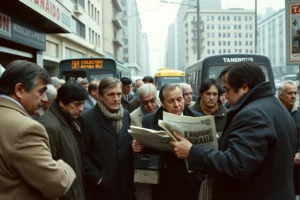
Sarajevo’s newspapers in 1914 included the German-language Bosnische Post and the official Sarajevski list, alongside Serb, Croat, and Muslim publications. Initial reports described the archduke’s visit and the bomb attempt; extra editions and official communiqués followed confirmation of the deaths. After 28 June, reporting was increasingly constrained by the provincial authorities and by the atmosphere of emergency. The archduke’s reported exclamation at City Hall became one of the most quoted fragments of the day, and Vienna’s press quickly framed the killings as a Serbian-backed outrage.
What People Were Talking About
In the streets, cafés, and offices of Sarajevo, people discussed the astonishing failure of security. Why had the route been published? Why had the governor ignored warnings? Who had armed the young conspirators? Rumours of Black Hand involvement, Serbian complicity, and official negligence circulated alongside expressions of shock and fear. Serb residents feared reprisals, and Muslim, Croat, and Jewish neighbours debated what the assassination would mean for the province. Later testimony from the conspirators revealed that Ilić had kept the identities of the Belgrade recruits secret until the eve of the attack, adding to the sense of a plot that had been both amateurish and deadly.
Historical Photographs
Photographs from Sarajevo in June 1914 preserve the visit and its aftermath: the archduke and Sophie in open cars, crowds along the Appel Quay, the City Hall reception, and the Latin Bridge. One well-known image, captured by the amateur photographer Milos Oberajge on 28 June, was long believed to show the arrest of Gavrilo Princip; it is now thought to show the arrest of Nedeljko Čabrinović. Other photographs record the trial, the conspirators, the funeral processions, and the damage to the city’s reputation. These images are not neutral illustrations; they were circulated, captioned, and reused in ways that shaped public memory of the assassination.
Documents & Primary Sources
Historians studying Sarajevo in 1914 rely on Austro-Hungarian police and court records, the trial transcript of the conspirators, diplomatic telegrams from Vienna and Belgrade, the 1910 census, cadastral and street maps, local newspapers, memoirs, and photographs. The Archives of Bosnia and Herzegovina in Sarajevo hold administrative records, while the Haus-, Hof- und Staatsarchiv in Vienna contains foreign-policy documents from the July Crisis. Personal letters and diaries of officials, soldiers, and townspeople add texture, though many ordinary voices were never written down.
1914 Timeline
| Date | Event |
|---|---|
| 25 June | Franz Ferdinand and Sophie arrive in Sarajevo. |
| 26–27 June | The archduke attends official duties and military manoeuvres; the couple sightsees in the city. |
| 28 June, morning | Six armed conspirators take positions along the Appel Quay. Čabrinović throws a bomb and misses; the archduke continues to City Hall. |
| 28 June, late morning | The motorcade turns toward the hospital; at the Latin Bridge corner, Princip shoots Franz Ferdinand and Sophie. Both die. |
| 28 June, afternoon | Princip is arrested; anti-Serb disturbances begin in Sarajevo. |
| July | Arrests and investigations continue; Austria-Hungary prepares its ultimatum to Serbia. |
| 23 July | Austria-Hungary presents its ultimatum to Serbia. |
| 28 July | Austria-Hungary declares war on Serbia. |
| October | The Sarajevo trial of the conspirators begins. |
What Changed Next
The assassination transformed Sarajevo from a provincial capital into a symbol of the outbreak of the First World War. Gavrilo Princip, too young for the death penalty under Austro-Hungarian law, was sentenced to twenty years and died of tuberculosis in Theresienstadt in 1918. Danilo Ilić and several other conspirators were executed in 1915. During the war, Bosnia and Herzegovina experienced harsh military administration, internment, and nationalist repression. After 1918, Sarajevo became part of the Kingdom of Serbs, Croats and Slovenes, later Yugoslavia. The Latin Bridge and the surrounding street corner remained sites of memory, reinterpreted by successive states and later marked by a museum and commemorative plaque.
Sources
- Foster, Samuel. "Sarajevo Incident." 1914-1918 Online: International Encyclopedia of the First World War. https://ueaeprints.uea.ac.uk/id/eprint/72080/1/1914_1918_Online_sarajevo_incident_2019_02_14_V1.1.pdf
- Shapiro, Ari. "A Century Ago In Sarajevo: A Plot, A Farce And A Fateful Shot." NPR, 27 June 2014. https://www.npr.org/2014/06/27/325516359/a-century-ago-in-sarajevo-a-plot-a-farce-and-a-fateful-shot
- Dedijer, Vladimir. The Road to Sarajevo. New York: Simon and Schuster, 1966.
- Clark, Christopher. The Sleepwalkers: How Europe Went to War in 1914. New York: Harper, 2012.
- Archives of Bosnia and Herzegovina, Sarajevo. Austro-Hungarian administrative, police, and court records, 1914.
FAQ
What was the population of Sarajevo in 1914?
There was no separate 1914 census. The 1910 Austro-Hungarian census recorded about 51,900 inhabitants in Sarajevo, and the city grew only slowly on the eve of the war.
What major events happened in Sarajevo in 1914?
The most significant event was the 28 June assassination of Archduke Franz Ferdinand and Sophie by Gavrilo Princip, which triggered the July Crisis and the First World War. The city also experienced anti-Serb riots and the beginning of the conspirators’ trial.
What primary sources are available for studying Sarajevo in 1914?
Key sources include Austro-Hungarian police and court records, the trial transcript, the 1910 census, local newspapers such as Bosnische Post and Sarajevski list, diplomatic telegrams, maps, memoirs, and photographs held in Sarajevo and Vienna archives.
How did daily life in Sarajevo in 1914 differ from today?
In 1914 Sarajevo had no university, automobiles were rare, the city was under Austro-Hungarian administration, and everyday life was structured by religious communities and Ottoman-Habsburg social customs. Modern telecommunications, mass motor traffic, and the postwar state borders did not yet exist.




Leave a Reply