
Short Answer
On the night of April 14, 1912, the RMS Titanic, the largest and most luxurious ocean liner ever built, struck an iceberg in the North Atlantic and sank in under three hours. The world awoke to a catastrophe that defied belief: a ship proclaimed “unsinkable” had gone down, taking with it more than 1,500 passengers and crew. In the immediate aftermath, survivors’ accounts—given to newspapers, to the U.S. Senate, and to the British Board of Trade—painted a harrowing picture of chaos, courage, and loss. These eyewitness testimonies, preserved in official transcripts and personal memoirs, remain the most direct link to that fateful night.
What Happened?
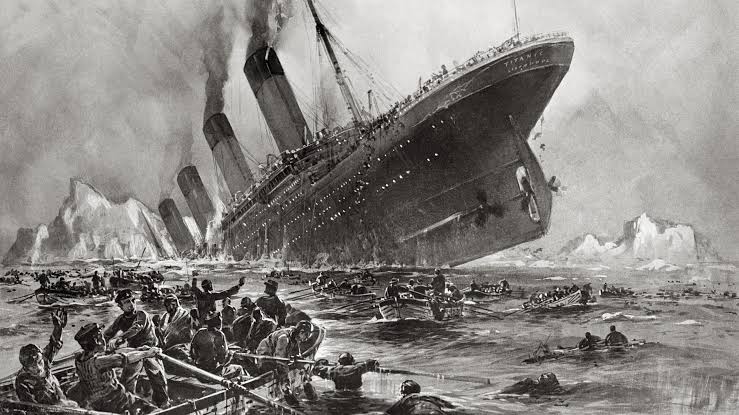
The Titanic departed Southampton on April 10, 1912, bound for New York with approximately 2,200 passengers and crew. On April 14, at about 11:40 PM, the ship struck an iceberg. The collision opened a series of gashes in the hull, flooding five of the watertight compartments. The ship’s designer, Thomas Andrews, estimated that the ship had only about two hours to live. Lifeboats were launched, but there were only 20, with capacity for about 1,178 people—far fewer than the number aboard. The “women and children first” order was enforced on the port side, but on the starboard side, men were allowed to board if there was room. At 2:20 AM on April 15, the Titanic broke in two and sank. The Cunard liner Carpathia arrived at about 4 AM and rescued 705 survivors. The death toll was 1,517, according to the British Inquiry.
How It Was Seen at the Time
Initially, many passengers did not believe the ship was in danger. The prevailing belief in the ship’s invincibility led to complacency. Eyewitnesses described the calmness and the disbelief. The British Inquiry’s introduction notes that “legends have sometimes become part of the Titanic saga” because the public lacked access to accurate information. The mood was one of shock and grief, with a focus on heroism and sacrifice. Survivor Colonel Archibald Gracie, in his memoir The Truth About the Titanic, wrote: “I was awakened by a sudden shock and a grinding noise.” He later described the struggle for lifeboats and the final plunge.
Historical Snapshot
| Aspect | Detail |
|---|---|
| Date | April 14–15, 1912 |
| Place | North Atlantic Ocean, approximately 375 miles south of Newfoundland |
| People | RMS Titanic passengers and crew; survivors rescued by RMS Carpathia |
| What Happened | The Titanic struck an iceberg and sank; 1,517 people died |
| Why It Mattered | Led to major maritime safety reforms, including the SOLAS convention |
Eyewitness Accounts
Survivor testimony forms the core of our understanding of the disaster. Colonel Archibald Gracie, a first-class passenger, wrote one of the most detailed memoirs, The Truth About the Titanic (1913). He described the collision and the sinking: “The sea was calm, the night was clear, and the stars were shining.” He also recounted the chaos on the boat deck and his own survival on an overturned collapsible lifeboat. Another account, preserved by the Gilder Lehrman Institute of American History, offers a personal letter from a survivor that captures the terror and confusion. These firsthand narratives, along with the official inquiry testimonies, provide a mosaic of experiences—from the wealthy in first class to the steerage passengers who faced the greatest barriers to survival.
Official Reports
Two official inquiries were conducted in the aftermath. The U.S. Senate investigation, led by Senator William Alden Smith, began on April 19, 1912, and heard testimony from survivors, crew, and officials. The British Inquiry, led by Lord Mersey, ran from May 2 to July 3, 1912. Both concluded that the ship sank due to a collision with an iceberg and that the loss of life was due to insufficient lifeboats and inadequate safety regulations. The British Inquiry also criticized the SS Californian for failing to respond to distress signals. The transcripts of these hearings, now available online, are invaluable primary sources that reveal the questions contemporaries asked and the answers they accepted.
Different Perspectives
American vs. British Inquiries
The American and British inquiries differed in tone and conclusions. The American investigation, driven by public outrage, was more critical of the White Star Line and the British shipping industry. It recommended that lifeboats accommodate all aboard and that ships maintain 24-hour radio watch. The British inquiry, while acknowledging failures, was seen by many as more lenient, partly to protect British commercial interests. It focused on the conduct of the crew and the captain, but ultimately placed blame on the ship’s speed and the lack of lifeboats. These differing perspectives reflect national interests and the political climate of 1912.
What the Sources Got Wrong
Contemporary reporting contained significant errors. The most pervasive was the “unsinkable” myth, promoted by the White Star Line and repeated in newspapers. Initial reports claimed that all passengers had been saved, and some even reported that the ship was being towed to port. The number of lifeboats was misreported, and the exact time of sinking was disputed. The Californian controversy—whether the ship ignored distress signals—was initially resolved in the British inquiry with a mild rebuke, but later evidence suggested the captain had indeed failed to act. These errors were corrected over time as more testimony and evidence emerged, but they shaped public perception in the immediate aftermath.
Aftermath
The disaster prompted sweeping changes in maritime safety. In 1914, the International Convention for the Safety of Life at Sea (SOLAS) established requirements for lifeboat capacity, 24-hour radio watch, and the creation of the International Ice Patrol. Memorials were erected in New York, Southampton, and Belfast. The inquiries led to improved safety regulations and a shift in public confidence in ocean travel. The Titanic’s legacy, however, was not only regulatory—it became a symbol of human hubris and the fragility of technological progress.
The primary sources—survivor memoirs, official transcripts, and contemporary reports—offer a window into the fear, courage, and confusion of that night. They remind us that history is not a single narrative but a chorus of voices, each with its own truth. The Titanic disaster, as seen through these eyes, remains a powerful testament to the human spirit in the face of catastrophe.
FAQ
How many people survived the Titanic disaster?
According to the British Inquiry, 705 people were rescued by the RMS Carpathia. The death toll was 1,517, making it one of the deadliest maritime disasters in peacetime history.
What were the main findings of the U.S. Senate investigation?
The Senate investigation, led by Senator William Alden Smith, concluded that the Titanic sank due to a collision with an iceberg and that the loss of life was caused by insufficient lifeboats and inadequate safety regulations. It recommended lifeboat capacity for all aboard and 24-hour radio watch.









Leave a Reply