Short Answer
In the autumn of 1929, the United States stood on the brink of an economic catastrophe that would reshape the nation. Within ten weeks, stocks on the New York Stock Exchange lost half their value, and by 1932 one in every four workers was unemployed. Banks failed, life savings evaporated, and families across the country faced a daily struggle for food, shelter, and dignity. The Great Depression was not a distant headline; it was a lived reality of breadlines, Hoovervilles, and the quiet shame of those who had lost everything. This article reconstructs that experience through the words and images of contemporaries—eyewitnesses, letter writers, photographers, and ordinary citizens—who recorded what they saw, feared, and hoped for during the darkest years of the twentieth century.
What Happened?
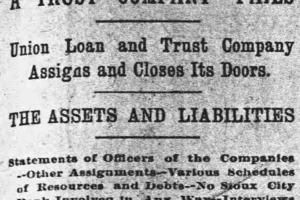
The Great Depression began with the stock market crash of 1929. According to the Library of Congress, in a period of ten weeks, stocks on the New York Stock Exchange lost 50 percent of their value. As stocks continued to fall during the early 1930s, businesses failed, and unemployment rose dramatically. By 1932, one of every four workers was unemployed. Banks failed, and life savings were lost, leaving many Americans destitute. The crisis spread from Wall Street to Main Street, closing factories, foreclosing farms, and forcing millions into poverty.
Key events unfolded in rapid succession:
- October 1929: The stock market crashes, triggering a decade-long economic downturn.
- 1930–1932: Unemployment soars; banks collapse; Hoovervilles—shantytowns named after President Herbert Hoover—spring up across the country.
- 1933: President Franklin D. Roosevelt takes office and launches the New Deal, a series of relief and recovery programs.
- 1936–1940: The Federal Writers’ Project and other New Deal agencies document the lives of ordinary Americans, leaving a rich archive of firsthand accounts.
How It Was Seen at the Time
Contemporaries understood the Depression as a profound moral and social crisis, not merely an economic one. The shame of unemployment and poverty was pervasive. Virginia Durr, who later became a civil rights activist, described the era in stark terms:
“It was a time of terrible suffering. The contradictions were so obvious that it didn’t take a very bright person to realize something was terribly wrong. Have you ever seen a child with rickets? Shaking as with palsy. No proteins, no milk. And the companies pouring milk into gutters. People with nothing to wear, and the were plowing up cotton.”
Durr’s words capture the bewilderment and anger many felt at the absurdity of poverty amid plenty. The prevailing mood was one of disillusionment with the old order, and a desperate hope for change.
Historical Snapshot
| Aspect | Detail |
|---|---|
| Date | 1929–1941 (the Depression era, with the U.S. entry into World War II ending it) |
| Place | United States, with global repercussions | People | Unemployed workers, farmers, bankers, President Herbert Hoover, President Franklin D. Roosevelt, and millions of ordinary Americans |
| What Happened | Stock market crash, bank failures, mass unemployment, and widespread poverty |
| Why It Mattered | It reshaped American government, society, and culture, and led to the New Deal and a new relationship between citizens and the state |
Eyewitness Accounts
The most powerful evidence of the Depression’s human toll comes from those who lived through it. The American Archive’s The Great Depression Interviews collection contains 195 raw interviews from the 1993 PBS series, featuring eyewitness accounts of key events. These interviews, along with the Federal Writers’ Project manuscripts held at the Library of Congress, preserve the voices of ordinary people—farmers, factory workers, domestic servants, and the unemployed.
Virginia Durr’s testimony, quoted above, is one such account. Another comes from a letter to President Roosevelt, collected in the Digital History archive, in which a citizen pleads for relief. These documents reveal not only the material deprivation but also the psychological weight of the era—the shame of accepting charity, the fear of eviction, and the determination to survive.
What People Knew at the Time
| What People Knew Then | What We Know Now |
|---|---|
| That the stock market crash of 1929 was a severe setback, but many hoped it would be temporary. | It was the beginning of a decade-long global depression, the worst in modern history. |
| That unemployment was high, but exact figures were often underestimated. | By 1932, one in four workers was unemployed, and in some cities the rate was far higher. |
| That banks were failing, but the full extent of the systemic weakness was not yet clear. | Thousands of banks closed, wiping out savings and deepening the crisis. |
| That the New Deal was controversial, with some seeing it as necessary relief and others as government overreach. | Historians now view the New Deal as a transformative set of programs that established the modern welfare state, though its effectiveness is still debated. |
Daily Life
Daily life during the Depression was defined by scarcity and improvisation. Photographs from the Farm Security Administration, such as the image of a “Hooverville” in Central Ohio (1938), show makeshift shelters built from scrap metal, wood, and cardboard. Families stood in breadlines, children went without milk, and the unemployed wore patched clothing. The Federal Writers’ Project documented the routines of the poor: women mending clothes, men searching for work, and children scavenging for coal. The shame of poverty was so acute that many refused relief, preferring to starve rather than admit failure. As one song from the era put it, “I’d Rather Not Be on Relief,” reflecting the stigma attached to government assistance.
Numbers at the Time
| Statistic | Value (Year) |
|---|---|
| Stock market loss (ten weeks after crash) | 50% of value (1929) |
| Unemployment rate | 1 in 4 workers (1932) |
| Bank failures | Thousands, wiping out life savings (1930–1933) |
| Hoovervilles | Hundreds of shantytowns across the U.S. (1930s) |
How Historians See It Today
Contemporary observers saw the Depression as a failure of capitalism and a test of democracy. Many believed it would end quickly; others feared revolution. Modern historians, drawing on the same primary sources, interpret the Depression as a structural crisis exacerbated by policy mistakes—the gold standard, the Smoot-Hawley Tariff, and the Federal Reserve’s contractionary policies. They also emphasize the resilience of ordinary Americans and the lasting impact of the New Deal, which created Social Security, unemployment insurance, and labor protections. The shift from seeing the Depression as a temporary downturn to a systemic crisis is a key historiographical development.
The primary sources of the Great Depression—letters, photographs, interviews, and diaries—do more than document suffering; they preserve the voices of a generation that endured the unthinkable. They remind us that history is not just a list of dates and figures, but a tapestry of human experience. In the words of Virginia Durr, the contradictions were obvious, and the suffering was real. To read these accounts is to understand that the Depression was not an abstraction, but a lived reality that shaped the American character for decades to come.
FAQ
What was the most common way Americans experienced the Great Depression?
Most Americans experienced the Depression through unemployment, poverty, and the daily struggle for food and shelter. Many lost their savings when banks failed, and families were forced to rely on breadlines, charity, and makeshift housing in Hoovervilles. Eyewitness accounts describe the shame and humiliation of poverty, as well as the resilience of communities.
How did the New Deal change the role of the federal government?
The New Deal, launched by President Franklin D. Roosevelt in 1933, established a permanent federal role in economic relief and social welfare. Programs like Social Security, unemployment insurance, and the Works Progress Administration provided direct aid and jobs, fundamentally reshaping the relationship between citizens and the state.






Leave a Reply