
Short Answer
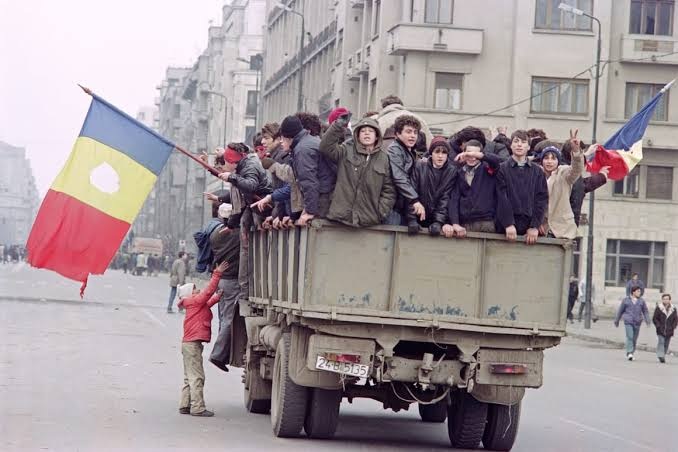
In the gray December of 1989, Romania was a nation holding its breath. For twenty-four years, Nicolae Ceaușescu had ruled with a blend of nationalist rhetoric and brutal repression, and the world watched as the last hard-line Communist leader of the Warsaw Pact faced a rising tide of resistance. The revolution began in the western city of Timisoara, where a crowd gathered to defend a Hungarian pastor from deportation. Within days, the uprising had spread to Bucharest, the army had turned against the dictator, and the state television station—once the mouthpiece of the regime—had become the voice of the revolution. Journalists on the ground, including an Associated Press correspondent who was shot three times, risked their lives to bring the world the truth. Their dispatches, filed from hospital beds and makeshift newsrooms, captured the raw emotion, the fear, and the improbable hope of a nation that had finally said “no.” This is the story of those reports, and the events they recorded.
What Happened?
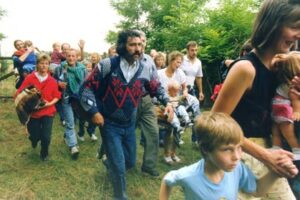
The Romanian Revolution of 1989 began in the city of Timisoara on December 16, when a crowd gathered outside the home of Laszlo Tokes, an ethnic Hungarian priest facing deportation for his sermons critical of Ceaușescu. According to a Washington Post report published on December 31, the crowd had been small for two days, but by noon on the 16th, it had grown into a full-blown demonstration. The mayor, Petre Mot, came to plead with the protesters, but they whistled and jeered him away. The following days saw violent clashes between the protesters and the Securitate, Ceaușescu’s secret police.
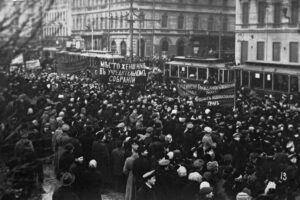
On December 21, Ceaușescu attempted to hold a mass rally in Bucharest to condemn the Timisoara uprising, but the crowd turned against him, chanting “Timisoara! Timisoara!” The next day, December 22, the army, which had been ordered to fire on the crowd, refused and instead joined the protesters. Ceaușescu and his wife, Elena, fled the presidential palace by helicopter, but were soon captured. The Washington Post reported on December 23 that “tens of thousands of unarmed demonstrators overwhelmed troops, who later joined them in putting down pockets of resistance around the capital.” Fighting continued through the night, as security forces loyal to Ceaușescu held out in the presidential office and in their apartments. The head of the Securitate, Gen. Iulien Vlad, called on his agents to surrender on the morning of December 23, but sporadic fighting persisted.
The television station, which had been the regime’s propaganda tool, was seized by the revolutionaries. According to a Los Angeles Times article of December 27, “Free Romania Television” became the heart of the struggle. On the air, poet Murica Dinescu shouted, “We’ve won. We’ve won.” The station broadcast images of Ceaușescu in captivity, confirming to a skeptical nation that the dictator had indeed been captured. He was eventually tried and executed on December 25, 1989, along with his wife. The revolution was over, but its cost was high: hundreds of people had been killed in Timisoara and Bucharest.
How It Was Seen at the Time
Contemporaries understood the revolution as a sudden, cathartic rupture. The Washington Post described the army’s switch as the turning point, noting that “the army and the people are in the streets together.” The mood was one of euphoria, mixed with fear and confusion. The LA Times captured the role of the television: “The station that once beamed the glory of Nicolae Ceaușescu to a numbed nation has become not only the voice, but the soul of the revolution.” People watched the broadcasts with a mixture of disbelief and hope. As the poet Dinescu shouted on air, “We’ve won. We’ve won.”
“The television station that once beamed the glory of Nicolae Ceaușescu to a numbed nation has become not only the voice, but the soul of the revolution that toppled his government and ended his life.” — Los Angeles Times, December 27, 1989
But the mood was also one of uncertainty. The AP correspondent John Daniszewski, who was shot three times in Timisoara on December 23, described the “hellish situation” in a dispatch from his hospital bed in Belgrade, Serbia. He wrote of “fierce resistance” and the ongoing struggle against the Securitate. The world watched with bated breath, not knowing whether the revolution would hold.
Historical Snapshot
| Aspect | Detail |
|---|---|
| Date | December 16–25, 1989 |
| Place | Timisoara and Bucharest, Romania |
| People | Nicolae Ceaușescu, Elena Ceaușescu, Laszlo Tokes, the Romanian Army, the Securitate, the people of Romania |
| What Happened | A popular uprising that began in Timisoara over the deportation of a Hungarian priest, spread to Bucharest, and toppled the communist regime. |
| Why It Mattered | The first successful revolt against a Warsaw Pact regime in 1989; ended the last hard-line communist dictatorship in Eastern Europe. |
Contemporary Newspaper Coverage
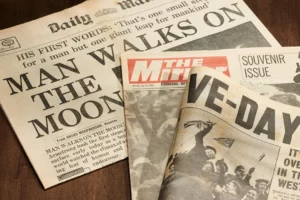
The world’s press descended on Romania in late December 1989. The Associated Press, The Washington Post, and the Los Angeles Times were among the first to report the events. The AP’s John Daniszewski, who was shot three times in Timisoara, filed his first-hand account from a hospital bed in Belgrade, Serbia, on December 26. The story, titled “AP Correspondent Shot 3 Times in Early Throes of Romanian Revolt,” was a harrowing firsthand narrative of the uprising. The Washington Post ran a front-page story on December 23, “Romanian Dictator Ceaușescu is Overthrown,” which described the army’s switch and the ongoing fighting. The Post also published a detailed account of the revolution’s start in Timisoara on December 31, “How Romania’s Bloody Revolution Got Its Start in Timisoara,” which reconstructed the events of December 16. The Los Angeles Times, in “Free Romania Television Fueled Nation’s Revolution,” highlighted the crucial role of the television station.
“The uprising against dictator Nicolae Ceaușescu gave rise to fierce resistance.” — John Daniszewski, AP, December 26, 1989
“At about 5 this morning, the head of the Securitate, Gen. Iulien Vlad, called on his agents to surrender, but fighting appeared to be continuing.” — The Washington Post, December 23, 1989
Eyewitness Accounts
The most direct eyewitness account from a journalist is that of AP correspondent John Daniszewski. He was shot three times while covering the events in Timisoara on December 23. His account, filed from a hospital in Belgrade, described the “hellish situation” in Romania and his brush with death. He wrote, “The uprising against dictator Nicolae Ceaușescu gave rise to fierce resistance.” His report was a first-hand account of the violence that marked the revolution’s aftermath.
The poet Murica Dinescu, who appeared on Free Romania Television, provided another eyewitness moment. According to the LA Times, “We’ve won. We’ve won,” he suddenly shouted into the camera. His words captured the euphoria and disbelief of the moment when the army switched sides and the regime crumbled.
The Washington Post’s Mary Battiata interviewed participants in Timisoara, describing the scene at the house of Laszlo Tokes: “The crowd began gathering two days earlier, but it had been small up to now.” She described the mayor’s attempt to disperse the crowd and the whistling and jeering that followed, capturing the mood of defiance.
What People Feared
At the time, the greatest fear was that the revolution would be crushed by the Securitate or that the army would reverse its decision and side with Ceaușescu. The Washington Post reported that fighting continued through the night, with troops attacking security forces loyal to the president. The head of the Securitate, Gen. Iulien Vlad, called for surrender, but the outcome was uncertain. The AP’s Daniszewski described the “hellish situation” and the constant danger. The people of Romania feared a civil war, a return to the Stalinist past, or a foreign intervention, as the Warsaw Pact had previously invaded Czechoslovakia in 1968. There was also fear that the revolution would be a bloodbath, with the army and the Securitate engaged in urban warfare. The fact that the army joined the people was a turning point, but it was not known until the last moment. The revolutionaries also feared that the Ceaușescu regime would execute the leaders, as they had done with other dissidents. The fear was palpable, as evidenced by the cautious tone of the reports.
Aftermath
The immediate aftermath of the revolution was the trial and execution of Nicolae and Elena Ceaușescu on December 25, 1989. The execution was broadcast on television, and the news was confirmed by the Free Romania Television. The new government, the National Salvation Front, took power, led by Ion Iliescu. The country began a slow transition toward democracy, but the legacy of the revolution was marred by the ongoing violence and the legacy of the Securitate. The revolution also inspired other uprisings across Eastern Europe, but it was the only one that ended with the execution of the dictator. The events were a watershed in the history of the Cold War, and the contemporary reports captured the chaos and the hope of those days.
The primary sources of December 1989—the dispatches of the AP, the Washington Post, and the Los Angeles Times—remain invaluable records of how the fall of Ceaușescu was experienced in real time. They show us the fear, the courage, and the uncertainty of a people who had toppled a tyrant but did not yet know what would follow. The revolution was not a single, clean event, but a messy, violent, and ultimately hopeful struggle. These reports remind us that history is not only what happened, but also what people thought was happening at the moment—and that the truth, as reported from the streets, is the first draft of history.
FAQ
What triggered the Romanian Revolution of 1989?
The revolution began in Timisoara on December 16, 1989, when a crowd gathered to protest the deportation of the Hungarian pastor Laszlo Tokes. The protest grew and spread, leading to a nationwide uprising.
How did the television station contribute to the revolution?
The television station, once a propaganda tool, was seized by the army and became the 'Free Romania Television.' It broadcast the revolution's success, the images of Ceaușescu in captivity, and the announcement of the new government, galvanizing the nation.
What was the role of the army?
The army initially was ordered to suppress the protesters but on December 22, it switched sides and joined the people, a turning point that led to the overthrow of Ceaușescu.
How did the press report the revolution?
Journalists from the Associated Press, The Washington Post, and the Los Angeles Times were on the ground, reporting from Timisoara and Bucharest. AP correspondent John Daniszewski was shot three times but filed a report from a hospital bed.




Leave a Reply