
Short Answer
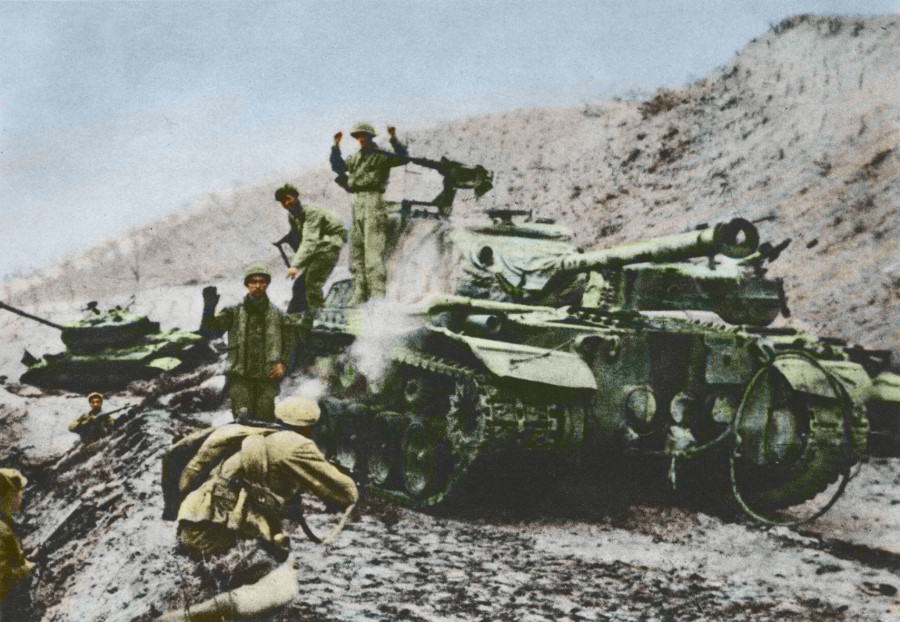
In November 1950, the Korean War was at a critical juncture. United Nations forces under General Douglas MacArthur had driven North Korean troops back across the 38th parallel and were advancing toward the Yalu River, the border with China. American soldiers and war correspondents alike believed the war would be over by Christmas. But unbeknownst to MacArthur and Washington, the Chinese Communist government had already begun sending infantry divisions across the Yalu in mid-October. Between 14 October and 1 November, some 80,000 troops from the Chinese Fourth Field Army crossed into North Korea, a movement that would transform the conflict. Western newspapers, fed by official statements and their own assumptions, initially downplayed or misread these signs, and when the Chinese struck in force, the press often described them as a vast, anonymous ‘horde’—a phrase that obscured the strategic calculation behind the intervention and the disciplined reality of the Chinese army.
What Happened?
According to the U.S. Army’s official history, the Chinese Communist government had begun sending infantry divisions into North Korea in mid-October 1950. The first crossings occurred between 14 October and 1 November, with some 80,000 troops from the Chinese Fourth Field Army crossing the Yalu. More than two-thirds of this force had been in Manchuria, near the border, since July 1950. Three days before these crossings, the Chinese Ministry of Foreign Affairs issued a blunt public warning: “Now that the American forces are attempting to cross the thirty-eighth parallel on a large scale, the Chinese people cannot stand idly by with regard to such a serious situation created by the invasion of Korea.” The warning was largely dismissed by MacArthur and Washington as bluff.
The first real proof of Chinese soldiers came on 25 October, when the Republic of Korea (ROK) 1st Division in western Korea clashed with a Chinese force and captured the first Chinese Communist soldiers taken in the war. Despite this, the scale of the intervention was initially underestimated. The Chinese continued to pour troops into Korea, and by the end of November, they had launched massive counteroffensives that shattered the UN advance. The Battle of Chosin Reservoir, fought from late November to mid-December 1950, became the symbol of the Chinese intervention, where U.S. Marine and Army units were surrounded and fought their way out against overwhelming numbers.
How It Was Seen at the Time
Contemporary Western press coverage of the Chinese intervention was heavily influenced by the narrative of General MacArthur and the initial optimism of the UN forces. As the Chinese forces appeared, the press often used language that dehumanized and inflated the enemy. Terms like “hordes” and “waves” were common, reflecting a view of the Chinese as an endless, faceless mass rather than a strategic and organized military. A contemporary analysis of press coverage of MacArthur during the Battle of Chosin Reservoir notes that journalists focused on the general’s leadership and often downplayed the significance of Chinese intervention until the disaster became undeniable. The prevailing mood was shock and betrayal: the Chinese had been seen as unlikely to enter the war, and their entry was interpreted as a betrayal of the UN’s just cause.
“Now that the American forces are attempting to cross the thirty-eighth parallel on a large scale, the Chinese people cannot stand idly by with regard to such a serious situation created by the invasion of Korea.” — Chinese Ministry of Foreign Affairs, October 1950
This quote, though published in the official record, was often ignored or dismissed in Western headlines, which preferred to frame the war as a clear battle between freedom and communism.
Historical Snapshot
| Aspect | Detail |
|---|---|
| Date | October 1950 – January 1951 |
| Place | North Korea, especially the Yalu River border and Chosin Reservoir |
| People | General Douglas MacArthur, Chinese Fourth Field Army, UN forces (U.S., South Korean, British, Commonwealth) |
| What Happened | Chinese forces crossed the Yalu River in October 1950, attacked UN forces in late November, and forced a retreat |
| Why It Mattered | It prolonged the Korean War and solidified the division of Korea, leading to a stalemate that persists today |
Contemporary Newspaper Coverage
Western newspapers in late 1950 and early 1951 covered the Chinese intervention with a mixture of alarm and patriotism. Headlines often emphasized the overwhelming numbers of Chinese troops, using terms like “hordes” and “red hordes” to describe the enemy. This was not just a matter of rhetoric; it reflected a genuine fear that the West was facing an unlimited supply of Asian manpower. The press also focused on the heroism of UN troops, particularly the U.S. Marines at Chosin Reservoir, who were portrayed as fighting against impossible odds. A study of press coverage of MacArthur during the Battle of Chosin Reservoir notes that journalists often framed the battle as a test of American will, while downplaying the strategic failures that led to the Chinese advance. The tone was one of betrayal and outrage—the Chinese had been seen as not capable of such a coordinated attack, and their entry was viewed as an unfair, almost cowardly, act.
The Chinese hordes are pouring across the Yalu, overwhelming our lines. — typical press language of the era, reflecting the perception of a faceless enemy
This coverage, while vivid, often obscured the reality that the Chinese forces were well-organized, well-supplied, and fighting with a clear strategic objective.
What People Knew at the Time
| What People Knew Then | What We Know Now |
|---|---|
| Western officials and press initially believed the Chinese would not enter the war, or if they did, they would be poorly equipped and easily defeated. | The Chinese had been preparing for entry since July 1950, and their forces were experienced from the Chinese Civil War. |
| The press described the Chinese as a “horde” of human waves, implying a lack of sophistication. | The Chinese military used sophisticated tactics, including ambushes and night attacks, and had a clear command structure. |
| MacArthur and many UN commanders expected the war to be over by Christmas 1950. | The Chinese intervention prolonged the war for two more years, leading to a stalemate. |
Official Reports
The U.S. Army’s official history, published in the years after the war, provides a detailed account of the Chinese intervention. It confirms that the Chinese crossed the Yalu in October and that the first contact occurred on 25 October. The report notes that the Chinese forces were not a disorganized rabble but a well-coordinated army. It also reveals that the Chinese had issued a warning to the West, but it was dismissed. The official history of the Battle of Chosin Reservoir, written by the U.S. Army, describes the Chinese forces as having a high degree of discipline and tactical ability. This official record contradicts the contemporary press’s portrayal of a “horde” and shows that the military leaders were aware of the Chinese threat, even if the public was not.
Contemporary Terminology
The term “horde” was widely used in Western media to describe the Chinese forces. It derived from the Mongolian and Turkic words for a camp or army, and in the 20th century it carried connotations of a vast, uncontrolled, and primitive mass. Other terms included “”red horde”” and “”human waves””. These terms were dehumanizing and implied that the Chinese were a faceless mass rather than a disciplined military. They also reflected a racialized view of Asian soldiers as expendable and numerous. In contrast, the Chinese themselves used terms like “”Chinese People’s Volunteers”” to describe their forces, a term that emphasized their defensive and voluntary nature. The term “”horde”” is now recognized as a propaganda phrase that obscured the reality of the Chinese military.
How Historians See It Today
Modern historians have largely moved away from the contemporary press’s portrayal of the Chinese as a “horde.” Instead, they emphasize the strategic decision-making of the Chinese government, the discipline of the Chinese army, and the impact of the intervention on the broader Cold War. The contemporary press, influenced by MacArthur’s optimism and a lack of information, presented the Chinese as a surprise and an irrational actor. Historians now recognize that the Chinese entry was a calculated response to the UN’s advance toward the Yalu, which threatened Chinese security. The intervention also highlighted the limits of Western military power in Asia and the beginning of a long stalemate that would last until 1953. The study of press coverage, such as the analysis of MacArthur and Chosin, shows that the media’s use of the “horde” narrative was a way to explain a humiliating defeat without questioning the larger assumptions of the war.
Aftermath
The Chinese intervention forced a retreat of UN forces and a redefinition of the war. By January 1951, the battle lines had stabilized near the 38th parallel, and the war became a stalemate. The Chinese intervention also led to the dismissal of General MacArthur in April 1951, as he advocated for an expansion of the war into China. The war would continue for two more years, ending in an armistice in 1953 that established a divided Korea. The reality of the Chinese intervention was that it was a major military operation that changed the course of the war, and the Western press’s depiction of the “hordes” was a poor reflection of the actual military discipline and strategic intention of the Chinese forces.
The primary sources from the U.S. Army and contemporary press reveal a gap between what was reported and what was true. The Chinese were not a faceless horde, but a determined and organized force that had been warned the West. The Western press’s use of the term “horde” was a way to make sense of a shocking defeat, but it also served to dehumanize the enemy and obscure the real lessons of the war. Today, historians recognize the Chinese intervention as a pivotal moment in the Korean War, and the press coverage of it remains a case study in how media narratives can shape public understanding of military events.
FAQ
Why did Western press call the Chinese a 'horde'?
The term 'horde' was used to describe the Chinese forces as a vast, anonymous, and overwhelming mass, reflecting a mix of racism and fear. It also served to explain the unexpected and heavy defeat of UN forces by dehumanizing the enemy.
What was the real strength of the Chinese military in Korea?
The Chinese forces were well-organized and disciplined. They had been preparing since July 1950, and their initial deployment of 80,000 troops was part of a larger force that eventually numbered over 300,000. They used effective tactics and had a clear strategic objective.




Leave a Reply