
Short Answer
In September 1941, the German army encircled Leningrad, cutting off all land routes to the city. For the next 900 days, the people of Leningrad faced a relentless blockade that would claim the lives of at least one million civilians. As the city sank into a frozen, starving twilight, ordinary men and women began to write. They kept diaries, scribbled letters, and composed memoirs—not as official records, but as intimate acts of survival. These documents, preserved in archives and private collections, offer a piercing, unmediated view of what it meant to endure the worst siege in modern history. Through their words, we see the daily struggle for a piece of bread, the chilling cold of unheated apartments, and the stubborn hope that the blockade would eventually break.
What Happened?
The siege of Leningrad began on September 8, 1941, when German forces severed the last land link to the city. The blockade lasted until January 27, 1944, a period of 900 days. During this time, the city was subjected to constant shelling, aerial bombardment, and, most devastatingly, a systematic famine. The Soviet government introduced rationing, but the rations were tragically insufficient. In the winter of 1941–42, the daily bread ration for non-workers fell to 125 grams—about the size of a matchbox. The first winter was the deadliest; thousands died from starvation, hypothermia, and disease. By the time the siege was lifted, at least one million civilians had died, many of them during the brutal first winter.
The diaries and letters produced during these years provide an unflinching chronicle of this catastrophe. The Presidential Library in St. Petersburg has collected and digitized many of these personal records, including diaries, letters, and memoirs. The collection includes the experiences of workers, housewives, schoolchildren, and soldiers, all of whom recorded their daily struggles with hunger and cold.
How It Was Seen at the Time
For the people of Leningrad, the siege was not a distant war but a personal, intimate battle against starvation. Official Soviet propaganda often downplayed the severity of the famine, emphasizing heroism and sacrifice. Yet the diaries tell a different story. As the Project MUSE article notes, “While the extent of food deprivation is heavily downplayed (even concealed) in Soviet propaganda, it is absolutely central in the diaries.” The diarists wrote about the gnawing pain of hunger, the search for food, and the loss of friends and family. They also wrote about their fears—not only of the enemy but of the winter, of the ration card, of the next day.
“I am so hungry, I have eaten everything. The children are crying, and I have nothing to give them.”
— From a diary of a Leningrad woman, 1942 (as preserved in the Presidential Library collection)
Letters & Diaries
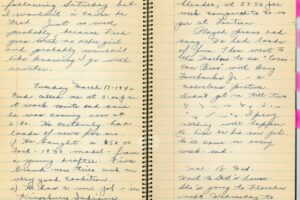
The most powerful primary sources from the siege are the diaries and letters written by the Leningradians themselves. These documents are not only a reflection of the lives of residents during the war but also a valuable source of information about the history of the city. They provide us with a unique insight into the experiences, feelings, and struggles of those who lived through the siege. The University of Pittsburgh Press book, Writing the Siege of Leningrad, highlights the diaries and memoirs of women, who formed the vast majority of the civilian population. Women recorded their double role as homemakers and as workers in the “public theater of war.”
One of the most famous diaries is that of Tanya Savicheva, a young girl who recorded the deaths of her family members in her notebook. Her final entry reads:
“All of them are dead. Only Tanya is left.”
Savicheva’s diary became a symbol of the siege’s human cost. Similarly, the diaries collected in the JSTOR volume The War Within: Diaries from the Siege of Leningrad offer a daily chronicle of the famine and the struggle to survive. These diaries are not only historical records but also literary works that give voice to the ordinary people who lived through the siege.
Daily Life
Daily life during the siege was a relentless cycle of survival. The day began with the hunt for bread. Bread lines formed early, often in the bitter cold, with people waiting hours for their ration. The bread itself was made with sawdust and other substitutes, but it was still the most precious commodity. People also scavenged for food—boiling leather, eating glue, and searching for anything edible. The winter of 1941–42 was especially harsh, with temperatures dropping to -30°C or lower. Apartments were unheated; people burned furniture and books for warmth. The streets were filled with the dead, who were often left in the snow because the living were too weak to bury them. Despite this, many continued to work in factories, hospitals, and as air-raid wardens. The diaries record these mundane yet tragic details: the number of people who died in a building, the price of a piece of bread, the effort to walk to work.
What People Knew at the Time
| What People Knew Then | What We Know Now |
|---|---|
| Official propaganda emphasized that the city would soon be relieved and that the Soviet army was breaking the blockade. | The blockade lasted 900 days and was not broken until January 1944. |
| Ration cards were issued, but the amounts were often reduced without notice. | The ration in the first winter was 125 grams of bread for non-workers, a figure that was kept secret. |
| People knew that hunger was killing thousands, but the official death toll was not publicized. | At least one million civilians died, most of them from starvation and disease. |
| The diaries recorded the daily deaths and the struggle for food. | These diaries are now used by historians to understand the full scope of the famine. |
Aftermath
When the siege was lifted on January 27, 1944, Leningrad was a city of ruins and corpses. The survivors were emaciated, many with permanent health problems. The city began a slow recovery, but the trauma remained. The diaries and letters that had been written during the siege were now preserved as memorials. Many survivors kept their diaries, and later they were collected by archives and libraries. The Presidential Library and other institutions digitized these records, ensuring that the voices of the besieged would not be forgotten.
How Historians See It Today
Modern historians have shifted the narrative of the siege from a heroic story of resistance to a more nuanced understanding of the human cost. The diaries and letters have been essential to this reinterpretation. They reveal the famine, the breakdown of social norms, and the moral ambiguities of survival. Historians now emphasize the importance of these personal records as a counterpoint to official propaganda. The University of Pittsburgh Press book, for example, highlights the role of women in maintaining the city’s fabric. The JSTOR volume The War Within uses the diaries to analyze the psychological effects of hunger and loss. Today, the siege of Leningrad is recognized not only as a military event but also as a humanitarian catastrophe, and the diaries are the primary source for understanding that catastrophe.
The diaries and letters of the siege of Leningrad are not just historical documents; they are a powerful reminder of human endurance and the will to document. They show us the past not as a series of facts but as a collection of individual lives, each with its own story of pain, courage, and hope. As we read them, we are reminded that history is not only about dates and battles but also about the people who lived through it.
FAQ
What was the daily bread ration during the first winter of the siege?
In the winter of 1941–42, the daily bread ration for non-workers was 125 grams, about the size of a slice of bread. For workers, it was slightly higher, but still insufficient to survive.
How many people died during the siege?
At least one million civilians died, many of them from starvation, cold, and disease. The exact number is difficult to determine, but the figure of one million is widely accepted.
What is the significance of Tanya Savicheva's diary?
Tanya Savicheva's diary is one of the most famous records of the siege. It contains a short list of the deaths of her family members, ending with 'All are dead, but Tanya is left.' It became a symbol of the suffering of the Leningrad people.







Leave a Reply