
Short Answer
In June 1935, Caroline Henderson, a farmer in Oklahoma, wrote to a friend in Maryland that she and her husband were trying to “tie a knot in the end of the rope and hang on.” For five years her household had fought the “devastating effects, first of the unprecedented drought, and then of the resulting dust storms.” The dust-covered desolation she called “No Man’s Land” was not a metaphor but the actual condition of the southern Great Plains, where millions of acres of topsoil had been lifted into the sky by relentless winds. As the storms grew more frequent and more terrible, farmers like Henderson, Kansas wheat grower Lawrence Svobida, and North Dakota diarist Ann Marie Low kept records of their daily struggles—letters, diaries, and memoirs that remain among the most vivid contemporary accounts of the Dust Bowl.
What Happened?
The Dust Bowl was a period of severe drought and wind erosion that struck the southern Great Plains of the United States during the 1930s. The drought began in the early years of the decade; Caroline Henderson wrote in 1935 that she and her husband had been fighting its effects for five years, placing the onset around 1930. The region—encompassing parts of Oklahoma, Kansas, Texas, Colorado, and New Mexico—had been heavily plowed for wheat cultivation, and when the rains failed, the exposed soil was lifted by high winds into enormous dust storms.
Lawrence Svobida, a wheat farmer in Meade County, Kansas, described the experience in his memoir Farming the Dust Bowl. He wrote of the gales that brought dust so thick that it “completely hid the sun,” with visibility ranging from nothing to fifty feet even when goggles were worn. Farmers planted crops year after year, only to see them destroyed by the elements. The storms, sometimes called “black blizzards,” swept across the Plains and beyond, reaching as far as the East Coast. By 1934, the dust had become a “gritty nightmare,” as Ann Marie Low noted in her diary, and the region’s agricultural economy was collapsing.
Key events in the chronology of the Dust Bowl include:
- 1930–1931: Severe drought begins across the southern Plains, leading to crop failures.
- 1932–1933: Intense dust storms become more frequent and widespread.
- 1934: The worst dust storm of the decade—the “Black Sunday” storm of April 14—sweeps the Plains, and Ann Marie Low’s diary records the “gritty nightmare.”
- 1935: Caroline Henderson’s letter describes the fifth year of struggle; the term “Dust Bowl” appears in newspapers, as Low noted in her diary.
- 1936: Lawrence Svobida publishes his memoir, calling for better farming methods and public regulation of land use.
How It Was Seen at the Time
Contemporary observers understood the Dust Bowl as a catastrophic natural disaster compounded by human error. Farmers spoke of a “deathly feeling” when they realized their crops were irrevocably gone. Lawrence Svobida wrote:
“When I knew that my crop was irrevocably gone I experienced a deathly feeling which, I hope, can affect a man only once in a lifetime. My dreams and ambitions had been flouted by nature, and my shattered ideals seemed gone forever.”
Caroline Henderson’s letters, published in The Atlantic in 1936, expressed a more stoic determination:
“Your continued interest in our effort to ‘tie a knot in the end of the rope and hang on’ is most stimulating.”
The prevailing mood was a mix of despair and resolve, with many farmers hoping that the drought would break and that their lives would return to normal. The newspapers, as Low noted, had already given the disaster a name: “the Dust Bowl.”
Historical Snapshot
| Aspect | Detail |
|---|---|
| Date | 1930–1939 |
| Place | Southern Great Plains (Oklahoma, Kansas, Texas, Colorado, New Mexico) |
| People | Farmers such as Caroline Henderson, Lawrence Svobida, and Ann Marie Low |
| What Happened | Severe drought and wind erosion produced massive dust storms, destroying crops and livelihoods |
| Why It Mattered | The Dust Bowl forced mass migration, led to government conservation programs, and became a symbol of ecological disaster |
Letters & Diaries
Personal correspondence and diaries offer an intimate view of the Dust Bowl. Caroline Henderson, a farmer in Oklahoma for 28 years, wrote a series of letters to a friend in Maryland that were published in The Atlantic in 1936. Her letters describe the transition from rain-soaked eastern Kansas to the “dust-covered desolation of No Man’s Land,” and the family’s attempts to “hang on” despite the relentless drought.
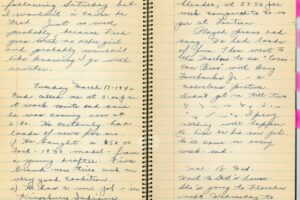
Ann Marie Low, a teenager living on a stock farm in southeastern North Dakota, kept a diary from 1927 to 1937. Her entry from 1934 reads:
“Life in what the newspapers call ‘the Dust Bowl’ is becoming a gritty nightmare.”
Her diary details the searing heat, the dust that reached the tops of fence posts, and the death of livestock, as well as the emotional toll on her family.
Eyewitness Accounts
Lawrence Svobida, a wheat farmer in Kansas, wrote a first-hand memoir, Farming the Dust Bowl, published in 1936. He described the beauty of the land before the drought:
“I believe any man must see beauty in mile upon mile of level land where the wheat, waist high, sways to the slightest breeze and is turning a golden yellow under a flaming July sun.”
But he also described the storms and the despair:
“With the gales came the dust. Sometimes it was so thick that it completely hid the sun. Visibility ranged from nothing to fifty feet, the former when the eyes were filled with dirt which could not be avoided, even with goggles.”
His account also urged for better farming methods and a public acceptance of the “sovereign rights of the states and the nation to regulate the use of land by owners . . . so that it may be conserved as a national resource.”
What People Feared
Farmers feared the loss of their crops and livelihoods, the death of their dreams, and the possibility that the land would never recover. Lawrence Svoboda’s “deathly feeling” captures the emotional devastation. Caroline Henderson’s “hang on” suggests a fear of giving up, of losing the family farm. There was also a broader fear that the entire region might become an uninhabitable desert, forcing everyone to leave. The dust storms themselves were terrifying—the darkness, the lack of visibility, the inability to breathe. The fear was rational, as the storms continued for years and forced many families to abandon their homes.
What People Expected Would Happen Next
Many farmers expected that the drought would break and the land would recover, as it had after previous dry spells. Caroline Henderson’s letters suggest a hope that they could continue farming if they could “hang on” long enough. Lawrence Svoboda, however, was more pessimistic and argued that without changes in farming methods and government regulation, the destruction would continue. He wrote of the need for “better farming methods—the only way, he felt, the destruction could be halted or confined.” Some expected that the government would intervene, and indeed by 1935 the federal government had established the Soil Conservation Service and had begun to buy up land in the Dust Bowl region. Others expected that they would have to leave, and indeed many did, leading to the mass migration of “Okies” and “Arkies” to California.
Contemporary Terminology
The term “Dust Bowl” was coined by journalist Robert Geiger in 1935, though it was not widely used until later. Ann Marie Low’s diary entry of 1934 refers to “what the newspapers call ‘the Dust Bowl’,” indicating that the term was already in circulation. “No Man’s Land” was used by Caroline Henderson to describe the desolate landscape of the Oklahoma panhandle. “Black blizzard” and “duster” were common names for the worst dust storms. “Gritty nightmare” was Low’s own phrase. The term “Okies” and “Arkies” were used for the migrants who left the region, often with a derogatory connotation. These terms reflect the era’s sense of catastrophe and displacement.
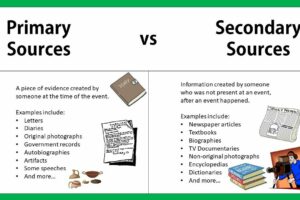
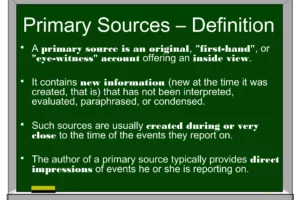
The primary sources from the Dust Bowl—letters, diaries, and memoirs—offer a unique window into the experience of a disaster that was both natural and man-made. They show the resilience of farmers who refused to give up, the fear and despair that threatened to overwhelm them, and the hope that the land would one day be restored. They also remind us that history is not just a series of facts and dates, but the lived experience of ordinary people.
FAQ
What was the Dust Bowl?
The Dust Bowl was a period of severe drought and wind erosion in the southern Great Plains of the United States during the 1930s. It resulted in massive dust storms that destroyed crops and forced many farmers to abandon their land. Contemporary accounts from farmers like Caroline Henderson and Lawrence Svobida describe the devastation and the emotional toll.
How did farmers describe the dust storms?
Farmers described the dust storms as terrifying and destructive. Lawrence Svobida wrote that the dust was so thick it 'completely hid the sun' and that visibility could drop to nothing. Ann Marie Low called it a 'gritty nightmare.' These descriptions highlight the severity and the fear the storms inspired.

Leave a Reply