
Short Answer
In the winter of 1955, the city of Montgomery, Alabama, was a place where the hum of buses and the shuffle of segregated seating were part of the everyday rhythm. On December 1, 1955, Rosa Parks, a seamstress and NAACP secretary, refused to give up her seat to a white man, and her arrest set off a chain of events that would transform the city’s streets, its homes, and its daily routines. Over the next 381 days, Montgomery’s Black residents organized a boycott of the city’s bus system, turning a simple act of defiance into a sustained community movement. Through the letters, diaries, and local newspapers of the era, we can glimpse what it was like to live through that time—the carpool schedules, the walking commutes, the heated letters to editors, and the quiet resolve that kept the protest alive.
What Happened?
On December 1, 1955, Rosa Parks, a seamstress and secretary of the Montgomery chapter of the National Association for the Advancement of Colored People (NAACP), was arrested for refusing to surrender her seat to a white passenger on a Montgomery city bus. Her arrest was the catalyst for a planned one-day boycott on December 5, 1955, which became a sustained protest. That day, the Montgomery Improvement Association (MIA) was formed, and a young minister named Martin Luther King Jr. was elected its president. The boycott lasted 381 days, ending on December 20, 1956, after the U.S. Supreme Court affirmed a federal court ruling that declared segregation on public buses unconstitutional.
- December 1, 1955: Rosa Parks is arrested.
- December 5, 1955: Boycott begins; MIA forms; King elected leader.
- December 1955: Carpool system established to replace buses.
- November 13, 1956: Supreme Court upholds lower court ruling against bus segregation.
- December 20, 1956: Boycott ends; buses desegregated.
How It Was Seen at the Time
Contemporaries saw the boycott as a direct challenge to the city’s segregation laws and a test of African American unity. In his December 5, 1955 speech, King urged supporters to “protest courageously, and yet with dignity and love.” Local newspapers like the Montgomery Advertiser printed both pro- and anti-boycott letters, revealing a divided city. White opponents framed the boycott as a disruption of order; Black participants saw it as a moral imperative. The April 1956 issue of Liberation magazine featured the boycott on its cover, signaling national interest.
“We are not advocating violence. We are not trying to make trouble. We are just trying to get the justice that we have a right to.” — Rev. Martin Luther King Jr., December 5, 1955
Historical Snapshot
| Aspect | Detail |
|---|---|
| Date | December 5, 1955 – December 20, 1956 |
| Place | Montgomery, Alabama, USA |
| People | Rosa Parks, Martin Luther King Jr., Jo Ann Robinson, Montgomery Improvement Association |
| What Happened | African American community boycotted city buses to protest segregated seating |
| Why It Mattered | Led to the desegregation of public transportation and elevated King as a national leader |
Contemporary Newspaper Coverage
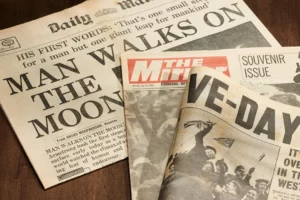
Local newspapers, especially the Montgomery Advertiser, covered the boycott extensively. The paper printed letters both for and against the boycott, reflecting the city’s divisions. A white boycott sympathizer wrote to the editor on December 12, 1955, expressing support. In contrast, anti-boycott letters denounced the protest. The Henry Ford Museum’s collection includes a scrapbook compiled by a Montgomery city bus manager, containing day-by-day newspaper clippings that show how citizens experienced the boycott through the press. These clippings reveal the evolving public narrative—from initial surprise to sustained coverage of carpool and legal battles.
“We are not going to ride the buses until we get what we want.” — anonymous Black participant quoted in the Montgomery Advertiser (December 1955)
Eyewitness Accounts
Rosa Parks herself left behind a carpool notebook, now held at the Library of Congress, in which she recorded contact information for some of the drivers. This notebook is a rare, tangible artifact of the boycott’s logistics. Another eyewitness account comes from Jo Ann Robinson, a professor at Alabama State College and a leader of the Women’s Political Council. In a May 21, 1954 letter to Mayor Gayle, she had already warned that “a majority of your citizens” were dissatisfied with bus conditions. Robinson later recalled the boycott’s early days, noting the community’s resolve.
“We are not to be pushed off the sidewalk. We are not to be pushed off the buses. We are going to be free.” — Jo Ann Robinson (from a 1955 speech)
Letters & Diaries
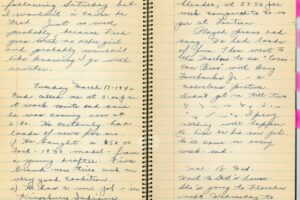
Letters and diaries from the period provide intimate insights. The letter from Jo Ann Robinson to Mayor Gayle on May 21, 1954, is a key primary source. In it, she complained about the humiliations of segregated seating and warned that “there has been talk of a boycott.” The carpool notebook of Rosa Parks is a diary-like record of daily organization. Additionally, the Montgomery Advertiser published letters from citizens—both pro- and anti-boycott—that reveal the emotional temperature of the city. One letter from a white sympathizer, published December 12, 1955, expressed support for the boycott’s goals, while others condemned it as a communist plot.
Daily Life
The boycott transformed daily routines. The Montgomery Improvement Association created an efficient carpool system. According to the Library of Congress, at one time 325 private cars gave free rides, and city churches provided 22 station wagons that operated hourly with drivers furnished by the churches. There were 43 dispatch stations and 42 pick-up stations, with scheduled service from 5:30 a.m. to 12:30 a.m. About 30,000 people were transported daily to and from work. Those who could not find a car walked miles to their jobs, often in the Alabama heat. The boycott also affected daily economic life—bus revenues dropped dramatically, and downtown businesses felt the impact as Black customers stayed away.
Numbers at the Time
| Statistic | Figure | Source |
|---|---|---|
| Private cars in carpool | 325 | Library of Congress |
| Station wagons provided by churches | 22 | Library of Congress |
| Dispatch stations | 43 | Library of Congress |
| Pick-up stations | 42 | Library of Congress |
| Daily passengers transported | 30,000 | Library of Congress |
| Duration of boycott | 381 days | General historical record |
Timeline
- May 21, 1954: Jo Ann Robinson writes to Mayor Gayle, threatening a boycott.
- December 1, 1955: Rosa Parks is arrested.
- December 5, 1955: Boycott begins; MIA formed; King delivers first speech.
- December 12, 1955: White sympathizer letter appears in Montgomery Advertiser.
- February 1956: Grand jury indicts 115 boycott leaders; King is tried and convicted.
- November 13, 1956: Supreme Court upholds desegregation ruling.
- December 20, 1956: Boycott ends; buses are integrated.
Key Documents
- Letter from Jo Ann Robinson to Mayor Gayle (May 21, 1954) — A pre-boycott warning about bus segregation.
- King’s December 5, 1955 speech — The first public address of the boycott.
- Code of the City of Montgomery, Ch. 6, sec. 10-11 — The segregation ordinance that was challenged.
- Supreme Court decision in Browder v. Gayle (1956) — Declared bus segregation unconstitutional.
Aftermath
The boycott ended on December 20, 1956, after the Supreme Court decision. Buses were desegregated, but the aftermath was not without violence—homes and churches were bombed. The MIA continued to work for civil rights, and King became a national leader. The boycott also inspired other civil rights campaigns, such as the sit-ins of 1960 and the Freedom Rides of 1961.
How Historians See It Today
Historians now view the boycott as a foundational moment in the civil rights movement, but they also emphasize that it was not a sudden event—it was the result of years of organizing and activism. Contemporary accounts often focused on King’s leadership, but modern scholarship highlights the roles of women like Jo Ann Robinson and the thousands of ordinary people who walked and carpooled. Historians also stress the boycott’s strategic use of community institutions, such as churches and the carpool network, as a model for later movements.
Common Misconceptions
Related Primary Sources
- Rosa Parks Papers, Library of Congress (including the carpool notebook)
- Montgomery Advertiser newspaper clippings (scrapbook, The Henry Ford)
- Daybreak of Freedom: The Montgomery Bus Boycott (edited by Stewart Burns)
FAQ
How did the Montgomery bus boycott carpool system work?
According to the Library of Congress, the MIA created a carpool system using 325 private cars and 22 station wagons provided by churches. There were 43 dispatch stations and 42 pick-up stations, operating from 5:30 a.m. to 12:30 a.m. About 30,000 people were transported daily to and from work.
What role did letters and diaries play in the boycott?
Letters and diaries provide firsthand accounts of the boycott's planning and daily life. For example, Jo Ann Robinson's letter to Mayor Gayle in 1954 warned of a boycott, and Rosa Parks's carpool notebook documents the logistics of the transportation system. Local newspapers also published letters from citizens, both supporting and opposing the boycott.





Leave a Reply