
Short Answer
At midnight on August 14–15, 1947, the British Indian Empire was formally partitioned into two sovereign dominions, India and Pakistan. The new borders, announced only two days later, cut through rivers, villages, and homes, triggering one of the most massive human convulsions in history. Within two months, more than twelve million people were displaced; a million lost their lives; and over seventy-five thousand women were abducted and raped. Yet for decades, the personal experiences of those who lived through this catastrophe remained largely hidden behind the high politics of empire and independence. Only through the meticulous collection of letters, diaries, and oral histories—many gathered decades later—have the voices of ordinary people emerged to reveal the human dimension of the Partition.
What Happened?
The Partition of India was the final act of British colonial rule. In 1947, the British government, weakened by World War II, hastened its exit from the subcontinent. The Indian National Congress and the Muslim League could not agree on a united India, and the British decided to divide the subcontinent along religious lines. On August 14, Pakistan was declared an independent state; on August 15, India followed. The new borders, drawn by the Radcliffe Commission, were not revealed until August 16–17, leaving millions of people suddenly on the “wrong” side of the new frontier.
The human consequences were immediate and devastating. According to Urvashi Butalia, in her seminal book The Other Side of Silence: Voices from the Partition of India, “Within the space of two months in 1947 more than twelve million people were displaced. A million died. More than seventy-five thousand women were abducted and raped. Countless children disappeared.” The NEH article, “The Story of the 1947 Partition as Told by the People Who Were There,” offers a slightly different estimate: “More than 14 million people were uprooted from their ancestral homes and an estimated 3 million perished due to violence, hunger, suicide, and disease.” These numbers, though varying, underscore the scale of the catastrophe.
- 14–15 August 1947: India and Pakistan become independent.
- 17 August 1947: The Radcliffe Line, the border, is formally announced.
- August–September 1947: Massive population exchanges, violence, and abductions occur, especially in Punjab and Bengal.
- 1947–1950: Continued migrations, especially of Hindus from East Pakistan (now Bangladesh) and Muslims from India.
How It Was Seen at the Time
For those living through the Partition, the event was experienced as chaos, betrayal, and terror. The borders were announced with little warning, and families were torn apart. The Dawn interactive project, “1947: Partition through the memories of people and places,” describes the scene: “The borders, only announced two days later, slashed through rivers, villages, fields and homes, displacing nearly 14 million people.” This sense of abrupt, arbitrary division was echoed by many survivors. One oral history from the project, collected by the 1947 Partition Archive, records a witness saying: “We never thought the line would come through our village. We woke up one morning and we were in Pakistan.” The prevailing mood was fear—fear of violence, fear of abduction, fear of losing everything. The language used by contemporaries was often one of “communal madness” and “butchery,” as communities that had lived together for centuries turned on each other.
Historical Snapshot
| Aspect | Detail |
|---|---|
| Date | August 1947 |
| Place | Indian subcontinent, particularly Punjab, Bengal, and the new borders of India and Pakistan |
| People | Hindus, Muslims, Sikhs, and other communities; refugees, women, children, and the lower castes |
| What Happened | Partition of British India into two independent states, accompanied by massive displacement, violence, and abductions |
| Why It Mattered | Created the modern states of India and Pakistan, caused a refugee crisis of millions, and left lasting social and political scars |
Eyewitness Accounts
Eyewitness accounts are the cornerstone of understanding the Partition’s human toll. The 1947 Partition Archive, an oral history project, has recorded hundreds of interviews with survivors. The NEH article describes the work of Manleen Sandhu, who recorded an oral history with Amarnath Kaustabh in Sultanpur Lodhi, Punjab, India. These interviews capture the personal stories of displacement, loss, and survival. The Dawn project also features a collection of 100 eyewitness accounts, including those of Rehmatullah Rad, Dr. Anand Raj Varma, Dr. Roshni Rustomji-Kerns, and Milkha Singh, the famous athlete who lost his family in the violence. These accounts are often raw and emotional, detailing the sudden violence and the long journeys to safety.
“The history books I read in my Florida high school spoke about Mahatma Gandhi’s peaceful marches as a means to independence in South Asia, but never mentioned the bloodletting and the unprecedented refugee crisis caused by the retreat of an empire bankrupted by World War II.” — NEH article, 2022
Urvashi Butalia’s The Other Side of Silence is another crucial collection. Through interviews conducted over a ten-year period, Butalia placed people—their individual experiences, their private pain—at the center of the Partition story. She gave voice to children, women, ordinary people, and the lower castes, who had been marginalized in the historical record.
Letters & Diaries
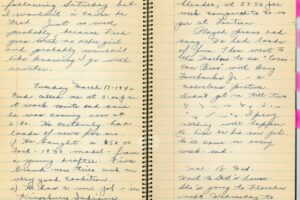
Personal letters and diaries offer a direct, intimate window into the everyday experiences of Partition. A 2025 study by Sheila Sengupta, “Revisiting the Partition of Bengal in 1947: An Epistolary Search for the Human Dimension,” analyzes letters written between 1946 and 1952. These letters, translated from Bengali and other languages, reveal the “everyday logistics of how Bengali people, mostly Hindus, experienced this event.” They document the fear, the plans to flee, the loss of property, and the pain of separation. The study notes that these letters also show the active presence of political organizations like the Hindu Mahasabha, which were often absent from high-level histories. Diaries, too, capture the daily grind of refugee camps, the search for missing relatives, and the struggle to rebuild a life.
What People Feared
Fear dominated the experience of Partition. The most acute fear was of violence and death, as communal riots swept through Punjab, Bengal, and other regions. Women feared abduction and rape; the figure of seventy-five thousand abducted women, cited by Butalia, was a terrifying reality. Families feared the loss of their homes and livelihoods. The uncertainty of the border—announced only days after independence—created a panic about where one belonged. Rumors spread quickly, often exaggerating the scale of violence, leading to preemptive flight. The fear of the unknown was as powerful as the actual violence. The oral histories collected by the 1947 Partition Archive are filled with stories of people who left their homes with only a few belongings, not knowing if they would ever return.
How Historians See It Today
Contemporary histories of Partition focused on the political negotiations between the Congress, the Muslim League, and the British. The human dimension was largely ignored, as the official records emphasized the “high politics” of state formation. However, since the 1990s, historians have shifted to a social and cultural approach, using oral histories, letters, and diaries to recover the experiences of ordinary people. Urvashi Butalia’s work is a landmark in this historiographical shift, as it places the voices of women, children, and lower castes at the center. Today, historians recognize that the Partition was not just a political event but a mass trauma that shaped the identities of millions. The emphasis on primary sources has also revealed the limits of official records, which often omitted the violence and the suffering. The “history from below” approach has transformed our understanding of the event, making the Partition a subject of memory and history.
Related Primary Sources
- The Other Side of Silence: Voices from the Partition of India by Urvashi Butalia (2000) – Based on a decade of interviews and archival work, this book is a key collection of eyewitness accounts.
- The 1947 Partition Archive – A digital repository of oral histories, photographs, and documents, accessible online.
- Dawn’s “1947: Partition through the memories of people and places” – An interactive project featuring 100 eyewitness accounts and historical photographs.
- Letters from the Bengal Partition (1946–1952) – Translated and analyzed in the University of British Columbia’s cIRcle repository.
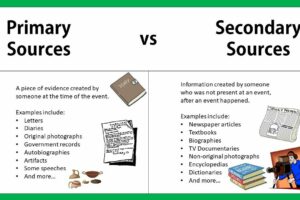
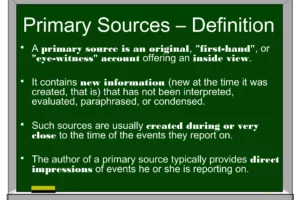
These sources provide a rich array of primary material for anyone seeking to understand the personal experiences of Partition.
In the end, the letters, diaries, and oral histories of the Partition are not merely records of suffering—they are acts of survival. They preserve the voices of those who witnessed the dissolution of a world, and they remind us that history is not only made by leaders but also by the millions of ordinary people who endured it. The primary sources reveal a truth that official documents often missed: the Partition was a human tragedy of immense proportions, and its echoes still resonate in the lives of millions today.
FAQ
What is the most reliable source for eyewitness accounts of the Partition?
There is no single source; a combination of oral histories, letters, and diaries is used. The 1947 Partition Archive and Urvashi Butalia's 'The Other Side of Silence' are among the most comprehensive collections, offering personal narratives from diverse survivors.
How did people document their experiences at the time?
People documented their experiences through letters, diaries, and photographs. Letters were often written in the immediate aftermath to relatives, while diaries recorded daily struggles. Oral histories were collected later, but they preserve the memories of those who lived through the events.
Leave a Reply