
Short Answer
In the quiet of an archive, a researcher unties a bundle of letters or opens a worn diary with faded ink. These personal documents seem to offer a living voice from the past—intimate, unguarded, and full of the texture of daily life. Yet, as historians and archivists have long known, letters and diaries are not simply transparent windows into history. They are crafted texts, shaped by the conventions of their time, the writer’s intentions, and the expectations of their intended readers. This guide explores how historians analyze these sources, what they can reveal, and the pitfalls to avoid when using them.
What Happened?
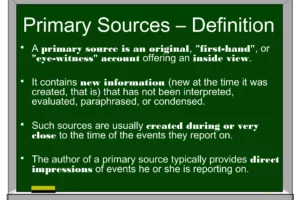
Letters and diaries are primary sources—documents created during the period under study. They offer a personal angle on history, giving voice to individuals often absent from official records, such as a World War I soldier in the trenches or a sweetheart on the home front. However, as the Roy Rosenzweig Center for History and New Media explains, these texts are not straightforward reflections of reality. They are “plain-spoken, lively, and full of details,” yet they follow the conventions of their time and must be considered in light of the writer’s motivations and biases.
Analyzing a letter or diary involves several levels of interpretation. The National Archives outlines a four-step process: meet the document, observe its parts, try to make sense of it, and use it as historical evidence. This means moving beyond the surface narrative to consider the document’s physical features, its creator, and its intended audience. For instance, a diary kept for personal reflection differs from one written with an eye toward future publication. A letter to a close relative may assume shared knowledge that the historian must reconstruct. The analysis requires asking questions about why the document was written, what it omits, and how it fits into the broader historical context.
How It Was Seen at the Time
When letters and diaries were first written, they were often viewed as private expressions of the self. As the historians at the Roy Rosenzweig Center for History and New Media observe, they “seem to emerge directly from the writer, fresh and intimate, bringing us close to who that person was.” This sense of intimacy has made them popular with readers and researchers alike. Yet even in the past, writers were aware that their words might be read by others, and they often shaped their narratives accordingly. For example, a soldier’s letter home might downplay the dangers of war to spare his family worry, while a merchant’s diary might record business dealings with an eye to posterity.
Historians have long recognized that these personal texts are not transparent. They are crafted artifacts, and their value lies in what they reveal about the writer’s world—its language, social relations, values, and expectations. As Steven Stowe, a historian at Indiana University, emphasizes, “Both letters and diaries seem to emerge directly from the writer, fresh and intimate,” but they also require careful interpretation to uncover the historical changes and continuities they capture.
Letters & Diaries: The Core Source
To analyze letters and diaries effectively, historians ask a series of questions. Who wrote the document, and what was their relationship to the intended reader? What was the purpose of the writing—to inform, persuade, confess, or remember? What is the tone and style, and how does it reflect the social and cultural norms of the time? As Stowe advises in his guide, “Making Sense of Letters and Diaries,” we must consider the writer’s motivations and the conventions of the genre. A diary may be a daily record, but it may also be a self-fashioning exercise, an attempt to present a particular version of the self to future readers.
“In an attic or an online archive, coming across personal correspondence and diaries can open a tantalizing window into past lives.” — Steven Stowe, Making Sense of Letters and Diaries (2002)
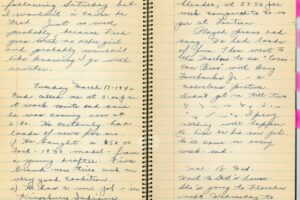
When reading such documents, it is crucial to note the physical details—the paper, ink, handwriting, and any annotations. These can reveal the material conditions of the writer and the way the document was produced. The role of the creator is equally important: a letter from a soldier to his mother carries a different weight than a letter to his commanding officer. The intended audience shapes the content and tone, and the historian must be aware of that.
What People Knew at the Time
The writers of letters and diaries knew their own lives and the events they recorded intimately, but they lacked the hindsight that historians have. They did not know how the story would end, nor did they have access to the broader documentary record that researchers can now assemble. The following table contrasts the knowledge of the original writers with the knowledge of historians today.
| What People Knew Then | What We Know Now |
|---|---|
| The immediate context of their own lives, the people they knew, and the events they witnessed firsthand. | The broader historical narrative, the outcome of events, and the long-term consequences. |
| The conventions of letter-writing and diary-keeping of their own era, including the expected forms and styles. | The historical evolution of those conventions, allowing us to identify deviations and innovations. |
| The intended audience and the purpose of the document, often unstated but known to the writer. | The actual readership and reception, which may differ from the writer’s expectations. |
| The writer’s own biases, fears, and hopes, though these may be implicit. | The biases and blind spots that are now visible through a wider lens of evidence. |
How Historians See It Today
Modern scholarship treats letters and diaries as complex primary sources, not as transparent records. Historians recognize that these documents are shaped by the writer’s social position, gender, class, and historical moment. They also understand that the act of writing itself is a performance—a way of constructing a self for an audience. As the University of Washington Libraries guide notes, “letters and diaries follow the conventions of their times and must be considered in light of the writer’s motivations and biases.”
Today, historians also use letters and diaries to recover the voices of ordinary people who are absent from official records. The digitization of collections has made these sources more accessible, allowing researchers to study patterns across many documents. Yet the same care is required: each document must be read critically, with attention to its unique circumstances.
Common Misconceptions
Related Primary Sources
Researchers can find letters and diaries in many archives and online collections. The University of Washington Libraries guide lists several digitized collections, and suggests using search terms such as “correspondence” or “diaries” in library catalogs. Many historical societies and special collections hold unpublished manuscripts. Some notable online resources include:
- Digitized collections on the Library of Congress website
- Archives of personal papers at university libraries, such as the Special Collections at the University of Washington
- Online databases like “Making of America” or “American Civil War Letters”
- National archives and local historical societies
FAQ
Why are letters and diaries considered primary sources?
Letters and diaries are primary sources because they are created at the time of the events they describe, by individuals who directly experienced those events. They provide firsthand testimony and personal perspectives, making them invaluable for historical research.
What should I consider when reading a diary?
When reading a diary, consider the writer's background, the intended audience (even if private), the purpose of the diary, and the conventions of diary-keeping in that era. Also note the physical features, the language used, and the context of the events recorded. Cross-check with other sources to verify accuracy and perspective.





Leave a Reply