
Short Answer
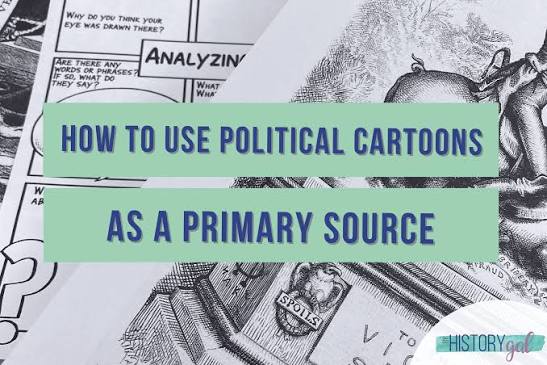
In the crowded pages of a nineteenth-century newspaper, a single drawing could stop a reader mid-sentence. Political cartoons—with their exaggerated figures, symbolic objects, and pointed labels—have been a fixture of public discourse since the eighteenth century. They are not mere comic relief; they are arguments, expressions of public opinion, and reflections of cultural assumptions. For historians, they offer a unique window into the past. But how does one “read” a cartoon as historical evidence? This article, drawing on the analytical methods developed by the Library of Congress and the National Archives, explores the practice of interpreting political cartoons, showing how they can be used to recover the attitudes, fears, and expectations of people at a given moment.
What Happened?
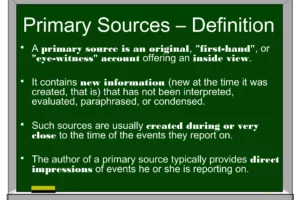
Political cartoons have appeared in newspapers and magazines for over three centuries, and historians have long recognized their value as primary sources. Yet, as the Civil War Era NC project notes, “Historians have traditionally privileged textual evidence over other types of sources.” In the latter half of the twentieth century, educators and archivists began to develop formal methods for teaching the interpretation of these non-textual sources. The Library of Congress, for example, has produced a teacher’s guide that breaks the process into three stages: Observe, Reflect, and Question.
The Library’s guide encourages students to begin by identifying details: “Describe what you see. What do you notice first? What people and objects are shown? What, if any, words do you see?” This stage is purely descriptive, noting everything in the image without interpretation. Next, the guide asks students to reflect and generate hypotheses: “What’s happening in the cartoon? What was happening when this cartoon was made? Who do you think was the audience? What issue do you think this cartoon is about? What do you think the cartoonist’s opinion on this issue is?” Finally, the question stage encourages students to ask “What do you wonder about… who?” to lead to further observations and reflections.
This three-step method is not merely an educational exercise; it is the core of historical analysis. The National Archives similarly stresses the need to understand the historical context of a cartoon: “What was happening at the time? Who are the main people in the cartoon? Why are those people important/whom do they represent? What are the artist’s intentions?” By applying these questions, a historian can unlock the meaning of a cartoon and its value as evidence.
How It Was Seen at the Time
Contemporaries understood political cartoons as vivid and persuasive sources. As the TeachingHistory.org guide observes, “Political cartoons are vivid primary sources that offer intriguing and entertaining insights into the public mood, the underlying cultural assumptions of an age, and attitudes toward key events or trends of the times.” The National Archives adds that cartoons “can give us a unique perspective on a particular event and throw light on public attitudes and values.”
“Political cartoons are vivid primary sources that offer intriguing and entertaining insights into the public mood, the underlying cultural assumptions of an age, and attitudes toward key events or trends of the times.” – TeachingHistory.org
These sources were not read as literal representations of reality, but as persuasive images designed to influence the reader. The cartoonist used symbols, exaggeration, and sometimes humor to make a point. As the Library of Congress guide notes, cartoons contain details that “look different than it would be in a photograph” and often include “symbols” and references to other works of art or literature. Understanding these devices is essential to interpreting the cartoonist’s message and the public’s reaction.
Historical Snapshot
| Aspect | Detail |
|---|---|
| Date | 1948 |
| Place | United States |
| People | President Harry Truman, Secretary of State George Marshall, cartoonist Clive Uptton |
| What Happened | President Truman signed the Economic Recovery Act, known as the Marshall Plan, a major program of foreign aid to Europe. |
| Why It Mattered | The Marshall Plan was a pivotal moment in the early Cold War, and the cartoon by Clive Uptton (Catalogue ref: INF 3/1295) captures the political debate over its implementation. |
What People Knew at the Time
| What People Knew Then | What We Know Now |
|---|---|
| Contemporaries were aware of the immediate political debates over the Marshall Plan, including arguments about its cost and its role in containing the Soviet Union. | Historians now have the benefit of hindsight, understanding the long-term economic and geopolitical consequences of the Marshall Plan, including its role in the reconstruction of Western Europe and the strengthening of the Western alliance. |
| Readers of the cartoon would have recognized the caricatures and symbols, such as the figure of Marshall and the imagery of Europe, as representing the aid program. | We can analyze the cartoon’s visual language and the cartoonist’s perspective, but we must also consider the broader historical context that was not fully known to contemporaries. |
What the Sources Got Wrong
Political cartoons, by their nature, are not neutral records. They are arguments, often exaggerated and one-sided. The Library of Congress guide asks, “What do you see that looks different than it would in a photograph?” – a reminder that cartoons intentionally distort. They may oversimplify complex issues, rely on stereotypes, or present a caricature of a person or group. For example, the cartoon about the Marshall Plan, while capturing a real event, may have simplified the motivations of the United States or the situation in Europe. Historians must therefore treat cartoons with caution, using them to understand how a particular group or individual saw a situation, but not as objective fact. The National Archives notes that to understand a cartoon, we need to know its historical context, and the cartoonist’s intention. Even then, the cartoon may contain errors or exaggerations that were accepted at the time.
How Historians See It Today
Modern historians use political cartoons as valuable primary sources, but they interpret them with a critical eye. As the TeachingHistory.org guide explains, cartoons offer “intriguing and entertaining insights into the public mood, the underlying cultural assumptions of an age, and attitudes toward key events or trends of the times.” The National Archives similarly emphasizes that cartoons “can give us a unique perspective on a particular event and throw light on public attitudes and values.” However, historians today are careful to place cartoons in their full historical context, asking questions about the audience, the artist’s intent, and the political climate. They also recognize that cartoons are not just reflections of public opinion, but also contribute to shaping it. The Library of Congress’s method of observation, reflection, and questioning is now a standard approach in history classrooms, demonstrating that cartoons are valuable evidence that must be interpreted with the same rigor as any other primary source.
Common Misconceptions
Political cartoons are just jokes and not serious historical evidence.
As the National Archives notes, cartoons “can give us a unique perspective on a particular event and throw light on public attitudes and values.” They are serious primary sources that historians use to understand the mood and assumptions of an era.
A cartoon is a literal representation of reality.
The Library of Congress guide highlights that cartoons often contain symbols, exaggerations, and elements that are different from a photograph. They are not literal, but rather a commentary on reality.
Cartoons are only about humor.
While they can be funny, political cartoons are primarily persuasive. The Library of Congress asks, “What methods does the cartoonist use to persuade the audience?” indicating that their purpose is to influence opinion.
Anyone can interpret a cartoon without historical context.
The National Archives states that to understand a cartoon, you need to know its historical context, including the people and the events of the time. Without context, the cartoon’s meaning is lost.
Related Primary Sources
- Library of Congress Teacher’s Guide: Analyzing Political Cartoons – https://www.loc.gov/static/programs/teachers/getting-started-with-primary-sources/documents/Analyzing_Political_Cartoons.pdf – A practical guide with sample questions for analyzing cartoons.
- National Archives (UK) – Working with Cartoons – https://www.nationalarchives.gov.uk/education/students/working-with-cartoons/introduction/ – An introduction to using cartoons as historical sources, with a specific example.
- Civil War Era NC – How to Analyze Political Cartoons – https://cwnc.omeka.chass.ncsu.edu/exhibits/show/tutorial-cartoons/how – A tutorial that explains the challenges of reading political cartoons and provides a checklist.
- TeachingHistory.org – Interpreting Political Cartoons in the History Classroom – https://teachinghistory.org/teaching-materials/teaching-guides/interpreting-political-cartoons-in-the-history-classroom/ – A lesson guide that introduces a framework for analyzing cartoons.
FAQ
What are the key steps in analyzing a political cartoon as historical evidence?
The Library of Congress outlines three steps: Observe (describe details), Reflect (hypothesize about the cartoon's meaning and context), and Question (ask further questions to deepen the analysis). The National Archives also stresses the importance of understanding the historical context, the main figures, and the artist's intention.
Why are political cartoons considered valuable primary sources?
Political cartoons offer a unique perspective on the public mood, cultural assumptions, and attitudes toward key events of their time. As TeachingHistory.org states, they provide 'insights into the public mood, the underlying cultural assumptions of an age, and attitudes toward key events or trends of the times.'






Leave a Reply