
Short Answer
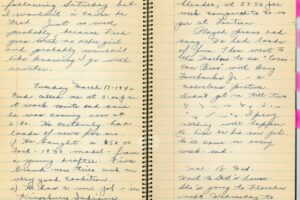
In a quiet archive of a university library, a researcher opens a worn leather notebook. The pages are brittle, the ink faded, but the words leap across time. “Diaries are often intensely personal sources which allow us to not only think about what individuals recorded about their lives, but how they decided to record it, and why they deemed it worthy enough to record,” notes the Churchill Archives Centre. This volume is not a neutral account of events but a crafted artifact of a self—a place where a person poured out fears, joys, and daily routines. To analyze a diary as a historical source is to treat it as a lens onto an individual’s inner world, to ask why certain moments were recorded and others left out. It is a practice that has evolved from simple fact-mining to a rigorous examination of context, subjectivity, and silence. Drawing on the guidance of archival scholars and historians, this article offers a path through the intimate terrain of diaries, showing how they are read, questioned, and used to reconstruct the past.
What Happened?
Diaries have been kept for centuries, from the spiritual journals of the 18th century to the wartime notebooks of the 20th century. The systematic analysis of diaries as historical evidence, however, is a relatively modern practice. In earlier eras, historians often treated diaries as transparent windows onto the past, reading them for dates, names, and events without questioning the author’s perspective. Yet as the historical profession matured, scholars began to recognize that diaries are not neutral. They are, in the words of one oral history resource, “not neutral; they reflect subjectivity, bias, and selective memory.”
Modern diary analysis begins with a careful inspection of the physical object itself. The Archives & Primary Sources Handbook advises researchers to ask: “What is the format of the diary? Typically, diaries are notebooks full of pages for the owner to fill with information. Some are created specifically to be diaries; they may be bound with a lock for privacy, include dated pages for the entries, and feature cover designs that…” These physical clues reveal the diarist’s intentions—whether they wrote for themselves or for a future reader. Steven Stowe, in his guide to letters and diaries, emphasizes that historians must consider “what questions to ask when reading these personal texts,” including what the diarist chose to record, why, and how the entries were shaped.
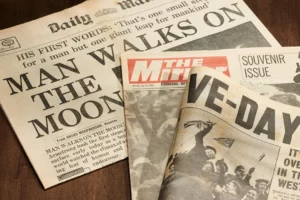
The analysis then moves to the content, cross-referencing the diary with other primary sources—letters, newspapers, official records—to verify claims and fill in gaps. As the oral history guide notes, “When analyzed with attention to context, purpose, and cross-referencing, diaries and journals can provide unparalleled insights into social norms, historical consciousness, and cultural change.”
How It Was Seen at the Time
For the diarists themselves, the diary was often a private refuge. The Churchill Archives Centre observes: “Diarists can use their volumes to mark the passage of time and reflect on their own mortality – a reflective space for introspection and an exploration of the self.” Many wrote without any expectation of publication, treating the diary as a confidant. They recorded daily routines, emotional upheavals, and observations of their world. Contemporaries understood the diary as a personal record, not a public document.
Early historians, however, saw diaries as a treasure trove of facts. They quoted from them liberally, assuming that the diarist’s words were a faithful record of events. This perspective ignored the diary’s constructed nature. As the oral history resource puts it, “Diaries are not neutral; they reflect subjectivity, bias, and selective memory.” The prevailing mood among many contemporary readers was that a diary was a direct line to the past, a window onto the everyday lives of ordinary people. But even at the time, some scholars warned that diaries must be read with caution, understanding the writer’s circumstances and purpose.
What People Knew at the Time
To understand a diary, it is crucial to distinguish between what the diarist knew and what historians know now. The diarist had intimate knowledge of their own life—their routines, emotions, and immediate surroundings—but they often lacked the broader context that historians bring. The following table illustrates this comparison:
| What People Knew Then | What We Know Now |
|---|---|
| Their daily routines, family life, and local events in vivid detail. | Historians reconstruct these details from the diary but also place them in wider social, economic, and political contexts. |
| Personal emotions, fears, and hopes, often expressed without self-censorship. | We can infer emotional states but must recognize that the diary itself shapes the expression of feeling. |
| Limited knowledge of distant events, relying on rumors and newspapers. | We have access to multiple sources, allowing us to verify or correct the diarist’s claims. |
| The diarist’s own biases and blind spots were invisible to them. | Modern historians can identify these biases by comparing the diary with other evidence. |
Letters & Diaries
Diaries are a form of personal writing that demands careful analysis. The first step is to examine the diary’s physical form and structure. As the Archives & Humanities Center Handbook advises, researchers should ask: “What is the format of the diary? Typically, diaries are notebooks full of pages for the owner to fill with information. Some are created specifically to be diaries; they may be bound with a lock for privacy, include dated pages for the entries, and feature cover designs that…” These details reveal whether the diarist intended to keep the diary private or to share it with a wider audience.
Next, consider the diary’s content and style. Steven Stowe’s guide encourages historians to ask: “What questions to ask when reading these personal texts?” These include: What events does the diarist choose to record? What is left out? How does the diarist describe other people? What language does the diarist use? The diary is not a mere chronicle but a self-portrait. As the Churchill Archives Centre notes, “Diaries can be an archive of thoughts and feelings which the diarist might not be able to express in any other way.”
“Diarists can use their volumes to mark the passage of time and reflect on their own mortality – a reflective space for introspection and an exploration of the self.” — Churchill Archives Centre
What the Sources Got Wrong
No diary is a perfect record. Diarists make mistakes, exaggerate, and omit facts. They may misremember dates, misquote conversations, or exaggerate their own role in events. The oral history guide warns that “diaries are not neutral; they reflect subjectivity, bias, and selective memory.” For example, a soldier’s diary might downplay the chaos of battle, or a politician’s diary might overstate their own wisdom. These errors are not deliberate falsehoods but the natural result of human memory and perspective.
Modern historians correct these errors by cross-referencing with other sources—official reports, newspapers, and letters from other people. If a diary claims a certain event occurred on a certain day, but a local newspaper gives a different date, the historian must weigh the evidence. The diary might have been written from memory, or the diarist might have been confused. The historian must also consider that the diarist might have omitted events that were too painful or too trivial. By identifying these gaps and biases, the historian can use the diary more effectively.
How Historians See It Today
Modern historians treat diaries as complex artifacts, not as transparent records. They understand that a diary is a self-conscious construction, shaped by the diarist’s purpose, audience, and context. As the oral history guide notes, “when analyzed with attention to context, purpose, and cross-referencing, diaries and journals can provide unparalleled insights into social norms, historical consciousness, and cultural change.”
Today, historians analyze diaries in layers. First, they examine the diary as a physical object—its binding, paper, and ink—to understand the circumstances of its creation. Second, they read the text closely, noting the diarist’s language, omissions, and emotional tone. Third, they place the diary in a broader historical context, cross-referencing with other primary sources. This approach contrasts with earlier historians who read diaries simply for facts. The shift reflects a broader movement in the discipline toward understanding the past through the eyes of contemporaries, while remaining aware of the limitations of those eyes.
Common Misconceptions
In the end, analyzing a diary as a historical source is an act of interpretation, not just reading. The diary offers an intimate connection to the past, but it is a connection that requires careful, critical engagement. By asking questions about the diary’s form, content, and context, historians can unlock the thoughts and feelings of those who came before us, while also recognizing the limits of what can be known. The primary sources—the diaries themselves—are the foundation of this work, and they continue to reward those who approach them with both curiosity and rigor.
FAQ
How do I start analyzing a diary as a historical source?
Begin by examining the diary’s physical format—its binding, dates, and cover—to understand its purpose. Then read the entries closely, noting what the diarist records, omits, and how they express themselves. Finally, cross-reference with other primary sources to verify facts and identify biases.
What are the common pitfalls when using a diary as evidence?
The main pitfalls include treating the diary as neutral truth, ignoring the diarist’s subjectivity, and failing to cross-check with other sources. Diaries can contain errors, exaggerations, and selective memory, so they must be read critically.





Leave a Reply