
Short Answer
In the summer of 1951, somewhere in Korea, a young soldier named Harold Mulhausen sat down to write to his wife. He later recalled, “My wife wrote almost every day…she wrote about the family, what she was doing, about our life when I return, what was happening around the city, and our love for each other…” That exchange of letters was the lifeline that tied the front lines of the Korean War to the kitchens and living rooms of America. For the men and women serving in Korea between 1950 and 1953, letters were not just communication; they were a daily ritual, a shield against loneliness, and a window into the world they had left behind. The war itself—officially a “police action”—was a brutal, grinding conflict that would claim nearly as many American combat deaths in three years as the Vietnam War did in ten. Yet for many at home, the experience of the soldier was filtered through these fragile, censored pieces of paper, which carried both the mundane details of camp life and the unspeakable horrors of the front.
What Happened?
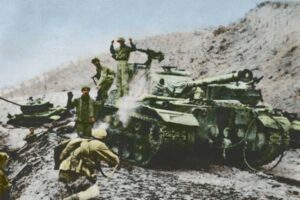
The Korean War began on June 25, 1950, when North Korean forces crossed the 38th parallel, and it ended with an armistice on July 27, 1953. American and other United Nations forces fought alongside South Korea to repel the invasion. The war was a brutal, seesaw conflict, with the front line moving up and down the peninsula. Soldiers endured extreme cold, heat, and the constant threat of death. For the men of the U.S. Army, such as William Dannenmaier, who served from December 1952 to January 1954, the war was a series of patrols, firefights, and holding positions. Dannenmaier served as a radioman and later a radio scout with the Fifteenth Infantry Regiment, and his memoir, We Were Innocents, captures the daily grind of the infantryman. The war was not just a battle against the enemy; it was also a battle against boredom, fear, and the elements. As the dissertation by Luke Macauley notes, the soldiers filled the tedious hours between firefights and company duties by writing V-mail letters to loved ones back home. These letters were the primary means by which the frontline soldier maintained contact with the world he had left behind.
How It Was Seen at the Time
For the soldiers and their families, the letters were a window into the war. They were often upbeat, even when the reality was grim. Macauley’s analysis of American servicemen’s letters from Korea shows that the letters served to reassure the home front and to preserve a sense of normalcy. Harold Mulhausen’s wife wrote about “our life when I return,” a future that both of them hoped for. The letters were a shared fantasy of a life after the war. Yet they also contained the mundane details of daily life—the food, the weather, the mail call. The prevailing mood in the letters was one of endurance and homesickness. The soldiers often expressed a desire to be home, but they also accepted their duty. As Dannenmaier wrote in his memoir, he was “eager to serve a cause in which he fervently believed—the safeguarding of South Korea from advancing” (the communists). The letters reflected that mix of duty and longing.
Letters & Diaries
The most personal records of the Korean War are the letters and diaries that soldiers wrote. Bob Spiroff, a platoon sergeant with the First Cavalry, wrote V-mail letters to his wife, Cassie, from 1950 to 1951. These letters, preserved on the Korean War Educator website, are a testament to the daily routine of writing. Spiroff described the tedium of the war and the small comforts of mail call. John W. Harper, who commanded a rifle platoon with the First Marine Division in 1951, wrote letters to his father that were published by LIFE magazine in 1951 and later by LIFE Books in 1958. In his book Tent Pegs and 2nd Lieutenants, Harper described the assault on a North Korean redoubt and the daily realities of small-unit leadership. These letters and diaries are not just records of events; they are expressions of the human spirit under duress. They show how men coped with fear, boredom, and loss.
Eyewitness Accounts
Eyewitness accounts from the front line come in the form of letters, diaries, and later memoirs. William Dannenmaier’s We Were Innocents is a rich eyewitness account, based on his service from 1952 to 1954. The book was praised by Stars and Stripes as “a richly textured picture of an infantryman’s life in Korea.” Dannenmaier’s account includes the cold of winter, the heat of summer, the constant patrols, and the sudden, terrifying firefights. He wrote about the fear of being killed and the camaraderie of the men in his unit. Another eyewitness, Bob Spiroff, wrote in his letters to his wife about the freezing conditions and the loss of friends. These accounts, written in the moment or shortly after, give us a visceral sense of what the war was like for the men who fought it.
Daily Life
Daily life for a soldier in Korea was a mix of boredom and terror. As Macauley’s dissertation describes, the soldiers wrote letters frequently, often every day, to their wives, parents, and friends. The letters were written on V-mail, a special form that was photographed and reduced to microfilm for shipment, saving weight and space. The soldiers also received mail from home, which was a major morale booster. The letters were the primary entertainment, along with cards, reading, and the occasional USO show. The food was often poor, and the weather was a constant enemy. In the summer, the heat was oppressive; in the winter, the cold was brutal, with frostbite a constant threat. The soldiers were also aware of the racial and cultural differences between them and the Korean people. Macauley’s dissertation notes that some soldiers expressed compassion for the Korean civilians, while others were aloof or racist. The daily routine was also punctuated by the threat of combat, which could come at any moment.
Contemporary Terminology
The language used by soldiers and the public reflected the era. The war was officially called a “police action” because the United States never declared war; it was a United Nations action. The term “V-mail” was used for the letters that were microfilmed. Soldiers used military jargon such as “foxhole,” “mortar,” “patrol,” and “the front.” The term “G.I.” was common for the American soldier. The soldiers also used slang for the enemy, often calling them “Gooks,” which is now considered offensive. The term “police action” was itself a misnomer, as it was a full-scale war. The soldiers themselves often called it “the Korean War” or “the Forgotten War.”
Numbers at the Time
| Aspect | Detail |
|---|---|
| American combat deaths | Almost as many in three years as the Vietnam War did in ten (Dannenmaier, 2000) |
| Duration of war | June 25, 1950 – July 27, 1953 |
| Service branch example | U.S. Army, 15th Infantry Regiment (Dannenmaier) |
| Letter format | V-mail (photographed and microfilmed) |
| Typical letter frequency | Almost every day (Harold Mulhausen) |
How Historians See It Today
Historians today view the Korean War as a forgotten war, overshadowed by World War II and Vietnam. But the letters and diaries of the soldiers provide a unique window into the experience of the war. Macauley’s dissertation, for example, analyzes these letters to understand how soldiers coped with combat, the Korean people, and the weather. Modern scholarship emphasizes the importance of these primary sources in understanding the social and cultural history of the war. While the letters were often censored and self-censored, they still reveal the soldiers’ attitudes and emotions. Historians also note that the war was a “police action” that set the stage for the Cold War. The letters show that soldiers were often confused about the war’s purpose, but they still fought for their comrades and their country.
The letters and diaries of the Korean War are not just artifacts; they are the voices of men who lived through a brutal conflict. They remind us that the war was not just a geopolitical event, but a human one. The letters tell of love, fear, boredom, and hope. They show us that even in the midst of the “Forgotten War,” there were men who remembered the world they were fighting for. The primary sources, from the V-mail letters to the published memoirs, continue to speak to us today, offering a personal history of a war that is too often remembered only as a footnote.
FAQ
Why were letters so important to soldiers during the Korean War?
Letters were the primary connection to home. They provided emotional support, boosted morale, and helped soldiers maintain a sense of normal life. They also served as a record of the war for the families, who often knew little about the conflict.
What was V-mail?
V-mail was a system used by the U.S. military during World War II and the Korean War to reduce the cost and weight of mail. Letters were written on a special form, photographed, and reduced to microfilm, then printed out at the destination. This allowed for faster and cheaper transport.
Did the soldiers' letters reflect the actual danger of combat?
Many soldiers self-censored their letters, avoiding graphic descriptions of combat to protect their families and to maintain morale. However, some letters did mention fear, cold, and death. The letters often focused on daily routine and the hope of returning home.










Leave a Reply