
Short Answer
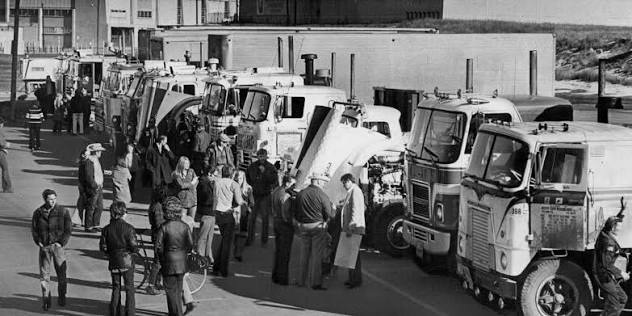
In the chaotic August of 1973, the streets of Santiago were quieter than usual. The truckers’ strike that had begun in October 1972 had reached a critical point, and the Chilean government was calling it “catastrophic.” The New York Times reported on August 18, 1973, that the strike had gripped the country’s transport and commerce, leaving shelves empty and the economy paralyzed. The strike was not merely a labor dispute; it was a central force in the political crisis that would culminate in the military coup of September 11, 1973, and the death of President Salvador Allende.
What Happened?
The truckers’ strike began in October 1972, as a response to grievances over freight rates and the scarcity of spare parts. According to a memorandum from the Executive Secretary of the Department of State to the President’s Assistant for National Security Affairs, dated October 16, 1972, the strike started in southern Chile and spread to the more populous central zone. The government’s moves to counteract the strike—jailing key union leaders, impounding trucks, and declaring zones of emergency—appeared to stiffen resistance and gain sympathy from other groups. Shopkeepers and small businesses joined the strike with at least 65 percent effectiveness, and some professional groups, including engineers and doctors, publicly indicated they might follow suit. The opposition political parties announced their support of the strike. While President Allende called for moderation, he also extended the zones of emergency.
The strike continued intermittently throughout the following months, exacerbating the economic crisis. By August 1973, the situation had become dire. The New York Times reported on August 18, 1973, that the government described the strike as “catastrophic,” with the economy crippled by the lack of transport. The strike had become a symbol of the broader crisis facing Allende’s government, which was also grappling with hyperinflation and shortages.
On September 11, 1973, the armed forces under the command of General Augusto Pinochet launched a coup. The Economist, reporting on September 15, 1973, described the bombing and storming of the presidential palace, the seizure of power by the commanders of Chile’s armed forces, and the death of President Allende, who took his own life. The truckers’ strike and the economic crisis were the backdrop against which these events unfolded.
How It Was Seen at the Time
Contemporaries understood the strike as a direct challenge to the Allende government. The government itself called it “catastrophic,” as reported by The New York Times. The U.S. State Department memo noted that the strike was based on grievances over freight rates and spare parts, but that it quickly gained support from opposition groups. The Economist, in an editorial after the coup, placed the blame on Allende and his followers, stating:
“The temporary death of democracy in Chile will be regrettable, but the blame lies clearly with Dr Allende and those of his followers who persistently overrode the constitution.”
Opposition groups saw the strike as a legitimate protest against government mismanagement, while the government viewed it as a destabilizing threat and responded with emergency measures. The U.S. State Department observed that the government’s actions—jailing leaders and impounding trucks—appeared to stiffen resistance rather than quell it.
Historical Snapshot
| Aspect | Detail |
|---|---|
| Date | October 1972 – September 1973 |
| Place | Chile, primarily the central and southern zones |
| People | Salvador Allende (President), truckers, opposition parties, U.S. officials |
| What Happened | A truckers’ strike over freight rates and spare parts crippled the economy, gaining broad opposition support and destabilizing the government. |
| Why It Mattered | The strike contributed to the economic chaos and political polarization that preceded the military coup of September 11, 1973. |
Contemporary Newspaper Coverage
The New York Times covered the strike extensively. On August 18, 1973, the paper published an article titled “Chile Calls Truck Strike ‘Catastrophic'” reporting the government’s assessment of the crisis. The article, by Marvine Howe, described the impact on the country. The Economist, in its September 15, 1973, issue, ran an editorial titled “The end of Allende,” which provided a post-coup analysis, blaming Allende for the breakdown. The U.S. press also reported on the political turmoil, with The New York Times publishing a follow-up on September 12, 1973, about the power that eluded Allende, citing inflation and other problems.
“The temporary death of democracy in Chile will be regrettable, but the blame lies clearly with Dr Allende and those of his followers who persistently overrode the constitution.” — The Economist, September 15, 1973
Official Reports
The U.S. State Department’s internal memorandum of October 16, 1972, provides an official view of the early stages of the strike. It noted the truckers’ grievances over freight rates and spare parts, the spread of the strike, and the government’s countermeasures. The memo also highlighted the broader support the strike gained from shopkeepers, small businesses, and opposition parties, and the government’s declaration of zones of emergency. This document offers a detailed, contemporaneous account of the strike’s origins and the immediate political context.
Different Perspectives
The Government’s Perspective
The Allende government saw the strike as a destabilizing threat. It responded by jailing union leaders, impounding trucks, and declaring zones of emergency, as recorded in the State Department memo. The government called the strike “catastrophic” in August 1973, emphasizing the severe economic damage it caused.
The Opposition and Truckers’ Perspective
The truckers and opposition groups viewed the strike as a legitimate protest against government policies, including freight rate controls and the scarcity of spare parts. The State Department memo noted that the strike gained support from shopkeepers, small businesses, and professional groups, and that opposition parties publicly supported it.
The International Perspective
The Economist’s editorial after the coup reflected a view that blamed Allende for the crisis, arguing that he and his followers had overridden the constitution. This perspective saw the strike as part of a broader pattern of government mismanagement.
Aftermath
The truckers’ strike was one of the final pressures that led to the military coup on September 11, 1973. The Economist reported that the bombing and storming of the presidential palace, the seizure of power by the armed forces, and the death of Allende, who took his own life. The coup ended Chile’s democratic period and installed a military dictatorship under General Augusto Pinochet that lasted until 1990. The strike had demonstrated the vulnerability of the Chilean economy and the political divisions that would lead to the collapse of democracy.
How Historians See It Today
Modern historians view the truckers’ strike as a key factor in the destabilization of the Allende government, but they also emphasize the broader context of U.S. involvement and the Cold War. While contemporary reports, such as The Economist, often blamed Allende’s policies, later scholarship has highlighted the role of the truckers’ strike and other opposition movements in deliberately undermining the economy, with some evidence of foreign support. The strike is now understood as a major element of the economic warfare that contributed to the coup, rather than merely a spontaneous labor dispute.
The primary sources of the time—newspapers, official memos, and editorials—show the immediate, chaotic reality of a nation in crisis, and the deep divisions that would soon erupt in violence.
FAQ
When did the truckers' strike in Chile begin?
The strike began in October 1972, according to a U.S. State Department memorandum of October 16, 1972, which noted the strike started in southern Chile and spread to the central zone.
What were the main causes of the truckers' strike?
The truckers' grievances were over freight rates and the scarcity of spare parts, as reported in the State Department memorandum. The strike quickly gained support from opposition groups.





Leave a Reply