Short Answer
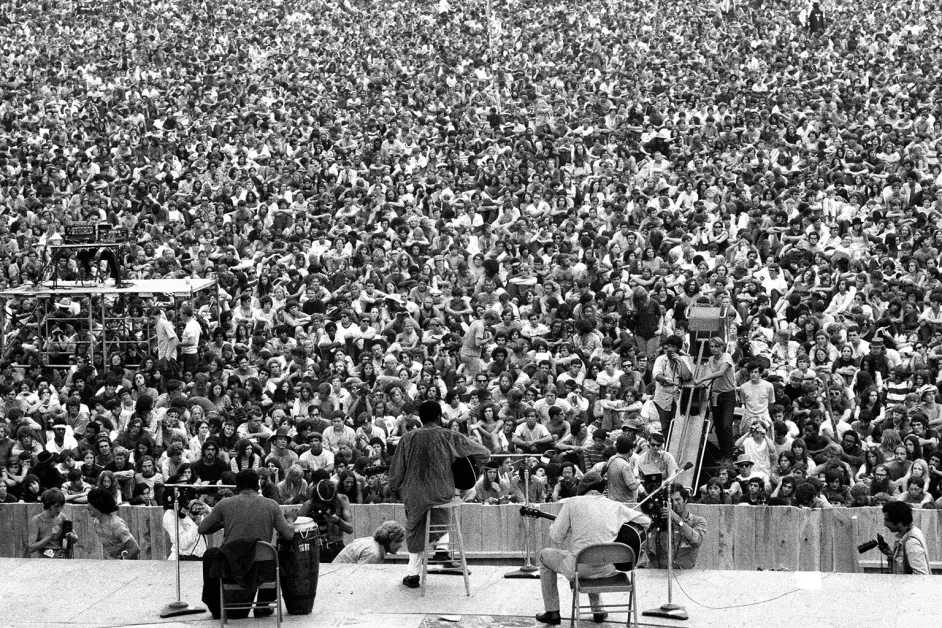
On the morning of August 15, 1969, a dairy farm in Bethel, New York—eighty miles northwest of New York City—was already swamped. The Woodstock Music and Art Fair, expected to draw perhaps 50,000, had become an overnight exodus. By the time the music began, more than 400,000 people were sprawled across the bucolic hillside owned by dairy farmer Max Yasgur. The rains came, the mud thickened, and the traffic gridlocked for miles. Yet the crowd did not panic. Instead, the weekend became a living experiment in mass cooperation, later remembered by one attendee as “a waterfall of love.” This chronicle reconstructs the festival as it was seen at the time: through the eyes of the participants, the fears of the organizers, and the language of an era already saturated with hope and dread.
What Happened?
The Woodstock Music and Art Fair took place from August 15 to August 18, 1969, on a bucolic hillside owned by dairy farmer Max Yasgur, located 80 miles northwest of New York City. The event was conceived by four young promoters, including Michael Lang, who later chronicled the experience in his memoir The Road to Woodstock. The initial plan called for a paid event with an expected attendance of around 50,000, but by the opening day, the crowd had swollen to an estimated 400,000, making it one of the largest gatherings in American history.
- August 15, 1969: The festival opened with folk and rock acts, but traffic jams and a lack of facilities created immediate chaos. The gates were opened, and the event became free.
- August 16: Rain turned the site into a sea of mud. Performers included Santana, Grateful Dead, and Janis Joplin. The crowd, exhausted but peaceful, began to form a self-sustaining community.
- August 17: The Who, Jefferson Airplane, and others performed. A heavy thunderstorm forced a temporary halt, but the music resumed under tarps and umbrellas.
- August 18: The final day featured Jimi Hendrix, who played to a dwindling crowd of about 30,000, his rendition of “The Star-Spangled Banner” becoming a defining moment of the era.
The festival ended on the morning of August 18, leaving behind a sea of mud, abandoned cars, and a legacy that would be debated for decades.
How It Was Seen at the Time
Contemporaries described Woodstock in the language of the counterculture—as a demonstration of peace and communal love, but also as a logistical nightmare. The phrase “waterfall of love” was used by attendees to describe the overwhelming sensation of collective goodwill. In an interview, one participant recalled, “It was like a waterfall of love, the way the crowd took care of each other.” The music was secondary; the experience was primary. The press, initially hostile, gradually softened as the weekend progressed. The New York Times reported on the traffic jams and the mud, but also noted the absence of violence and the surprising cooperation of the crowd.
“We are stardust, we are golden, and we’ve got to get ourselves back to the garden.” — Joni Mitchell, who did not attend but captured the festival’s mythic aura in her song “Woodstock.”
Historical Snapshot
| Aspect | Detail |
|---|---|
| Date | August 15–18, 1969 |
| Place | Max Yasgur’s dairy farm, Bethel, New York |
| People | Over 400,000 attendees; 32 acts performed; organized by Michael Lang and partners |
| What Happened | Three-day music festival that became a free gathering due to overcrowding |
| Why It Mattered | Defined the counterculture of the 1960s and became a symbol of peaceful mass assembly |
Eyewitness Accounts
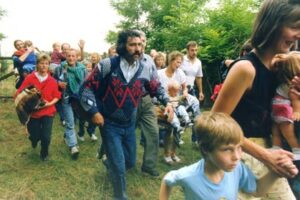
Eyewitnesses consistently describe the physical hardship and the emotional high. The AP article “A waterfall of love” collects memories from participants fifty years later. One attendee, who arrived on the second day, said, “We walked through the mud, but we felt we were part of something huge.” Another recalled the constant rain and the way strangers shared food and blankets. Michael Lang, in his memoir, described the moment the fences came down: “We knew we had to open the gates—there was no other way.”
“It was a waterfall of love—the way the crowd took care of each other.” — Unnamed attendee, quoted in AP News.
What People Feared
Before and during the festival, there were widespread fears of disaster. Local officials worried about sanitation, food supply, and the potential for violence. The sudden influx of over 400,000 people overwhelmed the infrastructure. There were rumors of an outbreak of dysentery and a shortage of clean water. The New York State Police and local authorities were on alert, expecting a riot or a major accident. The rain and mud amplified the anxiety, but the feared catastrophe never materialized—the crowd remained calm and cooperative, and no deaths were reported.
Common Misconceptions
Myth: Woodstock was a free event from the start.
Fact: It was originally a paid event, but due to the overwhelming number of attendees, the organizers were forced to open the gates and let everyone in free.
Myth: Everyone was high on drugs.
Fact: While there was drug use, many attendees were sober, and the event was remarkably peaceful.
Myth: The music was the only draw.
Fact: Many attendees came simply to be part of the gathering, and some never even saw the stage.
Aftermath
The immediate aftermath was a massive cleanup and a legal and financial disaster for the promoters. The event lost millions of dollars, and the farm was left in ruin. Yasgur, however, defended the festival, saying that the young people had shown a sense of responsibility. The festival’s reputation grew in the following weeks as the documentary film Woodstock (1970) and the soundtrack album spread the story. The site became a pilgrimage spot, and the phrase “Woodstock Nation” entered the lexicon. The event also solidified the counterculture’s identity, but it also marked the beginning of the end of the 1960s’ innocence, as the 1970s brought new realities.
How Historians See It Today
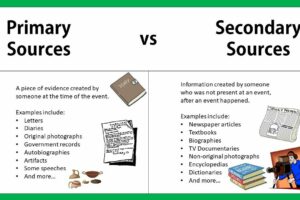
Modern scholarship, such as the 50th-anniversary collection Woodstock Then and Now (Clemson University Press), views Woodstock not as a spontaneous utopia but as a carefully organized, though chaotic, commercial venture that accidentally became a free festival. Historians now emphasize the tension between the commercial aspirations of the promoters and the communal ideals of the attendees. The festival is seen as a pivotal moment in the transformation of rock music from entertainment to a cultural force. Joni Mitchell’s song, written after the fact, captured the mythic quality, but historians caution that the reality was more complex—the mud, the hunger, the traffic jams, and the fact that many performers were paid and the event was intended as a profit-making venture. The primary sources—eyewitness accounts, the memoirs of Michael Lang, and the photographs—reveal a messy, human event that has been elevated to a national myth.
In the end, Woodstock was a singular moment in which the ideals of the 1960s were tested on a massive scale. The primary sources show that it was not a perfect “garden” but a real, messy, and deeply moving gathering. The festival’s enduring significance lies not in its perfection but in its demonstration that a generation could, in a moment of crisis, come together with surprising grace. The chronicle of Woodstock is a reminder that history is often made not by the powerful, but by the crowds who simply show up.
FAQ
Was Woodstock actually free?
It was originally a paid event, but the crowds overwhelmed the gates, and organizers were forced to open the festival to everyone for free. Many attendees did not pay.
How many people attended Woodstock?
Estimates range from 400,000 to 500,000. The AP reports about 400,000 in attendance.
Did anyone die at Woodstock?
There were no reported deaths directly from the festival, though a few people died from drug overdoses and a few accidents, but the official record is often debated.


Leave a Reply