
Short Answer
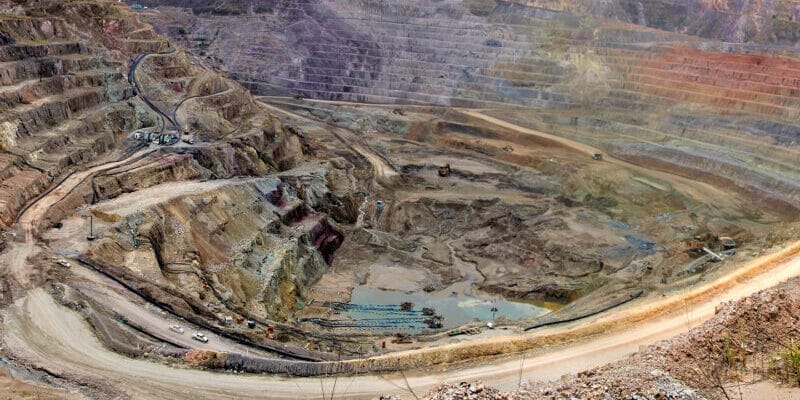
On 11 July 1960, just eleven days after the Republic of the Congo gained its independence from Belgium, the province of Katanga proclaimed itself a separate state. The declaration came from Moïse Tshombe, leader of the local CONAKAT party, who had long argued that the mineral-rich region should not be bound to the rest of the country. In the following months, the world watched as a copper-rich enclave, backed by the mining giant Union Minière du Haut Katanga and a contingent of Belgian military advisers, held its own against the central government in Léopoldville. The secession was more than a colonial hangover; it was a Cold War flashpoint, a struggle over resources, and a test of the new United Nations peacekeeping mission. This article draws on contemporary reports, archival collections, and the testimony of those who lived through the crisis to reconstruct how the Katanga secession unfolded and how it was understood at the time.
What Happened?
The Katanga secession was a direct challenge to the newly independent Republic of the Congo. Following the country’s independence on 30 June 1960, political tensions quickly escalated. Patrice Lumumba, the first Prime Minister, sought a strong central government, while regional leaders in the south, especially those from the Lunda and Yeke ethnic groups, feared domination by the more populous north. On 11 July 1960, Tshombe, backed by the Confédération des associations tribales du Katanga (CONAKAT), declared the State of Katanga independent.
The new state did not receive universal support within the province. The northern region, particularly the Baluba areas, remained hostile to the secession, leading to ethnic strife and violence. The Katangese government relied heavily on external support. Union Minière du Haut Katanga, the giant copper mining company, provided financial and logistical backing, hoping to protect its concessions. A large contingent of Belgian military advisers helped organise and train the Katanga Gendarmerie, the secessionist army. The Gendarmerie included Belgian soldiers and mercenaries from Northern Rhodesia and elsewhere. A similarly organised Katangese Air Force was also formed.
The secession was immediately opposed by the central government and by the United Nations, which dispatched ONUC (Operation des Nations Unies au Congo) forces. The UN’s initial mandate was to help the Congo maintain its territorial integrity. Tshombe’s government, however, portrayed the UN as an invader. The conflict escalated over the next two years. In January 1963, after a series of military offensives, UN forces finally seized control of the key mining town of Jadotville and the capital, Elisabethville, effectively ending the secession. On 14 January 1963, Tshombe agreed to reintegrate Katanga into the Congo. The state was dissolved and the province became the Katanga Province of the Republic of the Congo.
How It Was Seen at the Time
Contemporaries viewed the Katanga secession through a variety of lenses. In Belgium, many saw it as a way to protect the country’s economic interests in the region’s copper and uranium mines. The Belgian government had initially supported the secession, providing military advisers and arms. In the United States and Western Europe, the crisis was interpreted within the framework of the Cold War. Some feared that the Congo would become a Soviet ally if Lumumba remained in power; others worried that the secession would lead to a fragmentation of the newly independent African states. The Katangese government itself sought to portray the secession as a legitimate struggle for self-determination, using lobby groups in France, Belgium, and the United States to shape public opinion. The Katangese administration also emphasized its anti-communist stance, hoping to gain Western sympathy.
In the African and non-aligned world, however, the secession was widely seen as a betrayal of the Congo’s national unity. The United Nations Security Council, in a series of resolutions, called for the end of the secession and the territorial integrity of the Congo. The prevailing mood in Léopoldville was one of anger and determination to restore the country’s sovereignty. The Katangese secession was thus not a simple event; it was a prism through which the world saw the tensions of decolonization, the Cold War, and the economic stakes of the mineral-rich region.
Historical Snapshot
| Aspect | Detail |
|---|---|
| Date | 11 July 1960 – 14 January 1963 |
| Place | Katanga Province, Republic of Congo (now Democratic Republic of Congo) |
| People | Moïse Tshombe, leader of CONCATAL; Patrice Lumumba, Prime Minister of Congo; UN Secretary-General Dag Hammarskjöld (until 1961) |
| What Happened | Katanga declared independence from the Congo, backed by Union Minière, Belgian military advisers, and mercenaries; the UN intervened; secession ended in 1963. |
| Why It Mattered | The crisis threatened to fragment the Congo and became a Cold War flashpoint; it tested the UN’s peacekeeping capabilities and shaped the future of the mineral-rich region. |
Timeline
- 30 June 1960: The Republic of Congo gains independence from Belgium.
- 11 July 1960: Moïse Tshombe declares the independence of the State of Katanga.
- 14 July 1960: The UN Security Council passes a resolution calling for the withdrawal of Belgian troops and the establishment of ONUC (Operation des Nations Unies au Congo).
- September 1960: The UN forces begin to be deployed in Katanga, leading to clashes with the Katangese Gendarmerie.
- January 1961: The Katanga Gendarmerie, with the help of mercenaries, launches a campaign against the Baluba in the north, causing a humanitarian crisis.
- September 1961: UN Secretary-General Dag Hammarskjöld dies in a plane crash near Ndola, while trying to negotiate a ceasefire.
- December 1961: UN forces launch a major offensive against the Katanga secession, but a ceasefire is negotiated.
- January 1963: After a final military campaign, UN forces seize Elisabethville and the secession collapses.
- 14 January 1963: Tshombe signs the surrender, and Katanga is reintegrated as a province of the Congo.
Different Perspectives
The Katangese Government
From the Katangese perspective, the secession was a necessary act of self-determination. Tshombe and his supporters argued that Katanga was historically distinct and that its wealth should not be shared with the rest of the Congo. They claimed that the central government was illegitimate and that Katanga had the right to independence. The Katangese government sought international recognition and support, and it used its mineral wealth to fund its military and diplomatic efforts.
The Central Government
For the central government in Léopoldville, the secession was an act of rebellion and a threat to national unity. Patrice Lumumba and his successors viewed the secession as a betrayal of the Congo’s anti-colonial struggle. They appealed to the United Nations to help them restore the country’s integrity. The central government also accused Belgium and Union Minière of supporting the secession for economic gain.
The United Nations
The UN, under the leadership of Secretary-General Dag Hammarskjöld, viewed the secession as a threat to international peace and security. The ONUC forces were sent to protect the Congo’s territorial integrity and to ensure the withdrawal of Belgian military personnel. The UN faced a difficult task: it had to balance the sovereignty of the Congo with the need to avoid a wider war. The UN’s military operations in Katanga were controversial and led to the death of Hammarskjöld in a plane crash.
The Union Minière du Haut Katanga
The mining company Union Minière, which had a concession to the Katanga’s copper and other minerals, initially supported the secession. It provided financial aid, technical expertise, and political backing. The company feared that a weak central government would threaten its operations. However, as the conflict escalated, the company eventually withdrew its support, as it realised that the secession was unsustainable and was damaging the company’s reputation.
Aftermath
After the secession ended in January 1963, Katanga was reintegrated into the Republic of Congo as Katanga Province. The province remained a key economic asset, with its copper, cobalt, and tin mines. Tshombe was initially exiled, but he later returned to Congolese politics and became Prime Minister of the Congo in 1964. The United Nations remained in the Congo until 1964, overseeing the transition. The secession had a lasting impact: it set a precedent for other separatist movements in Africa and highlighted the economic and political complexities of decolonization. The Katanga crisis also shaped the UN’s approach to peacekeeping and the principle of territorial integrity.
How Historians See It Today
Modern scholarship has reassessed the Katanga secession in significant ways. Earlier interpretations often emphasised the role of external forces, particularly Union Minière and Belgian interests, as the primary drivers of the secession. However, more recent research, such as that by Miles Larmer and Erik Kennes, argues that the secession was also the initiative of indigenous Katangese political leaders. They point to the development of a Katangese national identity among self-consciously ‘indigenous’ leaders, who responded to what they saw as an imposed and illegitimate Congolese nation-state. The Katangese state constructed a national imagery rooted in a mythico-historical reconstruction of a usable Katangese past. This perspective highlights the agency of African actors and challenges the notion that the secession was purely a puppet of foreign interests. The discovery and analysis of the Moïse Tshombe archival collection has provided new primary sources that support this view. Historians now understand the Katanga secession as a complex interplay of local, national, and international forces, rather than a simple case of external manipulation.
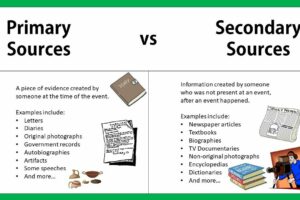
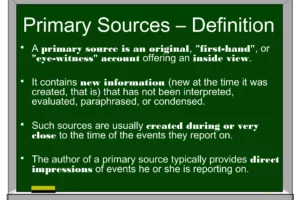
The Katanga secession remains a powerful example of the challenges of post-colonial state-building in Africa. The primary sources—the Tshombe archives, UN documents, and contemporary press reports—reveal the hopes and fears of those who lived through it. They show how the promise of independence was quickly overshadowed by the reality of civil war and foreign intervention. The secession also highlighted the economic importance of the Congo’s mineral wealth, which would continue to shape the region’s politics for decades. The events of 1960–1963 are not a footnote to history; they are a window into the complex birth of a nation.
FAQ
Why did Katanga secede from the Congo in 1960?
Katanga seceded because of a combination of factors: the desire of local political elites, led by Moïse Tshombe, to protect their economic interests and ethnic identity; the support of the Belgian mining company Union Minière; and the fear that the new central government under Patrice Lumumba would redistribute the province's wealth to the rest of the country.
How did the Katanga secession end?
The secession ended in January 1963 after a series of military operations by the United Nations peacekeeping force (ONUC). The UN forces captured the key towns and Tshombe surrendered on 14 January 1963. Katanga was then reintegrated as a province of the Republic of Congo.



Leave a Reply