
Short Answer
On the evening of October 22, 1962, President John F. Kennedy appeared on American television to announce that Soviet nuclear missiles had been discovered in Cuba. Across the United States and around the world, millions of people stopped what they were doing to listen. In Washington, CIA analyst Dino Brugioni, who had spent days poring over surveillance photographs, wrote a farewell letter to his wife and instructed her to open it only if he told her to. “Those photographs meant a crisis,” he later recalled. The world was about to hold its breath for thirteen days, as the United States and the Soviet Union edged toward nuclear war. This article reconstructs that crisis as it was experienced at the time—through the eyes of diplomats, ordinary citizens, and the leaders who held the fate of humanity in their hands.
What Happened?
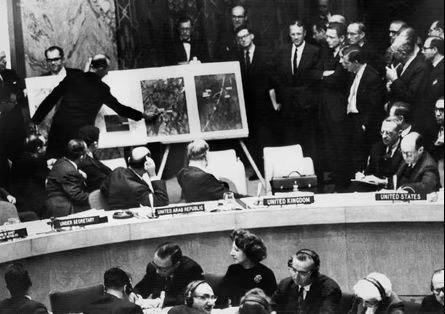
The Cuban Missile Crisis began with the discovery of Soviet offensive missile sites in Cuba. On October 14, 1962, a U.S. U-2 reconnaissance flight photographed the construction of medium-range ballistic missile (MRBM) sites near San Cristobal. The photographs, analyzed at the National Photographic Interpretation Centre, provided incontrovertible evidence that the Soviet Union was equipping its ally Cuba with nuclear missiles capable of striking Washington and other American cities. President Kennedy was briefed, and after a week of secret deliberations, he addressed the nation on October 22, announcing a naval “quarantine” of Cuba to prevent further Soviet shipments.
The crisis unfolded rapidly:
- October 22, 1962: Kennedy’s televised address reveals the missile sites and announces the blockade.
- October 23–24: Soviet ships approach the quarantine line; the world watches as they turn back.
- October 25: Diplomatic cables from around the world show a global response. The Organization of American States (OAS) offers support to the U.S., while Germany’s Chancellor Konrad Adenauer and other leaders express solidarity. In Canada, officials worry about delayed responses.
- October 26–27: Secret negotiations between Washington and Moscow intensify. A U-2 is shot down over Cuba, and the crisis peaks.
- October 28: Soviet Premier Nikita Khrushchev agrees to remove the missiles in exchange for a U.S. pledge not to invade Cuba. The immediate danger passes.
The crisis was a truly global event. As the Canadian diplomatic cables show, countries around the world were watching the actions of the major players and considering the impact on their own nations. The cables, spanning from October 22, 1962, to May 6, 1963, reveal a much richer story than a simple confrontation between the U.S. and the Soviet Union.
How It Was Seen at the Time
For contemporaries, the Cuban Missile Crisis was a time of acute anxiety and uncertainty. Many ordinary people feared the worst. In the United States, the government advised using sand-filled bricks for fallout shelters, and families made plans to evacuate cities. CIA official Dino Brugioni, who was well placed to know just how serious the situation was, made arrangements for his young family to get out of Washington in the event of war. He later recalled the atmosphere: “Those photographs meant a crisis.”
Diplomatic cables from the period capture the mood of governments. On October 25, 1962, German Chancellor Konrad Adenauer and other leaders expressed support for U.S. action, criticizing the Soviets for believing they could harbor missiles in Cuba and expect the U.S. to “resign itself to the situation.” The telegrams’ tone indicated a lack of concern among the Germans about a Soviet counter-attack if the U.S. intercepted a Soviet ship—a confidence not shared everywhere. In Canada, there were concerns about insufficient or delayed responses to the crisis, reflecting a broader anxiety about being caught between the superpowers.
The prevailing mood was one of dread mixed with resolve. As the BBC later noted, “While much of the western world held its breath, terrified by the prospect of imminent nuclear war,” the crisis was also a test of wills. People on both sides of the Iron Curtain expected the worst, but hoped for a peaceful resolution.
Historical Snapshot
| Aspect | Detail |
|---|---|
| Date | October 22–28, 1962 (with diplomatic aftermath through May 1963) |
| Place | Cuba, the United States, the Soviet Union, and the global diplomatic community |
| People | John F. Kennedy, Nikita Khrushchev, Fidel Castro, Robert McNamara, Dino Brugioni, and diplomats worldwide |
| What Happened | The U.S. discovered Soviet nuclear missiles in Cuba, imposed a naval blockade, and negotiated their removal after thirteen tense days. |
| Why It Mattered | The closest the world came to nuclear war; it reshaped Cold War diplomacy and led to arms control agreements. |
Eyewitness Accounts
Eyewitness testimony from those inside the crisis provides a visceral sense of the danger. Dino Brugioni, a CIA official at the National Photographic Interpretation Centre, was responsible for preparing briefings for President Kennedy on surveillance pictures of Cuba. He later described the moment the photographs were analyzed: “Those photographs meant a crisis.” He wrote a farewell letter to his wife, to be opened only if he told her to, and made arrangements for his family to leave Washington. His account underscores how even those with the most detailed knowledge of the threat expected the possibility of war.
From the Soviet and Cuban side, the BBC’s 2002 radio program “The Cuban Missile Crisis: As Seen From Moscow and Havana” used documents from the KGB archive and interviews with key insiders who were present as the crisis unfolded. These accounts, gathered by former Moscow correspondent Allan Little, revealed the “untold” side of the story—showing that Khrushchev and Castro also faced intense pressure and uncertainty. While direct quotes from these interviews are not available in the sources, the program’s existence demonstrates that contemporary eyewitnesses on both sides later shared their experiences.
Different Perspectives
American Perspective
U.S. officials saw the crisis as a direct threat to national security. Secretary of Defense Robert McNamara commented on the looming nuclear threat, and the military prepared for invasion. The U.S. government’s public stance was one of firm resolve, backed by the OAS and NATO allies.
Soviet and Cuban Perspective
From Moscow and Havana, the crisis was framed as a defensive response to U.S. aggression. Khrushchev’s decision to place missiles in Cuba was intended to deter an American invasion of the island, which had been attempted at the Bay of Pigs in 1961. The BBC program notes that until recently little was known about what was happening inside Khrushchev’s Kremlin and Castro’s Havana headquarters, but KGB archives and interviews have since illuminated their calculations.
Allied and Neutral Perspectives
Diplomatic cables from October 25, 1962, show a range of reactions. Germany’s leaders expressed strong support for the U.S., while the United Kingdom and Turkey called for a peaceful resolution to avoid further escalation. Poland and Iran’s relationships with the U.S. remained precarious. In Canada, there were concerns about insufficient or delayed responses, reflecting a desire to avoid being dragged into a conflict not of their making.
What People Feared
The most immediate fear was nuclear war. In the United States, the government advised citizens to prepare fallout shelters using sand-filled bricks, and many families stocked supplies. Brugioni’s decision to send his family out of Washington was a private echo of a public anxiety. The crisis also fueled fears of a Soviet invasion of Europe or a U.S. invasion of Cuba. The U.S. had detailed plans for an invasion, and the Soviet Union had nuclear weapons on the island. The possibility of a single miscalculation—a ship refusing to stop, a U-2 shot down—was a constant worry. As the BBC noted, “Many ordinary people feared the worst, and so, it appears, did those closely involved—both in the East and the West.”
Aftermath
The immediate crisis ended on October 28, 1962, when Khrushchev agreed to remove the missiles in exchange for a U.S. pledge not to invade Cuba. The U.S. also secretly agreed to remove its Jupiter missiles from Turkey, a detail not publicly known at the time. The diplomatic cables in the Canada Declassified collection continue until May 6, 1963, documenting the ongoing negotiations and the global reaction to the resolution. The crisis led to a thaw in U.S.-Soviet relations, including the establishment of a direct “hotline” between Washington and Moscow in 1963, and the signing of the Limited Test Ban Treaty later that year. For contemporaries, the relief was palpable, but the memory of those thirteen days would shape Cold War policy for decades.
How Historians See It Today
At the time, the crisis was understood primarily as a confrontation between the U.S. and the Soviet Union, with Cuba as a pawn. Modern historians, drawing on Soviet and Cuban archives, have revealed a more complex picture. The BBC’s 2002 program, using KGB documents and interviews, showed that Khrushchev and Castro had their own fears and miscalculations. Historians now emphasize the role of back-channel diplomacy, the risk of accidental escalation, and the importance of the naval quarantine as a carefully calibrated move. The crisis is now seen as a turning point in the Cold War, leading to arms control and a recognition of the need for crisis management. The diplomatic cables from Canada and other countries remind us that the crisis was a global event, with every nation watching and reacting.
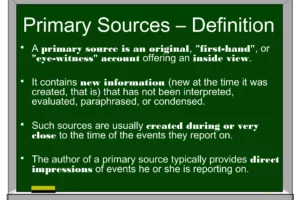
The primary sources from October 1962—diplomatic cables, personal letters, and eyewitness testimony—reveal a world on the brink. They show that the fear was real, the stakes were existential, and the outcome was far from certain. The Cuban Missile Crisis was not just a superpower standoff; it was a moment when humanity collectively held its breath, and the lessons of that moment continue to resonate today.
FAQ
What was the Cuban Missile Crisis?
The Cuban Missile Crisis was a 13-day confrontation in October 1962 between the United States and the Soviet Union over the presence of Soviet nuclear missiles in Cuba. It is considered the closest the world ever came to nuclear war.
How did ordinary people react to the crisis?
Many ordinary people feared the worst. In the U.S., families prepared fallout shelters and some made plans to evacuate cities. CIA official Dino Brugioni wrote a farewell letter to his wife, reflecting the seriousness of the situation.
What role did diplomatic cables play in understanding the crisis?
Diplomatic cables from countries like Canada, Germany, and others provide a global perspective on the crisis, showing how different nations reacted and what they feared. They are primary sources that reveal the worldwide impact of the standoff.








Leave a Reply