Short Answer
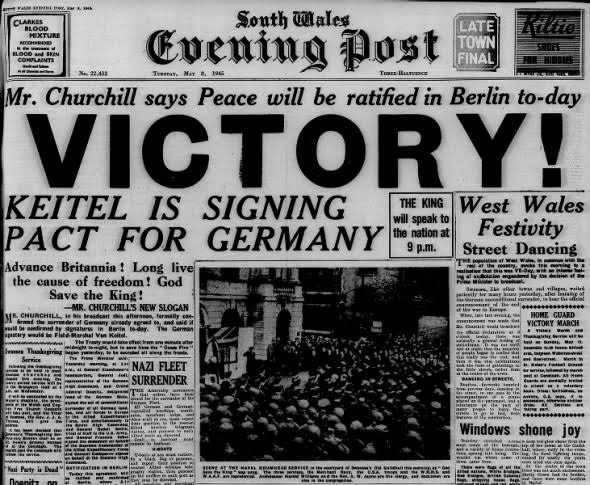
On the morning of 8 May 1945, Britons woke to a day they had long awaited. After nearly six years of war, peace in Europe was finally at hand. The previous evening, the BBC had broadcast the news of Germany’s unconditional surrender, and now the nation prepared to celebrate. In a country where 80% of families read a daily newspaper, the press was poised to capture the moment. As crowds gathered outside Buckingham Palace and bonfires were being prepared, newspaper offices worked through the night to produce special editions that would record the joy, relief, and solemnity of VE Day. The front pages that appeared on the streets that day—some with bold headlines, others with photographs of celebrating crowds—became enduring artifacts of a historic moment, offering a window into what Britons knew, felt, and hoped for as the war in Europe came to a close.
What Happened?
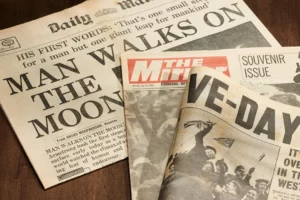
Germany’s surrender was formally signed on 7 May 1945, and the news filtered through to the British public via the BBC later that evening. The following day, 8 May, was declared Victory in Europe (VE) Day and made a public holiday. The press frantically rushed to produce special editions, with evening newspapers like the London Evening Standard and the Manchester Evening News able to break the first on-the-day reactions. The Times, however, placed the news of “victory in Europe to be declared today” on page six, as the first part of the newspaper was still reserved for adverts until 1966. Other papers, including the Daily Mirror and Daily Express, had begun to publish more eye-catching images on the front page, with many on 8 May showing crowds celebrating the momentous day. The hunt for Hitler was still ongoing at this point in history, although there were some reports suggesting his fate remained unknown. The day itself was marked by public gatherings, church services, and street parties, as the nation collectively exhaled after nearly six years of conflict.
How It Was Seen at the Time
The prevailing mood on VE Day was one of relief and joy, tempered by solemnity and the knowledge that the war was not yet fully over. Newspapers captured this mix of emotions in their headlines and editorials. The Daily Express proclaimed “Advance Britannia!” while the Daily Mirror ran a front page dominated by a photograph of celebrating crowds. The British Newspaper Archive blog notes that many papers used the phrase “Bonfires and Prayers” to describe the day’s activities, reflecting both the celebratory bonfires and the religious services held in thanks. The Daily Herald‘s front page, as described in a contemporary analysis, showed that 80% of the UK public read a newspaper during the war, underscoring the press’s central role in shaping public understanding. As one contemporary account put it, the newspapers were “able to hold the wartime government to account on issues that mattered to ordinary Britons,” a role that complemented the BBC’s broadcasts. The language of the day was one of victory and deliverance, but also of remembrance for those who had fallen and a cautious eye toward the ongoing war in the Pacific.
Contemporary Newspaper Coverage
British newspapers of 8 May 1945 provide a rich tapestry of how the news was presented. The Times, with its conservative layout, placed the story on page six, a decision that seems surprising to modern readers but reflected the paper’s tradition of reserving the first pages for advertisements. In contrast, the Daily Mirror and Daily Express used bold front-page images of crowds celebrating, signaling a shift toward more visual journalism. The London Evening Standard was “first on London’s streets to report on-the-day VE Day news,” as its managing editor later noted, emphasizing the paper’s long-standing commitment to breaking news. The Daily Herald also featured the news prominently, with its front page reflecting the widespread readership of newspapers across all social classes. Headlines such as “Advance Britannia!” and “Bonfires and Prayers” captured the dual nature of the day—triumph and reflection. The Manchester Evening News similarly provided on-the-day coverage, ensuring that readers across the country could share in the moment. These newspapers not only reported the facts but also conveyed the emotional atmosphere, using language that spoke of relief, gratitude, and hope for the future.
Historical Snapshot
| Aspect | Detail |
|---|---|
| Date | 8 May 1945 |
| Place | United Kingdom, particularly London and other major cities |
| People | British public, newspaper journalists, government officials, and the royal family |
| What Happened | Germany’s unconditional surrender was announced; VE Day was declared a public holiday; celebrations took place across the country. |
| Why It Mattered | Marked the end of World War II in Europe, bringing relief after six years of conflict, though the war continued in the Pacific. |
What People Knew at the Time
| What People Knew Then | What We Know Now |
|---|---|
| Germany had surrendered unconditionally, and the war in Europe was over. | The surrender was signed on 7 May, and the formal instrument of surrender was ratified on 8 May. |
| Hitler’s fate was unknown; the hunt for him was still ongoing. | Hitler had committed suicide on 30 April 1945, but this was not confirmed until later. |
| The war in the Pacific continued, and Japan had not yet surrendered. | Japan would surrender in August 1945 after the atomic bombings. |
| Newspapers were the primary source of detailed information for most Britons. | Radio and newspapers were both crucial, but newspapers provided in-depth analysis and images. |
Timeline
- 7 May 1945: Germany signs unconditional surrender at Reims; news is broadcast via BBC later that evening.
- 8 May 1945: VE Day is declared a public holiday; newspapers publish special editions; celebrations take place across Britain.
- 9 May 1945: Newspapers continue to report on the aftermath, including the ongoing hunt for Hitler and the war in the Pacific.
- 15 August 1945: VJ Day marks the end of the war with Japan, following the atomic bombings of Hiroshima and Nagasaki.
Aftermath
In the immediate aftermath of VE Day, Britain began the slow process of demobilization and reconstruction. Rationing continued, and the country faced severe economic challenges. The war in the Pacific remained a pressing concern, and many British servicemen were redeployed to the Far East. Newspapers turned their attention to these issues, while also reflecting on the cost of the war. The celebrations of 8 May were followed by a period of mourning for the fallen and a determination to build a better society. The general election of July 1945, which resulted in a Labour landslide, was partly a reflection of the public’s desire for social change, a mood that had been shaped by wartime experiences and the promises of a better future. The newspapers that had chronicled the war now turned to the challenges of peace, but the memory of VE Day remained a powerful symbol of national endurance and hope.
How Historians See It Today
Modern historians recognize that VE Day was not the end of World War II, but a significant milestone. They emphasize the role of newspapers in shaping public perception and morale, complementing the BBC’s broadcasts. The fact that 80% of British families read a daily newspaper during the war underscores the press’s influence. Historians also note that the coverage of VE Day reflected a complex mix of emotions—relief, joy, and anxiety about the future. The decision by the Times to place the news on page six is often cited as an example of the paper’s conservative style, while the more visual approach of the Daily Mirror and Daily Express foreshadowed the tabloid era. Contemporary scholarship also highlights the role of newspapers in holding the government to account, a function that was particularly important during wartime. The primary sources from May 1945—newspapers, photographs, and personal accounts—remain invaluable for understanding how Britons experienced and interpreted the end of the war in Europe.
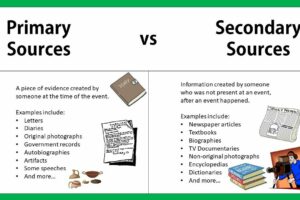
The newspapers of 8 May 1945 are more than historical artifacts; they are windows into the hopes, fears, and resilience of a nation at a pivotal moment. They capture the collective sigh of relief that peace had come to Europe, while also reminding us that the war was not yet over. Through their headlines, photographs, and editorials, we see the joy of the crowds, the solemnity of the prayers, and the determination to face the challenges ahead. These primary sources allow us to step back in time and experience VE Day as it was lived, not as a distant event, but as a day of profound significance for millions of people.
FAQ
Why did The Times place the VE Day news on page six?
Until 1966, The Times reserved its first pages for advertisements, so the news of VE Day appeared on page six, a practice that was common for the paper at the time.
What was the role of newspapers compared to the BBC on VE Day?
While the BBC broadcast the news of Germany's surrender, newspapers provided more detailed analysis, photographs, and a platform for holding the government to account. They also reached a massive audience, with 80% of British families reading a daily newspaper.



Leave a Reply