
Short Answer
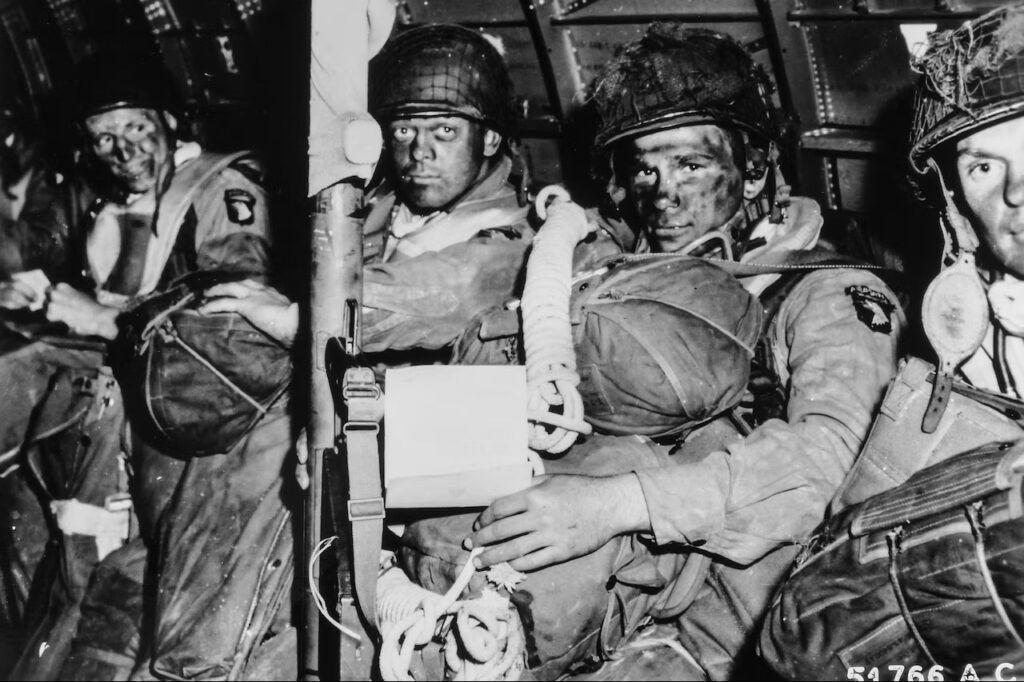
In the early hours of 6 June 1944, the largest amphibious invasion in history was underway. As dawn broke over the Normandy coast, thousands of Allied soldiers, many of whom had spent weeks or months waiting in the south of England, were about to hurl themselves against Hitler’s Atlantic Wall. Behind them stretched a vast armada of ships, and behind that, a continent of anxious civilians—both the families they had left behind and the French men, women, and children who would soon find themselves in the middle of a battlefield. This was D-Day, the beginning of the end for Nazi Germany, but for those who lived through it, it was not a moment of clean triumph. It was a day of chaos, terror, and sacrifice, remembered by one American soldier as a journey into the unknown, and by French civilians as a day of both liberation and loss.
What Happened?
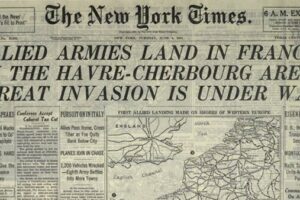
On 6 June 1944, Allied forces launched Operation Overlord, the long-awaited invasion of Nazi-occupied Western Europe. The operation involved the largest troop movement in history, with over 150,000 soldiers landing on the beaches of Normandy in northern France. The invasion was preceded by months of secret preparation in Britain, where troops were trained, supplies were stockpiled, and the south of England was transformed into a vast military camp.
The landings took place on five beaches, codenamed Utah, Omaha, Gold, Juno, and Sword. American forces landed at Utah and Omaha, British forces at Gold and Sword, and Canadian forces at Juno. The assault was supported by naval bombardment, aerial bombing, and the landing of airborne troops behind enemy lines. Despite the immense scale of the operation, the Allies faced fierce German resistance, particularly at Omaha Beach, where casualties were heaviest.
Key events of the day included:
- 00:16 (approx.): British airborne troops begin landing east of the Orne River, securing the eastern flank.
- 01:30: American airborne divisions begin dropping behind Utah Beach, suffering heavy dispersal due to cloud cover and anti-aircraft fire.
- 06:30: The first seaborne troops land on the beaches, beginning with Utah and Omaha.
- 07:25: British and Canadian troops begin landing on Gold, Juno, and Sword beaches.
- End of day: Allied forces have established a foothold, but have not yet captured key objectives such as the town of Caen.
The invasion was the beginning of the campaign in Europe that would culminate in the fall of Berlin in 1945. As Supreme Commander Dwight D. Eisenhower later said in his introduction to the official film record, The True Glory, the campaign covered all the major engagements from D-Day to the final victory.
How It Was Seen at the Time
For the soldiers who were there, D-Day was not experienced as a single, coherent event, but as a series of fragmented, chaotic moments. The official film The True Glory, produced by the Allies in 1944 and 1945, sought to create a permanent visual record of the campaign, but the personal accounts collected in its audio clips reveal a more human story. One American soldier remembered the journey to Britain and his first impressions of the country, while a British soldier described the experience of boarding the landing ships and the agonizing wait for the invasion to begin.
The prevailing mood among the troops was one of grim determination mixed with fear. The final briefing, described by an American soldier, was a moment of intense focus, as men were told where they would land and what they were expected to do. There was little talk of glory; instead, there was a sense of duty and a hope that the invasion would succeed.
“The waiting was the worst part. We were all packed in, and we just sat there, listening to the engines and the waves, wondering what was coming.” — A British soldier, recalling the wait aboard a landing ship (IWM).
For the French civilians, the day was one of confusion and hope. Many had lived under German occupation for four years. The arrival of the Allies was a moment of liberation, but it was also a moment of extreme danger, as the Normandy countryside became a battlefield.
Historical Snapshot
| Aspect | Detail |
|---|---|
| Date | 6 June 1944 |
| Place | The beaches of Normandy, France (Utah, Omaha, Gold, Juno, Sword) |
| People | Allied soldiers (American, British, Canadian), French civilians, German defenders |
| What Happened | The largest amphibious invasion in history, launching the liberation of Western Europe from Nazi occupation. |
| Why It Mattered | It opened a second front in Europe, leading to the defeat of Nazi Germany in May 1945. |
Eyewitness Accounts
The most powerful record of D-Day comes from the people who were there. In 1983, the Eisenhower Center at the University of New Orleans began a project to record the recollections of as many participants as possible, including civilians as well as soldiers. These accounts, edited by Ronald J. Drez and published as Voices of D-Day, tell the story of the operation almost entirely through the words of those who lived it.
One of the most striking accounts comes from a British soldier who described the final briefing before the invasion. The men were told the details of their mission, but the reality of what they were about to face was impossible to convey. Another account, from an American soldier, describes the journey to Britain and the strange experience of arriving in a country that was both an ally and a foreign land.
“My sister heard the rumour in the shop… that we were going to have to move.” — Betty Tab, a civilian from Slapton in Devon, recalling the forced evacuation of her village to make way for D-Day training exercises (World History Encyclopedia).
Betty Tab’s account is a reminder that the invasion touched the lives of civilians long before the first shot was fired. In the south of England, entire communities were uprooted to maintain secrecy and provide areas for training. Churches were locked and surrounded by barbed wire, and families were told to leave their homes with little notice.
Different Perspectives
The American Soldier
For the American soldiers who landed at Omaha and Utah beaches, D-Day was a brutal introduction to combat. Many were young men who had never seen battle. Their accounts speak of the terror of wading ashore under machine-gun fire, the chaos of the beach, and the determination to push inland. The official film The True Glory captures the scale of the operation, but the personal accounts collected by the Imperial War Museum reveal the fear and confusion of the individual soldier.
The British Soldier
British soldiers, many of whom had been waiting in Britain for years, experienced D-Day as the culmination of a long period of anticipation. Their accounts describe the monotony of the waiting, the tension of the final briefing, and the relief of finally being in action. The British landings at Gold and Sword beaches were less costly than the American landing at Omaha, but they were still fiercely contested.
The French Civilian
For the French civilians of Normandy, D-Day was a day of liberation and terror. The AP News report on the 80th anniversary of D-Day notes that the Battle of Normandy cost the lives of 20,000 French civilians, a fact that is often overshadowed by the military casualties. Survivors remember the joy of seeing the Allies arrive, but they also remember the bombing, the crossfire, and the destruction of their homes and towns. The liberation was not a clean or easy event; it was a brutal battle fought on their doorsteps.
What People Feared
In the months and weeks before D-Day, the greatest fear among the Allies was that the invasion would fail. The memory of the disastrous Dieppe Raid of 1942, in which thousands of Canadian soldiers were killed or captured, weighed heavily on the minds of commanders and soldiers alike. There was also the fear of the unknown: what would the German defenses be like? Would the weather hold? Would the element of surprise be maintained?
For the French civilians, the fears were more immediate. They feared the bombing, which was often imprecise and killed as many civilians as it did German soldiers. They feared the reprisals of the German occupiers, who were known to execute civilians suspected of helping the Resistance. And they feared for their homes and their families, as the battle raged around them.
There were also unfounded rumors. In the south of England, civilians were told that the evacuation of their villages was temporary, but many were not allowed to return for months or even years. The secrecy surrounding the invasion led to wild speculation about what was happening, but the true scale of the operation was kept hidden until the last moment.
What People Expected Would Happen Next
On the evening of 6 June 1944, the outcome of the invasion was still uncertain. The Allies had established a foothold, but they had not achieved all their objectives. The town of Caen, a key target, was still in German hands, and the fighting in the hedgerows of Normandy would prove to be slow and bloody.
Many soldiers expected the war to be over by Christmas. They believed that once the Allies were ashore, the German army would collapse. This optimism was not shared by the commanders, who knew that the Germans would fight fiercely for every mile of French soil. The campaign would drag on for nearly a year, and it would not be until 8 May 1945 that the war in Europe finally ended.
For the French civilians, the immediate expectation was for more fighting. They knew that the liberation of their country would not be quick or easy, and that the battle had only just begun. The joy of seeing the Allies arrive was tempered by the knowledge that the worst was yet to come.
Aftermath
In the days and weeks following D-Day, the Allies poured more men and supplies into Normandy. The Germans, despite being caught off guard, mounted a stubborn defense. The Battle of Normandy would last for more than two months, culminating in the encirclement of German forces at Falaise and the liberation of Paris on 25 August 1944.
The cost was immense. In addition to the military casualties, the civilian population of Normandy suffered terribly. The AP News report notes that 20,000 French civilians were killed during the Battle of Normandy, victims of the bombing, the crossfire, and the destruction of their towns. The liberation of France was a victory, but it was a victory bought with the lives of soldiers and civilians alike.
How Historians See It Today
At the time, D-Day was seen as a great military triumph, a necessary and justified step towards the defeat of Nazi Germany. The official film The True Glory presented the campaign as a story of Allied unity and progress, from D-Day to the fall of Berlin. This narrative of triumph was widely accepted in the immediate aftermath of the war.
Modern historians, however, have a more nuanced view. They emphasize the chaos and confusion of the landings, the high cost in civilian lives, and the fact that the invasion was not the quick victory that many had hoped for. The oral histories collected by the Eisenhower Center and the Imperial War Museum have given voice to the ordinary soldiers and civilians who experienced the event, revealing a story that is more complex and more human than the official narrative. The 80th anniversary commemorations, as reported by AP News, reflect this shift, acknowledging both the joys of liberation and the pain of the 20,000 civilian dead.
Common Misconceptions
Related Primary Sources
- Imperial War Museum (IWM) Oral History Collection: Audio recordings of D-Day veterans, including soldiers and WRNS personnel, available at iwm.org.uk.
- Voices of D-Day (Louisiana State University Press): A collection of oral histories edited by Ronald J. Drez, based on the Eisenhower Center’s project.
- The True Glory (1945): The official Allied film record of the campaign in Europe, from D-Day to the fall of Berlin.
- World History Encyclopedia: An article on the civilian view of D-Day, including the account of Betty Tab from Slapton in Devon.
The primary sources of D-Day—the letters, the diaries, the oral histories, and the official films—do not tell a single story. They tell many stories, of fear and courage, of chaos and determination, of liberation and loss. They remind us that history is not made by abstract forces, but by ordinary people who lived through extraordinary times. The soldiers who waded ashore and the civilians who watched their world be destroyed were not actors in a grand narrative; they were human beings, and their voices deserve to be heard.
FAQ
What was the role of civilians in the D-Day story?
Civilians played a crucial role in the D-Day story. In Britain, civilians in the south of England were evacuated from their homes to make way for training exercises and to maintain secrecy. In France, civilians experienced the liberation as a time of both joy and terror, as the Battle of Normandy caused the deaths of 20,000 French civilians. Their accounts, such as that of Betty Tab from Slapton, provide a vital perspective on the human cost of the invasion.
How did soldiers experience the wait for D-Day?
According to accounts collected by the Imperial War Museum, soldiers experienced the wait for D-Day as a period of intense anxiety and boredom. They boarded landing ships and waited, sometimes for days, listening to the engines and the waves, wondering what was coming. The final briefing was a moment of intense focus, as men were told where they would land and what they were expected to do.






Leave a Reply