
Short Answer
At 7:30 on the morning of December 7, 1941, Lieutenant George Macartney Hunter of the U.S. Naval Reserve lay in his bunk aboard the battleship USS West Virginia, anchored in Pearl Harbor, Hawaii. He and three shipmates—Moe, Heavy, and York—had a golf match scheduled for 9:30 and were in no hurry to rise. “I lay sleepy-eyed in my bunk for some time,” he later wrote. In the hills above the harbor, Beth Slingerland was beginning her day, unaware that her husband John, a crane operator at the naval base, was already at work. The morning was quiet, the sky clear, and nothing about the scene suggested the catastrophe to come. Within fifteen minutes, the first bombs of a Japanese surprise attack would shatter the peace, thrust the United States into World War II, and forever etch December 7, 1941, into the American memory. The accounts these two individuals left behind—Hunter’s journal and Slingerland’s letter—are among the most precious primary sources we have of that day.
What Happened?
At approximately 7:55 a.m. on December 7, 1941, Japanese carrier-based aircraft launched a coordinated surprise attack on the U.S. Pacific Fleet at Pearl Harbor, Hawaii. The attack came in two waves and struck battleships, airfields, and military installations across Oahu. The assault marked the entrance of the United States into World War II, altering the course of history.
For those aboard the ships in the harbor, the attack unfolded with terrifying speed. Hunter’s journal records the sequence of that morning:
- 7:30 a.m.: Hunter awakens, anticipating a golf match with shipmates Moe, Heavy, and York.
- 7:45 a.m.: The General Alarm sounds, followed by “Away Fire and Rescue Party.” Hunter, assuming it is another drill, is in no particular hurry to dress.
- Moments later: The General Alarm sounds again, and simultaneously a “terrific explosion” rocks the USS West Virginia.
- Immediately after: The ship lists heavily to port. Hunter heads for Sky Control but finds communications to the guns already severed.
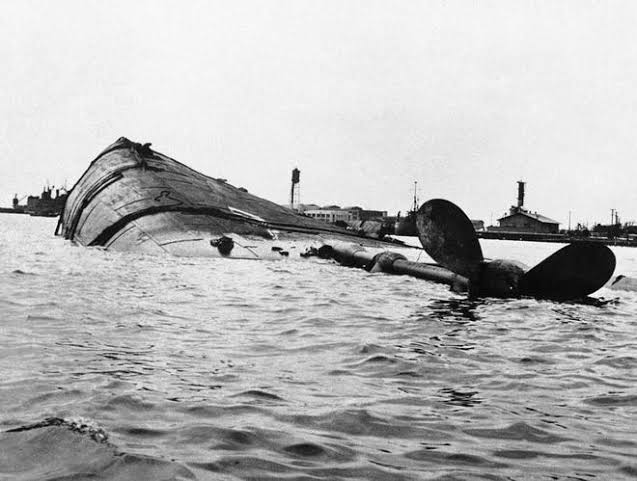
Hunter’s shipmate Pete, recognizing the reality of the moment, declared, “This is war!” and headed topsides on the double. The USS Oklahoma, moored forward of the West Virginia, capsized—”lay bottom up,” as Hunter later described it. The USS Arizona was struck and sunk with catastrophic loss of life. Across the harbor, the scene was one of devastation.
How It Was Seen at the Time
For those who lived through the attack, the initial reaction was disbelief. Many assumed the alarms and explosions were part of a drill or an accident. Hunter’s journal captures this confusion: he “cussed a bit about having to turn-to; these alarms usually secured before one was able to dress and reach his station.” The sudden, violent reality of war was almost incomprehensible to men who had been anticipating a leisurely Sunday morning of golf.
The language contemporaries used was one of shock and devastation. Hunter wrote:
“Pearl Harbor was a devastating sight. Forward of the West Virginia the Oklahoma lay bottom up.”
Beth Slingerland, watching from her home in the hills above Pearl Harbor, typed a letter to her parents on the day of the attack, describing the scene as she witnessed it. Throughout the day, she updated the letter, jotting additional notes by hand. Her account reflects both fear and the desperate hope that her husband, working at the harbor, had survived. The letter, written on onion-skin paper and preserved with its original envelope, is now held in the collection of the Smithsonian’s National Museum of American History.
Historical Snapshot
| Aspect | Detail |
|---|---|
| Date | December 7, 1941 |
| Place | Pearl Harbor, Hawaii |
| People | U.S. Pacific Fleet personnel, Japanese carrier-based air forces, Hawaiian civilians |
| What Happened | Japanese surprise air attack on the U.S. Pacific Fleet, sinking and damaging multiple battleships and killing thousands |
| Why It Mattered | The attack marked the entrance of the United States into World War II |
Eyewitness Accounts
The most powerful records of the attack come from those who were present. The Library of Congress Veterans History Project has collected numerous personal narratives from survivors, preserving their stories for posterity. As the Naval Historical Foundation notes, the events of December 7, 1941, “remain etched in the collective memory of Americans.”
George Macartney Hunter’s journal is among the most vivid firsthand accounts. An officer with the U.S. Naval Reserve assigned to the USS West Virginia, Hunter recorded his experience in real time:
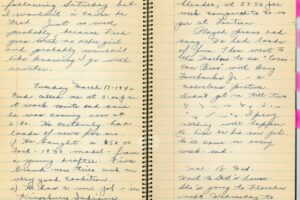
“Awoke this morning at 0730. Moe, Heavy, York, and myself had a golf match scheduled and planned to leave the ship at 0930. I lay sleepy-eyed in my bunk for some time. At 07:45 the General Alarm sounded followed by ‘Away Fire and Rescue Party.’ I cussed a bit about having to turn-to; these alarms usually secured before one was able to dress and reach his station. Consequently, I was in no particular hurry to get dressed. Suddenly the General Alarm sounded again; and, simultaneously, a terrific explosion rocked the ship. Vail, Hine, and I looked at each other; ‘This is war!’, said Pete and started topsides on the double.”
Hunter’s account continues with the chaos of the attack: “I headed for Sky Control but it was tough going as the ship listed heavily to port almost immediately. On reaching the second level in the mast, I met several of the men coming down. All communications and transmission to the guns had been…” — the entry breaks off mid-sentence, a testament to the disruption of the moment.
Letters & Diaries
Beth Slingerland’s letter to her parents, written on December 7, 1941, in Honolulu, offers a civilian perspective on the attack. Her husband, John, was a crane operator at Pearl Harbor, working on the day it was bombed. From her home in the hills above the harbor, Slingerland watched the attack unfold and described the scene in a typewritten letter on onion-skin paper. She updated the letter throughout the day, adding handwritten notes as events progressed.
The letter, now in the collection of the Smithsonian’s National Museum of American History, captures the fear and uncertainty of a wife watching her husband’s workplace come under attack. Despite her fears, John Slingerland survived. The letter stands as a testament to the civilian experience of the attack—a perspective often overshadowed by military accounts. The three-page letter, typed on fragile onion-skin paper and including the original envelope, is not currently on display but remains a vital primary source for understanding how ordinary Hawaiians experienced the day.
What People Feared
In the immediate aftermath of the attack, fear and uncertainty gripped Hawaii. Civilians like Beth Slingerland did not know if their loved ones had survived. Military personnel faced the terrifying possibility of a Japanese invasion or follow-up attacks. The attack had demonstrated that the United States was vulnerable to surprise assault, and the question of what would come next weighed heavily on all who witnessed the devastation.
The fear was not unfounded. The attack had been devastatingly effective, and there was no way to know whether Japanese forces would press their advantage. For those in Hawaii, the threat of further attacks or invasion was a genuine and immediate concern. Slingerland’s letter, updated by hand throughout the day, reflects this ongoing anxiety—each new note a record of a woman watching and waiting, not knowing if her husband was alive or dead.
Aftermath
The attack on Pearl Harbor had immediate and far-reaching consequences. The United States declared war on Japan the following day, December 8, 1941, and entered World War II. The wreckage of the fleet—the sunken Arizona, the capsized Oklahoma, the damaged West Virginia—became symbols of both the nation’s vulnerability and its resolve.
In the years that followed, the USS Arizona Memorial was constructed over the sunken battleship, which continues to leak oil to this day. As the Naval Historical Foundation notes, even eighty years after the attack, the wreckage remains a hallowed site, and the number of living survivors continues to dwindle. The 70th anniversary in 2011 prompted the Library of Congress to reflect on how the events “remain etched in the collective memory of Americans,” and the 80th anniversary in 2021 brought renewed attention to the importance of preserving the stories of the last surviving witnesses.
How Historians See It Today
At the time, the attack was understood primarily as a treacherous surprise assault that united the American people in a determination to enter the war. President Franklin D. Roosevelt famously called December 7, 1941, “a date which will live in infamy.”
Modern historians, drawing on the full range of primary sources—including the eyewitness accounts preserved by the Library of Congress, the Smithsonian, and the Naval Historical Foundation—have deepened our understanding of the attack’s complexity. Historians today emphasize the importance of preserving firsthand accounts while the last survivors are still alive, recognizing that these personal narratives offer an irreplaceable window into the human experience of the attack. The dwindling number of living veterans, as the Naval Historical Foundation notes, makes the preservation of these accounts increasingly urgent. Each letter, journal, and recorded interview adds a layer of texture to our understanding of a day that changed the world.
The eyewitness accounts of December 7, 1941—the letters, journals, and recorded recollections of sailors, civilians, and officers—do more than document a military attack. They capture the human experience of a moment when the world changed. From Hunter’s matter-of-fact journal entries to Slingerland’s anxious letter, these primary sources remind us that history is not abstract. It is lived, felt, and remembered by real people whose words continue to speak across the decades.
FAQ
What was the first sign of the attack for those at Pearl Harbor?
For many, the first sign was the General Alarm sounding at approximately 7:45 a.m., followed by the call 'Away Fire and Rescue Party.' Lieutenant George Macartney Hunter of the USS West Virginia initially dismissed it as a drill, but moments later a 'terrific explosion' rocked his ship. His shipmate Pete immediately recognized the reality, declaring 'This is war!'
How did civilians in Hawaii experience the attack on Pearl Harbor?
Beth Slingerland, writing from her home in the hills above Pearl Harbor, typed a letter to her parents on December 7, 1941, describing the scene as she witnessed it. She updated the letter by hand throughout the day. Her husband John, a crane operator at the harbor, survived the attack. The letter is preserved at the Smithsonian's National Museum of American History.



Leave a Reply