

Short Answer
What did it feel like to stand in a city while bombs were falling?
What did a factory worker notice about conditions that never appeared in company reports?
What did soldiers believe was happening during a battle before anyone knew who would win?
What did ordinary people see when a political revolution unfolded outside their homes?
Official records can tell historians when laws were passed, how armies moved, how governments responded, or how many people were registered by a particular institution.
Eyewitness accounts can reveal something different:
what people saw, heard, experienced, believed, feared, misunderstood, and remembered.
That is why eyewitness testimony occupies such an important place among historical primary sources.
The Library of Congress includes eyewitness accounts among the many forms primary sources can take, alongside letters, diaries, recordings, manuscripts, statistics, and other original materials.
The Library’s Veterans History Project, for example, preserves firsthand recollections of American military veterans specifically so researchers and future generations can hear directly from people who experienced military service.
Yet eyewitness accounts come with an important warning:
Seeing an event does not guarantee understanding it correctly.
The American Historical Association notes that eyewitness accounts are important historical sources but may also be unreliable.
This apparent contradiction lies at the heart of historical research.
Eyewitness testimony is valuable not because witnesses provide perfect recordings of events, but because they preserve individual encounters with the past.
To use those encounters responsibly, historians ask who witnessed the event, where they were, what they could see, what they knew at the time, why they recorded their account, how much later they remembered it, and whether other evidence supports their claims.
Understanding history therefore requires us to listen to eyewitnesses without assuming that any single eyewitness possesses the whole truth.
What Is an Eyewitness Account?
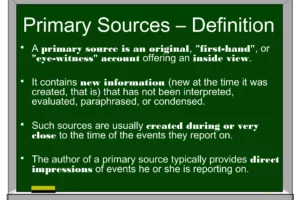
An eyewitness account is a description or recollection produced by someone who personally witnessed or experienced an event, place, condition, or historical situation.
Eyewitness evidence can survive in many forms.
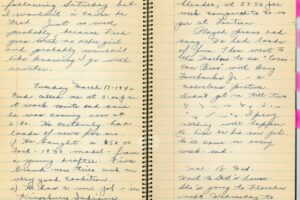
A witness might record an experience in a diary that evening.
A soldier might write home from the battlefield.
A traveler might describe a city in a journal.
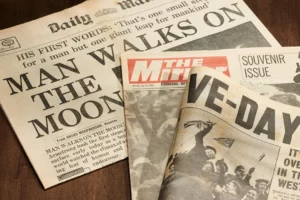
A newspaper reporter might describe a demonstration.
A survivor might give testimony decades later.
A government investigator might interview people shortly after an event.
A veteran might participate in an oral-history project fifty years afterward.
All can provide firsthand evidence.
But they are not identical.
A diary written while events were unfolding preserves a different type of testimony from an interview recorded decades later.
Both may be primary sources.
The historian simply has to ask different questions of them.
The Oral History Association describes oral history as a method of gathering, preserving, and interpreting the voices and memories of participants in past events. It also stresses that oral history depends on memory, meaning that recollections are filtered through changing personal and social contexts.
Why Eyewitness Accounts Matter
Imagine trying to reconstruct a war using only military orders.
You could learn:
when units moved,
which objectives commanders established,
what supplies were requested,
and what official reports claimed happened.
But much would remain invisible.
What were soldiers afraid of?
What did civilians see?
What rumors circulated?
How did people experience shortages?
What did battle sound like?
What happened when official plans collided with reality?
Eyewitness testimony can help answer those questions.
The Library of Congress has emphasized the immediacy of eyewitness material and its ability to create an emotional connection to historical events that later summaries may not reproduce.
That immediacy is one of its greatest strengths.
But historical value extends far beyond emotion.
Eyewitness accounts can preserve information unavailable anywhere else.
Eyewitness Accounts Put Human Experience Back Into History
Large historical events are often summarized through abstractions.
12 million people migrated.
The army retreated.
Food prices increased.
The city was occupied.
A new law was implemented.
These statements may be historically accurate.
But they cannot by themselves reveal what those developments meant to individual people.
An eyewitness account might tell us about the mother searching several shops for bread, the immigrant stepping off a ship into an unfamiliar port, the shopkeeper watching soldiers enter the street, or the worker discovering that wages no longer covered household expenses.
Those personal observations do not replace broader statistics.
They give those statistics human context.
This is one reason oral history can be so valuable. The Oral History Association states that oral history helps place people’s experiences within larger social and historical contexts and can document individual and collective experiences as well as how people understand the past.
History contains structures and institutions.
But it was lived by people.
Eyewitness accounts help connect the two.
They Tell Us What People Knew at the Time
Hindsight changes everything.
Today we know which armies won wars.
We know which political movements succeeded.
We know which economic crises became depressions.
We know which inventions transformed society.
People experiencing those events did not.
Consider reading a diary from the first weeks of a war.
The writer might confidently predict that fighting will end within months.
We may know that the war continued for years.
That makes the prediction wrong.
But historically, the mistake may be extremely valuable.
It tells us something about what people expected.
That matters because human beings make decisions based not on what future historians eventually learn, but on what they believe at the moment.
A mistaken eyewitness account may therefore help historians reconstruct:
public expectations,
rumors,
uncertainty,
fear,
confidence,
available information,
and the limits of contemporary knowledge.
A witness can be factually wrong while remaining historically revealing.
Eyewitness Accounts Show Us How Events Looked From Different Positions
No historical event has only one viewing point.
Consider a strike.
A factory owner may see economic disruption.
A worker may see an attempt to survive on inadequate wages.
A police officer may see a public-order problem.
A labor organizer may see collective resistance.
A newspaper editor may see a political story.
A nearby shopkeeper may see lost customers.
A worker’s spouse may see uncertainty over whether the family can pay rent.
Each person witnesses the same broad event from a different position.
This does not necessarily mean that one person’s version is correct and every other version false.
It means historical experience is situated.
The Library of Congress encourages the use of primary sources representing multiple perspectives precisely because a fuller understanding often requires seeing how different participants experienced the same subject.
This principle fits particularly well with eyewitness testimony.
One witness offers a viewpoint.
Several witnesses may reveal an entire landscape of viewpoints.
Eyewitnesses Can Preserve Voices Missing From Official Records
Archives often preserve institutions extremely well.
Governments produce documents.
Armies produce reports.
Courts produce files.
Companies produce accounts.
Universities produce records.
Political leaders generate correspondence.
But ordinary people do not always leave comparable documentary trails.
This creates a challenge for historians.
An official archive may tell us much more about what authorities did to people than what those people thought about what was happening.
First-person accounts can help reduce that imbalance.
Oral history is particularly important here. The Oral History Association describes testimony as a means of recovering voices and experiences, while recent OHA discussions emphasize oral history’s contribution in preserving testimony that written archives did not or could not hold.
Eyewitness testimony can therefore help historians investigate experiences that administrative documentation records poorly.
That might include the experiences of:
workers,
migrants,
soldiers,
prisoners,
refugees,
minority communities,
women whose activities were poorly documented by institutions,
or participants in local events that never generated extensive official records.
Eyewitness accounts do not magically eliminate gaps in the archive.
But sometimes they allow historians to hear voices that would otherwise remain faint.
They Preserve Details Official Documents May Ignore
Official documents are normally produced for specific administrative purposes.
A military casualty report may record a soldier’s name, unit, rank, date, and status.
It may not tell us what happened in the minutes before the soldier was wounded.
A census records household information according to categories selected by the government.
It usually does not record what the family argued about over dinner.
A factory inspection report may record machinery violations.
It may not describe how workers joked, complained, improvised, or helped one another.
Eyewitness accounts can preserve these apparently minor details.
For historians, minor details can become major evidence.
Descriptions of food, clothing, slang, transportation, weather, routines, noise, smells, social relationships, working practices, and household life can help reconstruct dimensions of the past that formal records rarely capture.
Library of Congress research guides highlight eyewitness accounts not only for major events but also for their vivid descriptions of daily life.
History is not composed only of extraordinary events.
It is also the history of ordinary life.
Eyewitness Accounts Can Reveal Emotions
Fear rarely appears neatly in a government statistical table.
Neither does grief.
Nor excitement, humiliation, confusion, hope, boredom, resentment, panic, or relief.
Eyewitness testimony can reveal emotional experiences surrounding historical events.
A civilian describing an air raid may tell us something that bombing tonnage alone cannot.
A migrant’s letter home may reveal uncertainty hidden behind migration statistics.
A veteran’s interview may show how military service continued to shape memory decades later.
The emotional force of firsthand evidence is one reason the Library of Congress has noted the unusual immediacy eyewitness accounts can bring to subjects such as September 11.
But emotions should be treated as evidence carefully.
If someone says they were terrified, that is evidence of their reported emotional experience.
It does not automatically prove every factual claim surrounding that experience.
Historians distinguish between the different things testimony can establish.
Eyewitness Accounts Help Reconstruct Historical Atmosphere
Some things about an historical moment are difficult to capture through retrospective summaries.
Consider phrases such as:
People expected war.
The city was tense.
Morale was collapsing.
Rumors spread rapidly.
A historian cannot simply state these things because they sound plausible.
Evidence is required.
Multiple eyewitness accounts may provide that evidence.
If diaries, letters, interviews, newspapers, police reports, and private correspondence repeatedly describe similar anxieties, researchers may begin reconstructing something about the atmosphere surrounding an event.
No single account proves what an entire population felt.
But patterns across many independent accounts can reveal historical attitudes difficult to measure otherwise.
Contemporary Eyewitness Accounts and Later Recollections Are Different
One important distinction concerns when testimony was recorded.
Consider a person who witnessed an important demonstration in 1965.
They might have produced two surviving accounts:
a diary entry written that night,
and an oral-history interview recorded in 2005.
Both are firsthand sources.
But they answer different questions especially well.
The 1965 diary
The diary can reveal what the witness noticed while the outcome remained uncertain.
It may preserve rumors, immediate impressions, fear, confusion, and details later forgotten.
The 2005 interview
The oral history can reveal how the witness remembers the event forty years later.
The witness may now understand its broader significance, connect it with later events, and interpret their younger self differently.
The Oral History Association explicitly notes that oral history relies on memory and therefore preserves recollections filtered through changing personal and social contexts.
This does not make the later interview useless.
Quite the opposite.
It may allow historians to study both the remembered event and the process of remembering it.
Memory Is Part of the Evidence
Historians do not have to choose between:
memory is perfectly accurate
and
memory is worthless.
Neither extreme is useful.
A retrospective eyewitness may confuse a date.
They may merge two events.
They may reinterpret an earlier experience through things learned afterward.
They may remember particular moments vividly while forgetting others.
The National Archives has even used historical eyewitness accounts recorded years after battlefield events as exercises in evaluating reliability and credibility, emphasizing that the distance between event and recollection must be considered.
Oral historians approach memory as part of the source itself.
If a community remembers an event differently fifty years later, that changing memory may reveal something historically important about identity, trauma, politics, commemoration, or the way a society constructs its past.
The question becomes not merely:
Did the witness remember everything correctly?
but also:
Why is this how the event is remembered now?
Eyewitnesses Can Be Wrong
Imagine standing inside a massive crowd.
You hear several explosions.
People suddenly run.
Someone shouts that police are firing.
You see smoke fifty meters away.
Later you tell someone:
The police started shooting and everyone panicked.
Perhaps that is exactly what happened.
Perhaps the sounds came from somewhere else.
Perhaps objects were thrown before the shooting began.
Perhaps police fired in another street that you could not see.
Perhaps another witness standing on a balcony had a broader view.
Being present does not provide omniscience.
The American Historical Association explicitly warns that eyewitness accounts can be important while still being unreliable.
Every witness occupies a physical location.
Every witness also occupies a social position.
They see part of an event.
That partiality is not a flaw unique to eyewitness testimony.
It is something historians must account for.
Physical Position Matters
Suppose five people describe a battle.
One was in the front line.
One served at headquarters.
One treated casualties in a field hospital.
One watched from a nearby village.
One arrived the following morning.
Technically, several may count as participants or eyewitnesses.
But their knowledge differs dramatically.
Whenever historians encounter firsthand testimony, they therefore ask:
Where was the witness?
What could they actually see or hear?
For how long?
How close were they?
What information did they receive from other people?
These questions help separate firsthand observation from rumor, inference, and later reconstruction.
Eyewitness Accounts Often Mix Observation and Hearsay
Suppose a diary says:
We heard that three thousand soldiers were killed yesterday.
The diary is a primary source.
But the diarist did not necessarily witness three thousand deaths.
The statement proves most directly that the writer heard a report.
That distinction matters.
Historical accounts frequently mix:
direct observation,
rumor,
assumption,
reported information,
and personal interpretation.
Historians try to separate them.
A useful question is:
How did this witness know what they claimed to know?
Sometimes the answer is obvious.
Other times it requires additional investigation.
Audience Can Change What an Eyewitness Says
A witness may describe the same experience differently depending on the audience.
Imagine a soldier.
In a private diary, the soldier writes:
I don’t know how much longer I can stand this.
In a letter to parents:
I’m doing fine. Don’t worry about me.
In an official after-action report:
The unit maintained its position despite heavy resistance.
All three statements may have been written by the same person during the same week.
None necessarily constitutes a lie.
They were created for different audiences and purposes.
This is why historians ask not merely:
Who witnessed the event?
but:
Who was expected to read this account?
Private testimony, public statements, official testimony, newspapers, memoirs, and interviews all have different social contexts.
Eyewitnesses May Have Reasons to Shape Their Accounts
Historical witnesses are human beings.
They may want to:
protect themselves,
defend their reputation,
justify a decision,
protect someone else,
assign blame,
claim credit,
reassure relatives,
avoid punishment,
support a political cause,
or tell a compelling story.
This does not automatically make their account false.
It means purpose matters.
Imagine a general explaining a military defeat.
The general’s memoir might contain invaluable firsthand information.
It might also attempt to justify the general’s decisions.
The historian therefore reads both levels:
What does the general say happened?
and
Why might the general want history to remember it that way?
Sometimes the second question is as historically important as the first.
Trauma and Difficult Experiences Require Careful Handling
Some eyewitness testimony concerns violence, persecution, displacement, war, disaster, or other deeply distressing experiences.
Historians should not reduce such testimony to a simple credibility contest.
Oral-history professionals emphasize ethical responsibilities toward narrators, including dignity, privacy, safety, and appropriate treatment of participants.
At the same time, testimony should still be interpreted historically.
Researchers can respect a witness while examining chronology, context, memory, provenance, and corroborating evidence.
Empathy and critical analysis are not opposites.
Responsible history requires both.
Eyewitness Testimony Is Not a Recording
A useful mental model is to stop imagining an eyewitness as a human camera.
Even a camera does not capture everything—it records one frame from one position.
A human witness does something more complicated.
The witness notices some things and ignores others.
They interpret what they see.
They connect events with existing beliefs.
They remember some details.
They later explain the experience through language.
If interviewed, they respond to questions selected by another person.
The Oral History Association emphasizes that oral-history interviews are collaborative interactions: interviewers shape conversations through preparation and questions, while narrators determine what they consider relevant or appropriate to share.
An eyewitness account is therefore not a transparent copy of the past.
It is evidence produced by a person encountering and interpreting the past.
That distinction makes it more interesting, not less.
Why Historians Compare Eyewitness Accounts
Imagine one witness says:
The demonstration was peaceful until police moved into the square.
Another says:
Protesters had already begun throwing objects before officers advanced.
A third says:
I could not see how the confrontation began, but people suddenly started running toward me.
What should the historian do?
Not simply select the most dramatic quotation.
Not automatically trust the witness who sounds most confident.
And not necessarily average the three accounts together.
Instead, investigate.
Where was each witness standing?
When did each arrive?
Were they participants?
Could they see the initial confrontation?
When did they record their testimony?
Do photographs exist?
Video?
Police radio records?
Hospital records?
Contemporary reporting?
Other independent witnesses?
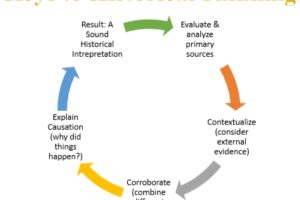
Historians call this process corroboration: testing one piece of evidence against others.
Historical understanding grows when accounts are placed in conversation with one another.
Agreement Between Witnesses Can Strengthen a Conclusion
Suppose five independently recorded diaries from different parts of a city all mention an unusual explosion at approximately the same time.
A newspaper also reports it.
A government record confirms structural damage.
The convergence of evidence makes it easier to establish that something significant occurred.
But independence matters.
Ten newspapers repeating the same wire-service report are not equivalent to ten independent eyewitnesses.
Historians therefore examine the information chain.
Who actually witnessed the event?
Who copied someone else?
Who heard a rumor?
Who wrote later after reading earlier accounts?
Corroboration works best when evidence arises from genuinely independent sources.
Disagreement Can Be Even More Valuable
Conflicting eyewitness accounts are sometimes treated as problems that historians must eliminate.
But disagreement can itself become historical evidence.
Suppose workers describe a factory as dangerous while managers describe it as carefully regulated.
That disagreement might reveal differing experiences of hierarchy and risk.
Suppose two communities remember the same political conflict differently.
That difference might reveal how historical memory became part of group identity.
Suppose soldiers and commanders tell different stories about a military operation.
That conflict might reveal problems in communication or command.
The goal of historical research is not always to force every source into one seamless narrative.
Sometimes understanding why people saw the same event differently is the historical discovery.
A Practical Method for Analyzing an Eyewitness Account
When examining eyewitness testimony, historians can use a simple sequence:
- Identify the witness. Determine who the person was and their relationship to the event.
- Establish proximity. Ask where the witness was and what they could realistically see, hear, or experience.
- Determine timing. Find out whether the account was recorded immediately, shortly afterward, or decades later.
- Identify audience and purpose. Determine who was expected to receive the account and why it was produced.
- Separate observation from interpretation. Distinguish what the witness personally observed from what they inferred, heard from others, or remembered later.
- Place the testimony in context. Understand what was happening politically, socially, culturally, or militarily when the experience occurred.
- Corroborate it. Compare the testimony with independent witnesses, documents, photographs, statistics, physical evidence, and other surviving records.
This approach avoids the two most common errors: accepting eyewitness testimony uncritically or dismissing it simply because it is subjective.
Example: A Soldier Describes a Battle
Imagine a fictional soldier writes:
Our attack destroyed most of the enemy position. Their men were fleeing everywhere, and I am certain the war will soon be over.
What does this eyewitness account tell us?
It might provide firsthand evidence that the soldier observed enemy troops retreating.
But several claims require caution.
“Most of the enemy position” may refer only to the area visible from the soldier’s location.
“Their men were fleeing everywhere” might describe a local withdrawal rather than the entire army.
“The war will soon be over” is a prediction, not an observation.
The account could therefore be extremely useful for understanding the soldier’s battlefield experience and expectations without being reliable evidence that the enemy army was actually collapsing.
A historian might compare it with unit reports, enemy records, maps, casualty lists, other soldiers’ diaries, and the subsequent military situation.
The eyewitness account remains valuable.
Its value simply needs to be defined correctly.
Example: A Civilian Describes a Political Revolution
Imagine a shopkeeper writes:
Everyone supports the revolution. I have not spoken to anyone who wishes the old government to return.
Can the historian conclude that the entire population supported the revolution?
No.
The statement directly tells us more about:
the people with whom the shopkeeper interacted,
the opinions those people expressed publicly,
and the shopkeeper’s perception of public sentiment.
Perhaps opponents were afraid to speak openly.
Perhaps the writer lived in a strongly pro-revolution neighborhood.
Perhaps support really was widespread.
Additional evidence is necessary.
Yet the account is still valuable because it tells us how political opinion appeared from one position inside the event.
Example: An Oral History Recorded Fifty Years Later
Suppose someone remembers a childhood evacuation during wartime:
I remember the station being completely silent. Nobody knew whether we would ever see our parents again.
The historian can ask several different questions.
Did official records confirm the evacuation?
Do contemporary photographs show the station?
What do other children remember?
Did newspapers describe the departure?
But historical value does not disappear if someone else remembers noise rather than silence.
Perhaps “silence” expresses the narrator’s remembered emotional experience rather than a literal absence of sound.
The testimony can therefore provide evidence about both:
the historical event
and
how the event remained meaningful in memory.
This dual character is one of oral history’s greatest strengths.
Famous Events Often Have Conflicting Eyewitness Accounts
The more chaotic an event, the more likely witness accounts are to diverge.
Battles, assassinations, riots, disasters, revolutions, and mass demonstrations can unfold rapidly across large spaces.
People see different fragments.
A useful illustration appears in historical investigations preserved by the National Archives. In reviewing the assassination of John F. Kennedy, official investigators considered physical evidence alongside eyewitness testimony rather than treating testimony alone as sufficient.
This reflects a broader historical principle:
Eyewitness testimony becomes strongest when integrated with other kinds of evidence.
Eyewitness Accounts Can Rescue Small Details From Oblivion
Historical knowledge sometimes survives because a single person bothered to record something.
The National Archives discusses an eyewitness description by Revolutionary War veteran Joseph Plumb Martin that helped document a woman operating a cannon during the Battle of Monmouth—an episode connected with the later “Molly Pitcher” tradition.
Without such observations, some experiences would leave little documentary trace.
This illustrates why historians pay attention even to apparently incidental remarks.
A witness may mention a person, practice, object, custom, or incident that official records ignored entirely.
What was trivial to the original writer can become precious evidence centuries later.
Large Eyewitness Collections Allow Historians to Compare Experiences
A single eyewitness account provides one perspective.
A collection can reveal patterns.
The Library of Congress Veterans History Project preserves firsthand recollections, manuscripts, photographs, and other materials connected with U.S. military veterans.
Researchers can use such collections not merely to reconstruct one veteran’s story but to compare:
different wars,
military branches,
roles,
locations,
generations,
and experiences.
The Library’s September 11 collections similarly preserve eyewitness reactions and diverse opinions surrounding a major historical event.
Collections matter because history becomes richer when many voices can be compared rather than allowing one memorable witness to represent everyone.
Eyewitness Accounts and Oral History Are Related but Not Identical
An eyewitness account can be created spontaneously.
Someone writes a diary entry because they want to record what happened.
An oral history is usually created intentionally through an interview process.
The Oral History Association defines oral history as both a method and the product of recorded interviews concerned with understanding the past through people’s voices and memories.
That means the interviewer matters.
Questions influence which stories emerge.
The sequence of questions matters.
The relationship between interviewer and narrator may matter.
Topics considered private may remain unspoken.
An oral-history interview should therefore be analyzed not merely as a witness “telling what happened,” but as a historical source produced during a conversation.
What Eyewitness Accounts Cannot Do
Eyewitness testimony cannot give historians unrestricted access to the past.
No witness can observe an entire war.
No individual can represent every member of a community.
No memoir can preserve every moment of a life.
No interview perfectly reconstructs events from decades earlier.
No firsthand account automatically resolves every contradiction.
Eyewitness testimony is strongest when historians resist asking it to do more than it can.
A source can reveal:
what one person experienced
without revealing:
what everyone experienced.
It can reveal:
what someone believed
without proving:
that the belief was correct.
It can reveal:
what someone remembered
without proving:
that every detail happened exactly that way.
Once these distinctions are understood, eyewitness testimony becomes much easier to use responsibly.
Primary Evidence Is Not the Same as Historical Truth
This distinction applies to primary sources generally.
A document’s historical authenticity does not guarantee the accuracy of everything inside it.
A genuine diary can contain false rumors.
A genuine government report can conceal failures.
A genuine photograph can be staged.
A genuine eyewitness can make a mistake.
The AHA has cautioned against assuming that going directly to eyewitness accounts automatically reveals historical truth; conflicting firsthand accounts can leave major figures and events historically ambiguous.
Historians therefore ask:
What does the existence of this account establish?
Then:
Which claims inside it require additional evidence?
That distinction is foundational to source criticism.
Why Eyewitness Accounts Remain Essential
Given all these limitations, someone might ask:
Why use eyewitness testimony at all?
Because without it, enormous dimensions of human history would disappear.
We would know less about:
how events felt while they were unfolding,
what ordinary people noticed,
what participants believed,
what rumors circulated,
how communities experienced major change,
how people understood themselves,
and how events continued to live in memory.
Historians sometimes depend heavily on eyewitness accounts precisely because other records remain inaccessible or were never created. An AHA discussion of recent-history research notes that firsthand accounts can become particularly important when government or institutional documents needed to reconstruct events are unavailable.
Eyewitness testimony does not replace other evidence.
It contributes evidence that other sources often cannot provide.
Frequently Asked Questions
What is an eyewitness account in history?
An eyewitness account is firsthand testimony from a person who personally witnessed or experienced a historical event, condition, place, or period. It may survive in a diary, letter, memoir, interview, newspaper account, recording, testimony, or other format. The Library of Congress includes eyewitness accounts among historical primary sources.
Why are eyewitness accounts useful to historians?
They can reveal personal experiences, contemporary perceptions, emotions, details of daily life, local conditions, and perspectives absent from official records. They also allow researchers to investigate how participants understood events while they were happening.
Are eyewitness accounts primary sources?
Usually, yes, when the witness personally experienced the subject being investigated. The Library of Congress explicitly includes eyewitness accounts among primary-source formats.
Are eyewitness accounts always reliable?
No. The American Historical Association notes that eyewitness accounts are historically important but can also be unreliable. Historians therefore examine proximity, timing, perspective, purpose, memory, and corroborating evidence.
Why can two eyewitnesses describe the same event differently?
They may have stood in different locations, possessed different information, arrived at different times, interpreted events differently, remembered different details, or had different interests and expectations. Contradictory accounts do not necessarily make both sources useless.
Is a memoir an eyewitness account?
It can be. A memoir written by someone who participated in an event provides retrospective firsthand testimony. However, because the memoir may have been created years or decades later, historians pay particular attention to hindsight and memory.
Is oral history the same as eyewitness testimony?
They overlap but are not identical. Oral history is an intentional method of recording and preserving memories through interviews. The Oral History Association describes it as a process for gathering, preserving, and interpreting voices and memories related to the past.
Does a witness have to record an account immediately?
No. A later recollection can still function as firsthand testimony. But historians distinguish contemporary accounts from retrospective recollections because memory and later knowledge may affect how experiences are narrated.
How do historians check eyewitness accounts?
They compare testimony with independent sources such as other eyewitness accounts, letters, official records, photographs, newspapers, physical evidence, statistics, maps, audio or video recordings, and subsequent documentation.
What if an eyewitness remembers something incorrectly?
The inaccurate detail should not simply be accepted as fact. But the source may remain historically valuable. It can still reveal what the person believed or remembered and may help historians investigate how perceptions and memories of events developed.
Can biased eyewitness testimony still be useful?
Yes. Bias or perspective can itself become evidence. A partisan witness may provide questionable evidence for some factual claims while offering excellent evidence about political attitudes, propaganda, prejudice, loyalty, or how particular groups interpreted events.
Is firsthand evidence better than secondary history?
Not automatically. Eyewitness testimony provides direct perspective, while a strong secondary history may compare hundreds of witnesses and other records. Historians use both because they answer different questions.
The Question Historians Should Ask
The weakest question to ask an eyewitness source is:
Is this person telling the truth?
Sometimes that question matters.
But historical analysis usually needs several additional questions:
What exactly did this person witness?
Where were they standing?
What could they know?
When did they record the account?
Who were they speaking to?
What were they trying to accomplish?
Which parts are direct observation?
Which parts are interpretation or hearsay?
What do other sources say?
What can this testimony reasonably prove?
Those questions transform an eyewitness account from a compelling story into usable historical evidence.
Final Takeaway: History as People Saw It
Eyewitness accounts bring us close to one of the central realities of history:
people experience events before they know what those events will mean.
A soldier does not experience “the decisive battle historians would later identify as the turning point.”
The soldier experiences noise, orders, confusion, fear, exhaustion, and whatever can be seen from a particular position.
A demonstrator does not experience “the beginning of a social transformation.”
They experience a street, a crowd, chants, police, excitement, uncertainty, and perhaps danger.
A migrant does not experience “a demographic movement.”
They experience leaving one place and arriving in another.
A worker does not experience “industrialization.”
They experience a workplace.
This is what eyewitness testimony can restore to history.
Not an all-seeing view.
A human view.
The value of an eyewitness is therefore not that they saw everything.
It is that they saw something—from somewhere, at a particular moment, without knowing how the story would end.
Historians then place that perspective beside other witnesses, documents, photographs, objects, statistics, and later scholarship.
Sometimes the accounts agree.
Sometimes they collide.
Sometimes one witness notices something everyone else missed.
Sometimes the witness was mistaken.
Sometimes the mistake itself teaches us what people believed.
That is why eyewitness accounts are indispensable historical sources.
They do not show us the past exactly as it was.
They help us understand the past as people saw it.




Leave a Reply